Showing posts with label Photo Sleuthing. Show all posts

Wednesday, March 9, 2016

Who Was Robert James Campbell?

Click to enlarge

The woman in the photo shown above is named Jessica Ferber. The photos spread out around her are the tip of a very large iceberg that floated into her life 13 years ago — a stash of photos, negatives, notes, letters, documents, and other materials that were left behind by a homeless man in Vermont who died in 2002. Ferber had just graduated college when she volunteered for the task of going through the deceased man's belongings, just to see if there was anything of value.

She ended up with more than she'd bargained for. The homeless man, Robert James Campbell, had been a professional photographer, and his work indicated that he'd had close ties to the New York jazz scene of the late 1950s and 1960s. Ferber, who had studied photography in college and was working at a photo processing lab at the time, immediately fell in love with Campbell's photos and felt compelled to answer the questions that the materials were raising: How had such a talented artist ended up homeless? Why had he held onto so many of his photos and negatives? Why did Google searches turn up so little evidence of his photographic career? Why had only two people — both from the homeless shelter where he had stayed — attended his funeral?

In short: Who was Robert James Campbell?

Ferber's 13-year attempt to answer that question became an obsession. She changed to a night job so her days would be free to research, cut back on socializing with friends, and learned everything she could about the jazz world that Campbell had inhabited. (She's written a good synopsis of the project here — highly recommended.) Her odyssey has now resulted in an excellent book, called Rebirth of the Cool, which features a few short essays and dozens of Campbell's photographs, many of which are stunners. Here's a sampling (if you can't see the slideshow below, click here):

You can find some additional info and photos here.

Ferber's story feels very familiar to me. Just as Campbell's belongings dropped into her lap, the Manhattan Trade School report cards dropped into mine. We both felt a strong responsibility to explore these materials and do right by the people behind them. And we both ended up sharing those people's stories with the public.

But Ferber went deeper than I did. Her project appears to have been the defining experience of her adult life, while the report cards have always been one passion among many for me. Even now, there are many dozens of report cards whose backstories I could (and really should) still investigate, and perhaps I will at some point when I have more time, but the project is back-burnered for now.

Does this mean Ferber is more obsessive than I am? Does it mean I'm lazier than she is? Does it reflect the fact that her project is focused on a single person who died recently, while mine encompasses hundreds of people, many of whom died decades ago? I think all of those things are probably true, at least to some degree.

In any case, Ferber's project is a winner, and Rebirth of the Cool is a great book. Don't miss.

Friday, November 7, 2014

In 2002, a woman named Fawn Fitter bought box of old letters, photos, and related memorabilia from a flea market vendor. She soon realized she'd stumbled upon the chronicle of one family's life, beginning with a series of 1940s love letters documenting the courtship of the man and woman who formed the family's foundation.

Fitter decided to track down the family and was surprised to discover that the man who wrote the love letters was still alive. The family welcomed her inquiries and she soon became the family's de facto historian, or even something like an unofficial family member.

All of this, and much more, is explained in greater detail in this excellent article. Fitter is also documenting her research on this blog. It's all very, very Permanent Record, and highly recommended.

(Special thanks to my friend Gina Duclayan — at whose 1996 birthday party I found the Manhattan Trade School report cards that formed the basis for Permanent Record! — for tipping me off to this one.)

Wednesday, November 5, 2014

Click to enlarge

The negative and the resulting photo shown above were taken at a prison in Iowa. They're part of an excellent-sounding project recently brought to my attention by reader Matt Miller. I'll let him explain it in his own words:

My cousin's name is Mark Fullenkamp. He's an amateur photographer and also a technology geek who's interested in genealogy and history. He's from West Point, Iowa, not far from the Iowa State Penitentiary in Fort Madison, which has been in use for 150 years. My aunt (Mark's mother) worked at the prison in the early 1960s and actually ordered the rope for the prison's last two hangings. A few of our cousins work there.

The penitentiary is preparing to move to a new facility. When Mark had heard about the move, he wanted to see if he could take some photos of the old prison while it still housed prisoners. In addition, he said he had heard rumors of old glass plate negatives still laying around from the prison's early days. These were old prisoner intake photos, taken as the person was committed to the prison. He eventually was able to get his hands on the negatives and has now completed scanning over 11,000 of them and inverting the colors.

He has also come across old prisoner records, at least some of which have prisoner numbers on them. Most of the photos have prisoner numbers on them as well [see above], and he's now in the process of matching up the photos and the paperwork. I know he plans to make the images and I believe the whole project available online and possibly in book form, but so far I've heard no details about those plans.

Faaaaaascinating. Fullenkamp calls this endeavor the Iowa State Prison Memory Project. You can learn more about it in this Des Moines Register article, and you can see Fullenkamp and his research assistant, Gemma Goodale-Sussen, discussing the project in this video, which is definitely worth watching:

I hope to be in touch with Fullenkamp soon to learn more about his project, and of course I'll share what I learn here on PermaRec. Stay tuned.

Friday, May 30, 2014

The photo blog Humans of New York, which launched in 2010, consists of portraits of NYC residents, accompanied by short quotes and stories. It's a relatively popular site and has been spun off into a best-selling book, so maybe you already know about it.

The site recently featured the photo you see above. It was accompanied by a short, cryptic quote — "I was Defensive Player of the Year" — and prompted a lot of interesting comments from Humans of New York readers, who read all sorts of things into the man's life just based on that one image and the simple statement.

That was enough to intrigue Sports Illustrated writer Greg Bishop, who became fixated on the question of how the guy in the photo had transitioned from some sort of athletic glory to a construction job. Bishop had nothing to work with except the photo itself, so he began using every tool and technique he could think of to track down the man's identity.

The result turned out to be a very PermaRec-ish little project, which you can read about here — highly recommended.

(Big thanks to reader Jeff Ash for letting me know about this one.)

Thursday, May 29, 2014

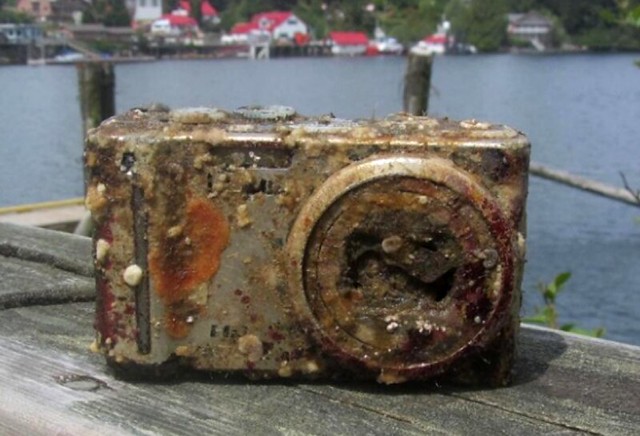
camera

The camera shown above was recently found in 40 feet of water — and with quite a few aquatic creatures living on it and in it — by marine science students who were doing research dives off of British Columbia, Canada. The divers were able to remove the camera's memory card and access the photos and video that, rather amazingly, were still preserved and intact.

One of the photos appeared to be a family portrait, so the students' professor posted it on Twitter in the hopes that someone would recognize the people in the photo. A local coast guard official saw the photo and recognized one of the family members as a shipwreck victim that the coast guard had rescued two years earlier. The camera apparently went down with that wreck and remained in the sea until the student divers found it.

The camera and memory card are now being returned to their owner. You can read more about the story here, and here's a TV news report on the camera's discovery.

Thursday, April 24, 2014

On the left is a snapshot from 1933, showing a boy and girl hugging on a sunny day in Syracuse; on the right, a tissue paper collage based on that photo. The collage was done by the children's book author Eric Carle, who also happens to have been the boy in the original photo.

Carle, who's now in his 80s, was three years old when the photo was taken. Last November he told USA Today that he couldn't recall her name — only that she had been his friend and was the daughter of Italian immigrants. He said he had frequently looked at the photo over the years and wondered what had happened to her, so he created the collage based on the photo and used it as the cover illustration for his latest children's book, Friends.

That USA Today article from last November caught the attention of Syracuse Post-Standard writer Sean Kirst, who decided to see if he could track down the little girl in the photo. And now, thanks to some persistent research and a few lucky breaks, he's succeeded. (You can get more info on how he connected the dots here.) Not only has the little girl been identified, but she's still alive. She and Carle spoke on the phone last Sunday, and there's talk of a face-to-face meeting. Great stuff.

(My thanks to reader Anne McNelis for letting me know about this one.)

Thursday, April 3, 2014

MysteryMan1Final.jpg.CROP.original-original.jpg
Click to enlarge

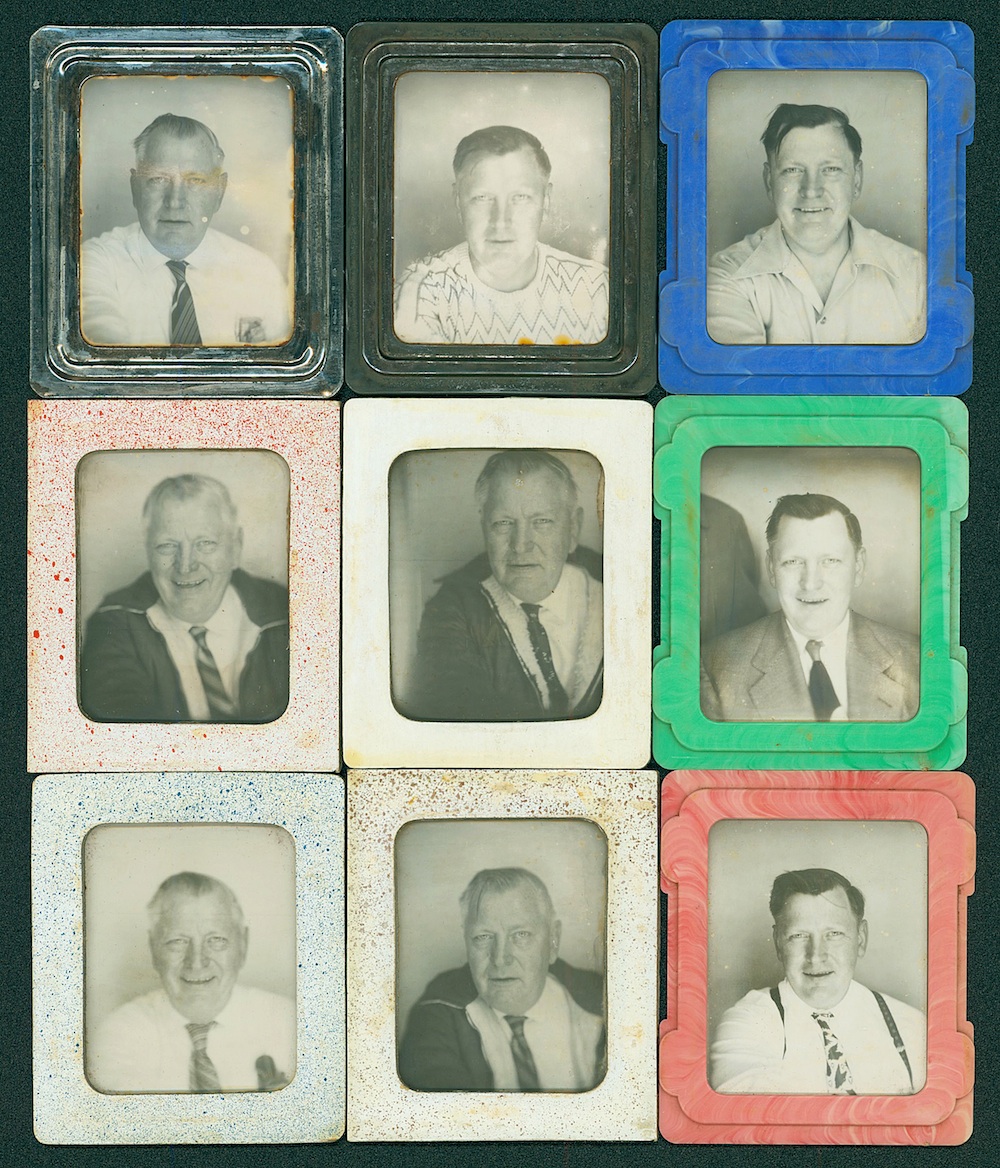
Lots of people this week have been calling my attention to the photobooth self-portraits shown above. They're nine images out of a collection of 445, apparently taken over the course of several decades, all showing the same man. The 445 images are currently being exhibited as part of a new art show about portraiture at Rutgers University.

I'm sure the whole exhibit is worthwhile — I hope to see it at some point this spring — but it's the photobooth images that are currently garnering the most attention. Writing at Slate, the history blogger Rebecca Onion did a good job of capturing their appeal:

The images are undated and unsorted, but you can make a mental game out of guessing how they might be organized chronologically. The man’s hair grows silver; his face gets craggy. In some frames, he smiles broadly — the grin of a kind uncle or grandfather.

The 445 photobooth shots are owned by historian Donald Lokuta, who purchased them from an antiques dealer in 2012. Lokuta has tried — so far unsuccessfully — to determine the subject's identity and why he took and saved so many photos of himself. Were the photos part of an art project? A neurotic obsession? Simple narcissism? It's a good PermaRec-ish puzzle, at least for now. Given the publicity the photos are currently receiving, I have a feeling this mystery will be solved fairly soon. (You can read more about the how Lokuta came to acquire the photos here.)

As an aside, the first person to tell me about the photobooth shots was longtime PermaRec supporter Kirsten Hively, who has a new blog about portraiture and self-portraiture, called Reflectology. She plans to use it as, among other things, a forum for portraits of herself (like many of us, she doesn't like how she looks in photos, so she's hoping all the portraits will help her come to terms with that). So far she's posted a self-silhouette and an x-ray. Not sure if she's planning to make it all the way to 445 or if she'll be content with a smaller number. Either way, it's a good start.

Monday, March 31, 2014

In 2007, a 26-year-old Chicagoan named John Maloof was working on a book about Chicago history. Maloof lived across the street from an auction house that was selling a stash of several thousand old negatives shot by a Chicago photographer several decades earlier. The auction house had acquired the negatives from a storage locker after the photographer had let the locker's account go delinquent. Maloof thought the negatives might be helpful for his book project, so he bought them for $380.

When Maloof looked at the negatives, he was quickly struck by how evocative they were. The photographer — a total unknown named Vivian Maier, who died shortly after Maloof acquired the negatives — clearly had a special feel for street photography. Her senses of framing, composition, portraiture, storytelling, pathos, and wit were all superb. But Maloof couldn't find any information about her. It appeared that none of her work, including the photos Maloof had acquired, had ever been exhibited or published. The more Maloof looked at the photos, the more convinced he became that he'd stumbled upon the work of a major overlooked artist. His hunch became even stronger when he scanned some of the negatives and posted them on Flickr, where they immediately generated lots of very positive response. (That's one of Maier's photos shown above, and the other photos scattered throughout this entry are hers as well.)

Thus began John Maloof's trip down a deep, deep rabbit hole that continues to this day. He has essentially become the chief custodian and cheerleader of Vivian Maier's legacy. Or, to put it another way, he's devoted his life to hers. Along the way he learned that Maier spent most of her adult life employed as a nanny, so he interviewed many of the families that hired her, including some of the now-grown children she looked after. He also visited her family's ancestral village in France. And he sought out and acquired thousands and thousands of additional Maier negatives (many of them salvaged from another storage locker she left behind), along with hundreds of rolls of film that she shot but never got around to developing (ditto). In short, Maloof is trying to be as encyclopedic about Vivian Maier as he can be. But there are still many pieces of the puzzle that he hasn't yet been able to put together, because Maier was intensely secretive and seriously eccentric. Among other things, she appears to have had a hoarding disorder. (Storage lockers and hoarding — this story reads like a reality TV treatment.)

This odd backstory has probably helped Maloof's efforts to promote Maier's work, because it adds an element of intrigue. In any case, the art world has embraced Maier's photography, which is now compared to the works of Diane Arbus, Robert Frank, and other great American populist photographers. Maloof has successfully shepherded her photos into an assortment of gallery shows, book projects, and more. Prints of her work, sold by a New York gallery that has partnered with Maloof, now sell for prices starting at about $1800.

And now there's new documentary film called Finding Vivian Maier. I saw it last Saturday and was blown away. It's a great story, superbly told. If you're into found objects and PermaRec-ish stories, it's absolutely essential viewing — don't miss. (As a bonus, Maloof, who co-directed the film, was on hand at the screening I attended, so I got to hear some of his commentary and participate in a short Q&A session he conducted.) Here, take a couple of minutes to check out the trailer:
Some of you may be thinking, "This Maloof guy is just profiting off of this dead woman's work. That's exploitation!" That's an understandable gut reaction, but I don't think it's accurate. While I could be wrong, I don't get the impression that Maloof is getting rich off of any of this (he needed a Kickstarter campaign to help finance the documentary), especially since a lot of the money that comes in from sales of Maier's prints is getting rolled back into the project's overhead (Maloof still has thousands of negatives to scan and hundreds of rolls of film to develop). I do think he's making a living off of all this, and good for him — that's a fair trade for the time and energy he's invested. It's pretty clear to me that he cares deeply about Maier and her work, and that he's made some pretty serious sacrifices to devote himself to this project. He didn't go looking to acquire something valuable. But once he realized what he had, he felt (and still feels) a strong responsibility to bring it to light and share it with the world. By his own account, he's also fairly obsessive, so it's his nature to keep following the rabbit hole, wherever it leads.

I relate to all of this. When I found the Manhattan Trade School report cards in that discarded file cabinet years ago, I knew had to do something with them — that was the responsibility I took on when I grabbed the cards. Frankly, given how important I think the report cards are, part of me feels a little ashamed for not having made them a full-time pursuit, the way Maloof has done with Maier's photography. I respect and admire how far he's taken this project.

Anyway: If you want to know more about Maier and her photography, look here. Meanwhile, Finding Vivian Maier is tremendous. See it!

Wednesday, May 29, 2013

6.png 5.png 1.png

The photos you see above are part of a remarkable project that is very much like Permanent Record. In fact, it's so PermaRec-ish that I can't believe I hadn't heard about it until just now.

Here's the deal: Two years ago a photographer named Jeff Phillips found a bunch of old slides in a Missouri antiques shop. He was intrigued by the images, so he bought the entire stash — over 1,000 slides — for $60.

The slides, including the three shown above, chronicled the life and travels of a couple. A few of the slides were inscribed with names: Harry and Edna.

Phillips decided he had to find out who Harry and Edna were, and what had become of them. So he started a Facebook page called "Is This Your Mother?," where he began posting some of the slides. Within three weeks, some of his more genealogy-minded followers, using clues provided in some of the photos, had solved the puzzle, and Phillips soon found himself in contact with Harry and Edna's descendants. (Harry and Edna themselves had passed away in the 1980s.) The descendants initially thought it was a bit odd that a stranger was so interested in their family, but they soon warmed to Phillips and his project, which filled in many gaps in their family history.

There's so much about this that feels familiar to me — the need to find the story behind the artifacts, the generosity of volunteer researchers who helped put the pieces together, the connection with the family members connected to the artifacts. It's exactly what happened to me with the Manhattan Trade School report cards.

Kudos to Phillips and his readers for producing such a satisfying project. You can read more about it in this article and on Phillips's website.

In addition, 30 of the slides are being featured in an exhibit at the Foundry Art Centre in Saint Charles, Missouri. The show opened two weeks ago and will be up through June 21.

(My thanks to reader James Poisso for tipping me wise to this one.)

Monday, January 14, 2013

Screen shot 2013-01-13 at 11.37.47 AM.png

We often encounter stories about found photographs. Sometimes we'll even see a story involving found negatives. But this is a story involving a much less common phenomenon: a found memory card.

Here's the deal: A man named David Nieland was recently hiking in the mountains along the Blue Ridge Parkway in North Carolina when he spotted a memory card near a stream. He picked it up, took it home, and accessed the photos on the card, a few of which offered enough visual clues to help him track down the family that had taken the photos.

The family was particularly appreciative to have the photographs because they included a few shots of a family member who had since died of cancer. This angle made the story irresistible for the Today show, which recently produced an extremely hokey (but nonetheless informative) segment about the memory card:

As noted toward the end of the Today segment, one of the most interesting aspects of the story is that Nieland -- the guy who found the memory card -- was recently reconnected with a lost object from his own past. His grandfather's high school diploma had somehow ended up in a garbage truck, where it was found and ultimately returned to him.

(Special thanks to Jennifer Hayden for pointing me toward this one.)

Tuesday, January 8, 2013

Screen shot 2013-01-08 at 4.23.06 PM.png

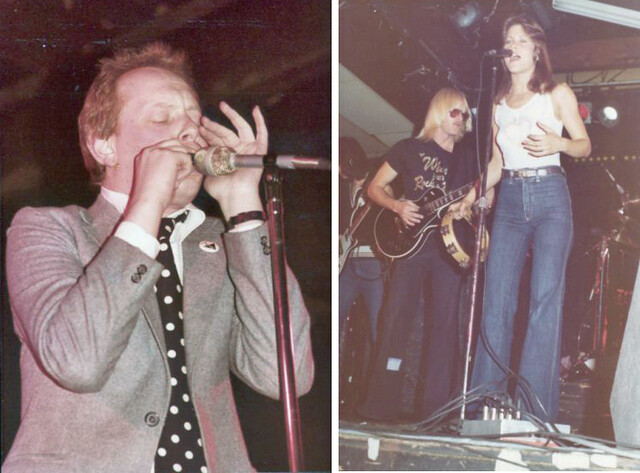
The photo on the left shows a young Joe Jackson; on the right, Suzi Quatro. The photos were recently shared with me by PermaRec reader Tom Common, who describes himself as "an antiques dealer specializing in postcards, paper, and photographs." He won't tell me where he's located, but his story, and the story of these photographs, is an intriguing one. I'll let him tell it in his own words:

Around the year 2000, I went to a local flea market. One of the dealers had a large box full of photographs. There were hundreds of folders of color and black-and-white photographs, most of them accompanied by negatives. Most of the photos were of rock musicians (mostly bar bands, but the photos looked very professional, like the photographer had been hired to do publicity shots), plus there was a little bit of personal family stuff and another large group of train pictures.

I quickly negotiated a price, paid, and asked the seller where he had acquired the photos. He told me that he had gone to a garage sale in a suburb and that a woman had sold them to him.

When I got home, I sorted through the photos and I was amazed. There were photos of bands that I remembered from the 1970s, interior shots of famous local bars with the employees, and shots of musicians practicing and relaxing backstage. In addition to photographing local bands, the person had seen shows by big-name acts like Bruce Springsteen, Tom Petty, Todd Rundgren, etc. The photographer had also attended some of the huge stadium concerts. He did not have as much access to those shows, but they are pretty good shots considering the equipment he had.

The train photos were also interesting, as this person traveled all over the state documenting trains and stations. The family photos were the smallest part of the collection, and there were no family names or other identification.

I organized the photos as best I could (some had been removed from their folders and mixed up). And I attempted to identify the bands, using what little info was included on the envelopes. Then I put the collection on the back shelf for a while, always wondering who, what, and why.

Fast forward about five years. I was listening to a local college radio show, and a guy from a band was being interviewed live. He was in one of the bands that had been photographed. I called the show and spoke with the guy, explained the situation, and arranged to meet with him at a coffee shop.

On the scheduled date, two guys showed up to meet me. They introduced themselves, and it turned out that one of them was a photographer. I had brought along some of the photos I'd purchased at the flea market, and I showed the photos to them. The photographer guy said there were only three people doing this kind of work at the time, and he said he was pretty certain it was "John Doe." I asked about John Doe, and the guy said that he believed Doe had ended up in prison.

After the meeting I went home and did a bit of internet research. Sure enough, John Doe had been incarcerated, but he was out on probation.

Doe had been in prison at the time I bought the photos, My best guess is that his wife sold the photos. I think the reason there were so few family photos is that the wife kept most of those.

In any event, the photos of the bands are an important document of a specific time when rock music was the life blood of my hometown. I know they could be crafted into a fine book. I also know I would have to get in touch with all the people in the bands and find out stuff about the fans and behind-the-scenes people. But I am unskilled at the business of book publishing, and I have concerns about John Doe's role in all of this. I have not yet attempted to contact him.

I have talked to a few people and their reaction has been mixed. I honestly do not know how to proceed. Can you offer me any advice?

As I explained to Tom, I'm no attorney, but my layman's understanding of copyright law is that the original photographer -- whether it's John Doe or someone else -- still holds the copyright to the photographs, and that the photos therefore can't be published without his permission or compensation. But Tom should really consult a legal professional on that point.

What I do feel qualified to comment on is the question of whether Tom should contact John Doe. Tom hasn't shared John Doe's real identity with me, or the details of his criminal record, so I can't offer fully informed advice here, but my general feeling is that Tom should go ahead and contact him. Just because someone's an ex-con, that doesn't make him a bad or dangerous person. If he's out on parole, then he's supposedly paid his debt to society. And he may have an emotional connection to those photos, which he's probably assumed are gone forever.

As I've said before, I'm a storyteller, so my instinct is always to connect the dots and follow where they lead, even if they lead in some potentially uncomfortable directions. I hope that's what Tom ends up doing. If you have other advice for him, feel free to post it below, and/or contact him directly. He's eager to hear feedback (and not just of the squealing electric guitar variety).

Saturday, December 22, 2012

Screen shot 2012-12-21 at 3.01.55 PM.png

Screen shot 2012-12-21 at 3.02.23 PM.png

Screen shot 2012-12-21 at 3.05.46 PM.png

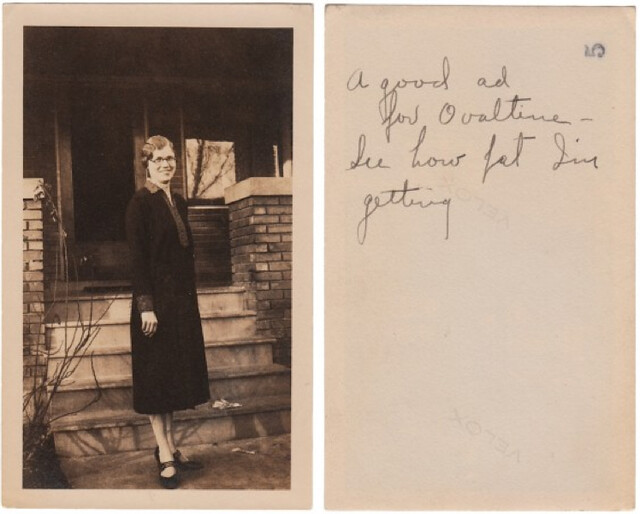
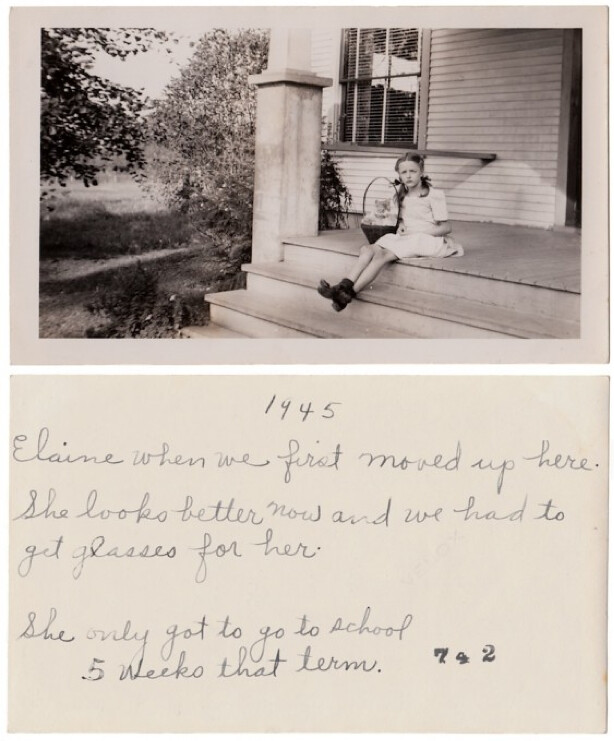
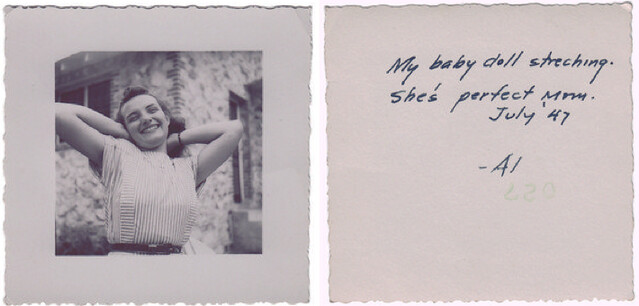
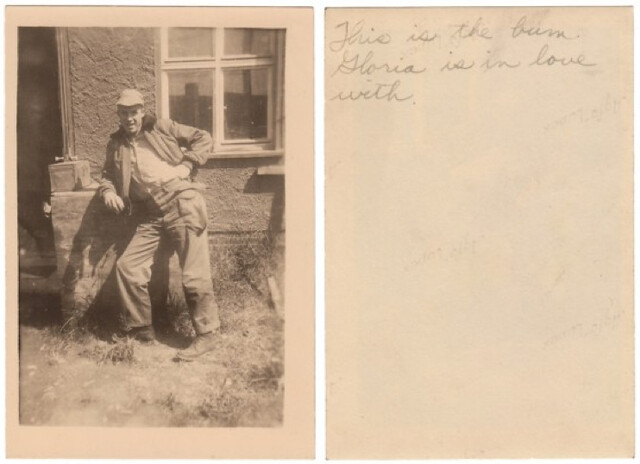
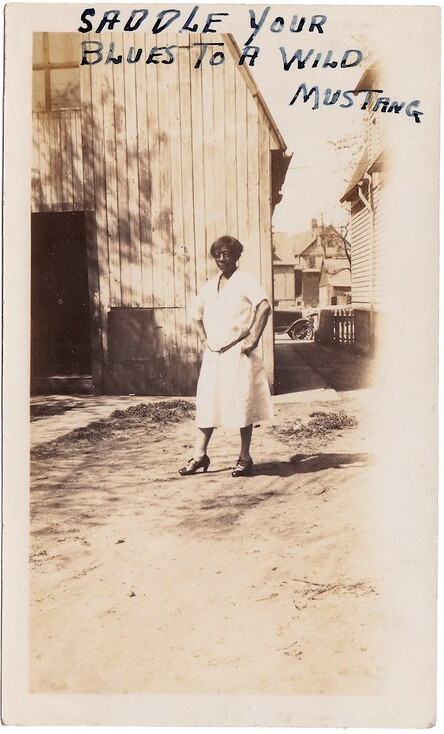
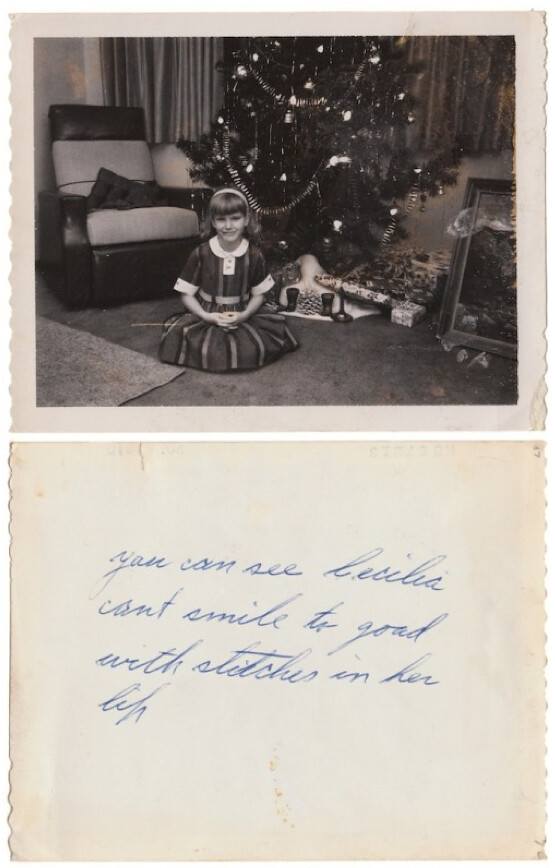
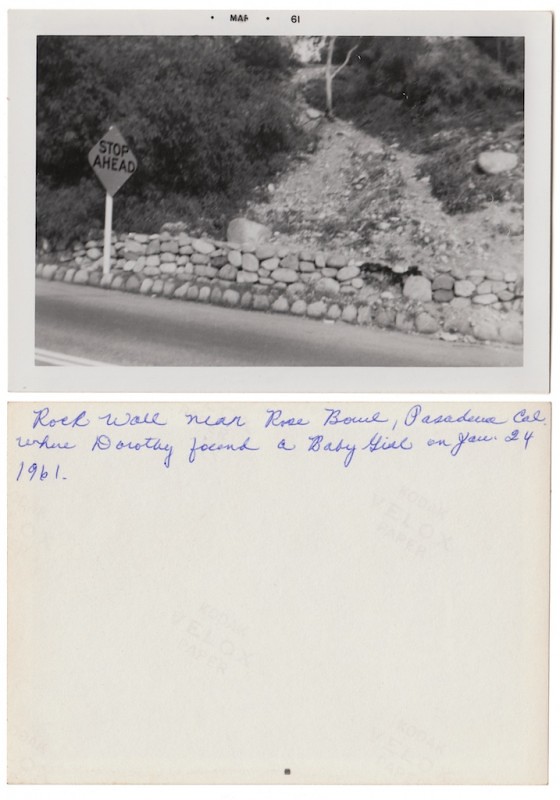
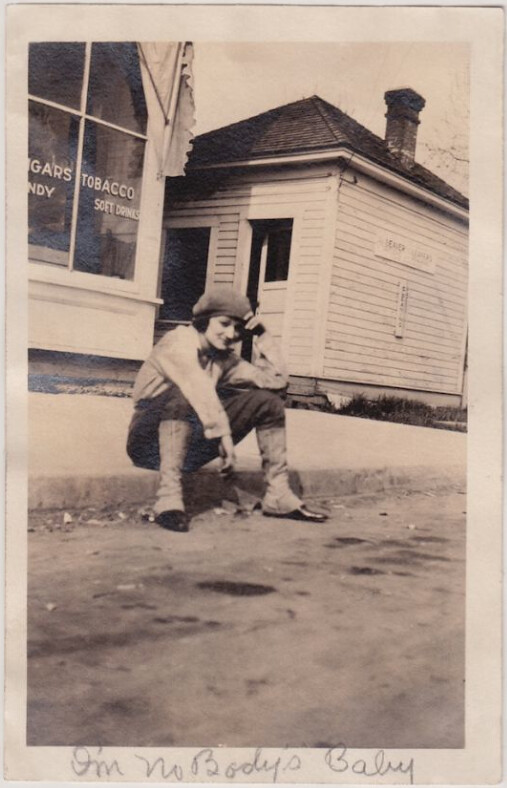
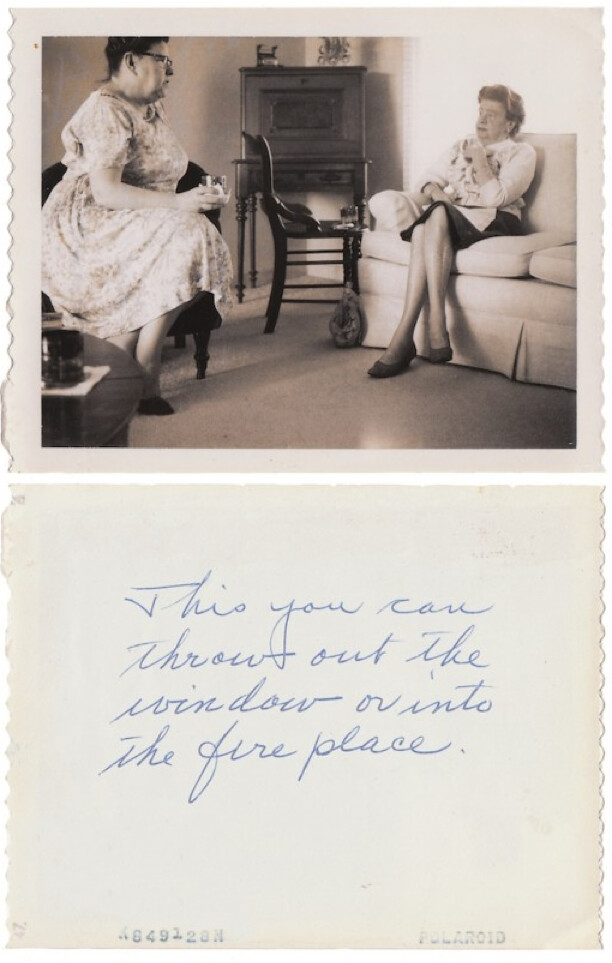
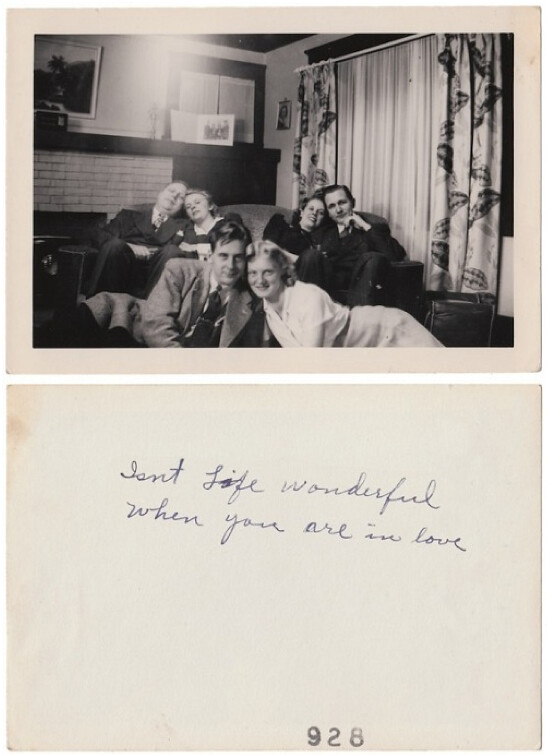
The three front/back photo pairings you see above are all from the book Talking Pictures: Images and Messages Rescued from the Past by Ransom Riggs, who puts an unusual spin on a common hobby. He collects old snapshots that he finds at flea markets and junk shops (nothing new about that), but only if they're annotated with handwritten inscriptions -- usually on the back, but sometimes on the front.

Several hundred of photos from Riggs's collection are compiled in Talking Pictures, and the result is a compelling series of partially told stories that leave you wanting to know more. As you page through the book and read the annotations, you can't help but wonder "Hmmm, what happened to that couple?" or "How did that guy end up with a black eye?" or "Did that smallpox-ridden child survive?"

It's a great book, and very reasonably priced. Highly recommended to all PermaRec readers.

I'll close this entry with an assortment of additional images from the book -- enjoy.

Screen shot 2012-12-21 at 3.26.29 PM.png

Screen shot 2012-12-21 at 3.05.07 PM.png

Screen shot 2012-12-21 at 3.03.30 PM.png

found-a-baby-girl-560x800.jpg

Screen shot 2012-12-21 at 3.04.26 PM.png

Screen shot 2012-12-21 at 3.28.06 PM.png

Screen shot 2012-12-21 at 3.06.05 PM.png

Friday, December 21, 2012

image.jpeg

I've written several times now about Russell Ries. As you may recall, he's the guy who purchased a cigar box full of old photos and other personal effects, all pertaining to the same person (who I refer to as John Doe). Russell did a little digging and discovered that John Doe was accused child neglect that resulted in the death of one of his children. Russell also discovered that while John Doe himself was now deceased, another one of his children was living in the Nashville area -- where Russell himself lives. He wondered if he should get in touch with the son and offer the photos and other items to him, or if he should keep his distance because the subject might be too painful. Several Permanent Record readers offered their own opinions on this.

Russell ultimately decided to get in touch with the son, whose name is Bill. (I had referred to him as Andy, to help protect his identity, but Russell is now ready to use his real first name.) Bill agreed to meet with Russell, and the meeting took place in Westmoreland, Tennessee, a few days ago. The photo above shows Russell on the left and Bill on the right.

Russell provided a detailed account of the meeting, including the following:

Until starting my drive to Westmoreland that morning, the full reality of the situation hadn't dawned on me. This was probably the final chapter of my connection to Bill and his family.

I had purchased the cigar box over Memorial Day weekend in 2011. And since that time, I had come to see myself as something of a steward of the memories contained within it. I had always hoped this day would come. But now faced with it, I began to lament the loss of my role in the story.

The truth was, no matter how close I may have felt to Bill or his father, I was a complete stranger to him. Some guy who, only last week, sent him a letter about pictures of his dad. He had been a compelling character in my life for over a year but I had literally just entered his. Would I be able to find any real connection with this man when we met? How would I feel about preserving and returning these memories to him if he turned out to be a jerk? It was a petty and small way to feel, I know. Fortunately, it proved to be without merit when we finally met.

There's more -- a lot more. To see how it all turns out, check out the full story on Russell's blog.

+ + + + +

A few housekeeping notes: It's been over two weeks since the last post here on the site. Sorry about that -- been busy with other projects. But Permanent Record is very much alive and well. In the coming days I'll be posting about a very PermaRec-ish book that I'm extremely excited about, along with the latest installment of Charlene Dodds's rephotography project, and hopefully a few other things.

Several people noticed the note at the end of last month's PermaRec article on Slate, which mentioned that there would be no more Slate articles for the foreseeable future. Just to clarify that, I plan to keep researching and investigating the stories behind the Manhattan Trade School report cards, and the Slate editors are happy to keep publishing PermaRec articles if I come across a student with a particularly powerful story. But they feel the basic goals of the series -- to tell about the school and its students -- have now been met. So any future articles will only be about report cards with particularly extraordinary stories to tell. (Of course, I think they're all extraordinary, but I understand the editors' point.)

My best wishes to all PermaRec readers for a safe and happy Christmas.

Thursday, November 15, 2012

The video shown above tells the story of a stash of World War II-era love letters that were found in a box that washed ashore in New Jersey in the wake of Hurricane Sandy. The man to whom the letters had been sent died in 1991; the woman who sent the letters is still alive, although she hadn't saved the letters herself, so it's not clear who had acquired them or how they ended up getting washed out to sea. In any event, it's another classic Permanent Record-type story. Further details here.

(My thanks to reader Sue Kendall for tipping me wise to this one.)

+ + + + +

Men at Lunch update: As promised, on Wednesday afternoon I went to see the documentary film Men at Lunch, which is about the famous 1932 photograph of ironworkers posing on a high-rise steel girder. It was good, but not great. A good chunk of the film is devoted to explaining why this is such an important and iconic photograph -- good stuff, but done in a very familiar, PBS-ish way. From a Permanent Record perspective, I was a smidge disappointed, because the filmmakers were able to positively identify only two of the 11 men in the photograph. A nice movie, but ultimately unsatisfying.

Monday, November 12, 2012

6.jpg 121.jpg 8.jpg

The fellow in the photographs shown above was named Lloyd Domier. He died in 1995 after a life spent primarily in North Dakota. These photos of him, and over 100 other shots of Lloyd and his family, were recently found in a Dumpster by someone in Florida. The photos were eventually sent to the Grand Forks Herald newspaper, which was able to get in touch with Lloyd's brother, Douglas Domier, to whom the photos were ultimately returned.

That's the short version. You can get more details in this article, which includes a link to a slideshow of additional photos.

(Special thanks to reader Tim Fry for tipping me off to this one.)

Sunday, November 11, 2012

Screen shot 2012-11-11 at 9.25.10 AM.png

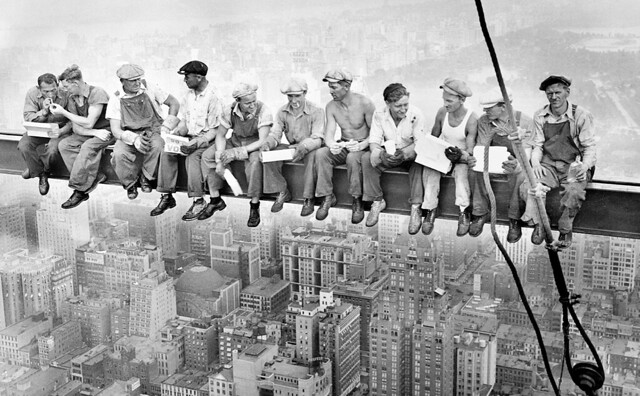
You've almost certainly seen this photo before. Taken in 1932, it shows an assortment of immigrant ironworkers taking their lunch on a steel girder at a New York City construction site. It has become one of history's most iconic New York photographs.

But who are the men shown in the photo? They've always been anonymous. For that matter, even the photographer's identity has long been unverified. (The photo has often been attributed to Lewis Hine, but that turns out to be inaccurate.)

A new documentary called Men at Lunch aims to solve these mysteries. I haven't yet seen the film, but it sounds very Permanent Record. You can read about it in this intriguing article. The film itself will screen this Wednesday, Nov. 14, at 3:15pm at the IFC Center in Manhattan. I'm going to try to attend. Anyone care to join me? If so, let me know.

Meanwhile, here's the film's trailer:

+ + + + +

Slate update: I'm told that the long-delayed 10th installment of the Slate series will finally be published this week. Hope so! Thanks for your patience.

Wednesday, June 13, 2012

pb-120611-civilwar-007.photoblog900.jpg

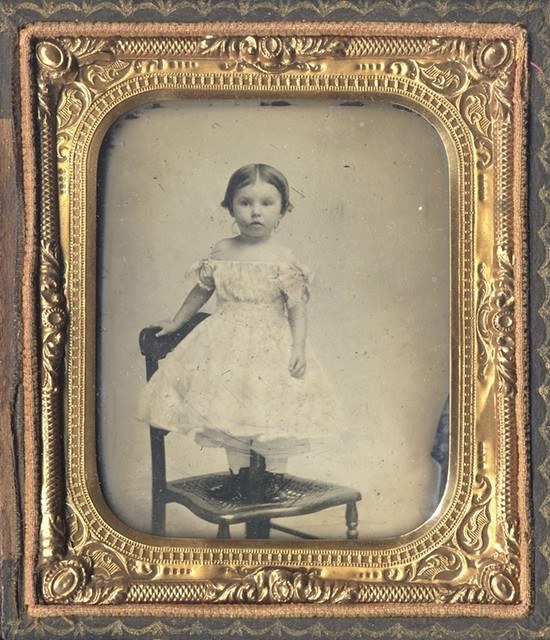
Do you recognize this little girl? If so the Museum of the Confederacy would like to hear from you.

The picture is one of eight photographs that the museum is trying to learn more about. They were found on the battlefield during the Civil War, in the pockets of dead soldiers. According to this Associated Press article:

Typically [the photos] were found by another soldier and handed down through generations. Ultimately an attic would be cleared or a trunk would be emptied and the photo would be given to the museum. Some have been in the museum's possession for 60 years or more. ... [N]ow museum officials are releasing the unidentified images ... on the admittedly remote chance someone might recognize a familial resemblance or make a connection to a battlefield where they were found.

You can see all eight photographs here. Some of them remind me a lot of the photos on the Permanent Record report cards, and the museum's quest to find the stories behind the photos feels a lot like the Permanent Record project, no? Hope they're able to connect some of the dots.