Showing posts with label Found Photographs. Show all posts

Friday, April 1, 2016

Lost and Found: Returning a Photo Album to Its Rightful Owner

Click to enlarge

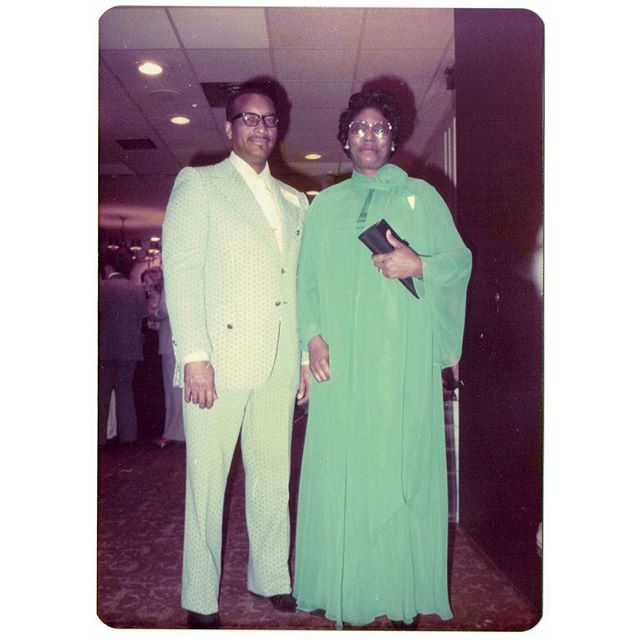
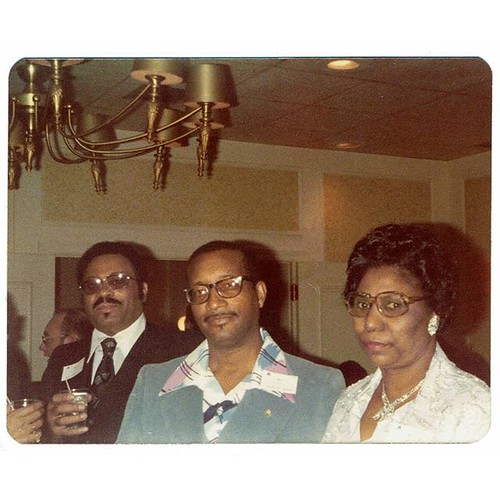
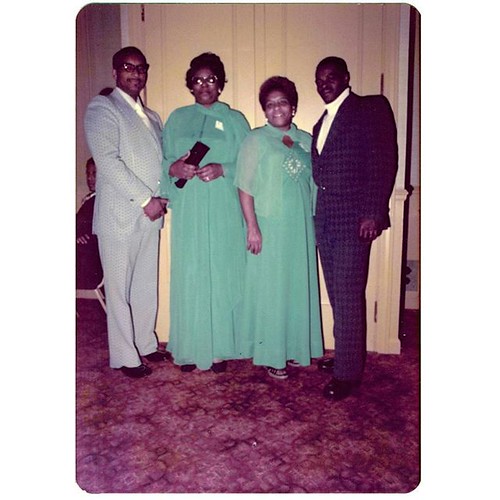
Last summer I posted an entry about Josh Koonce, who had rescued two old photo albums from an evicted storage unit in Chicago and was hoping to reunite them with their rightful owner. The image above shows part of a spread from one of the albums, and you can see additional photos here and here.

I'm happy to report that Josh has hit paydirt. Here's an email I received from him on Friday, April 1:

Not long after our correspondence last year, I was removing photos from the album for scanning and I found a name on the back of one of them. The photo showed a young woman and on the back was her name, along with "Age 16" and "11th grade." It was a name not mentioned elsewhere in the album. I will call her by her initials, JE.

Google — or rather, one of those weird whitepages websites that still exist on the internet for some reason — turned up an address in the Chicago south suburbs along with a publicly listed telephone number.

And what I did with that info was ... procrastinate for about nine months. I'd be a terrible reporter.

Earlier this week I finally worked up my nerve and decided I had to make this call. The number worked and the man who answered only told me his first name (I'll call him J). Although he seemed skeptical at first, he said he was JE's husband. I asked if I could talk to her, he didn't want to let me do that, but he definitely knew about the albums and wanted to meet up so he could retrieve them.

I told J I'd give him the albums even if he came alone, but that I'd prefer to give them to JE as well, since they were photos of her and her family.

We arranged to meet at a Dunkin Donuts near my office on my lunch break earlier today. I brought the albums, and J and JE were both there to meet me. They went through the albums right there with me, and it was pretty emotional — they did not think they were going to see these photos again. JE's father had placed the albums with some other belongings in the storage unit before succumbing to dementia and eventually passing away. By the time the family knew the storage unit was being evicted, it was too late to save anything.

I declined their offer of a reward, they declined my request for a photo, and I apologized that it had taken me so long to get the photos to them.

Very nice. Congrats to Josh on the successful resoluation of this story.

Thursday, March 24, 2016

The Rescued Film Project

Click to enlarge

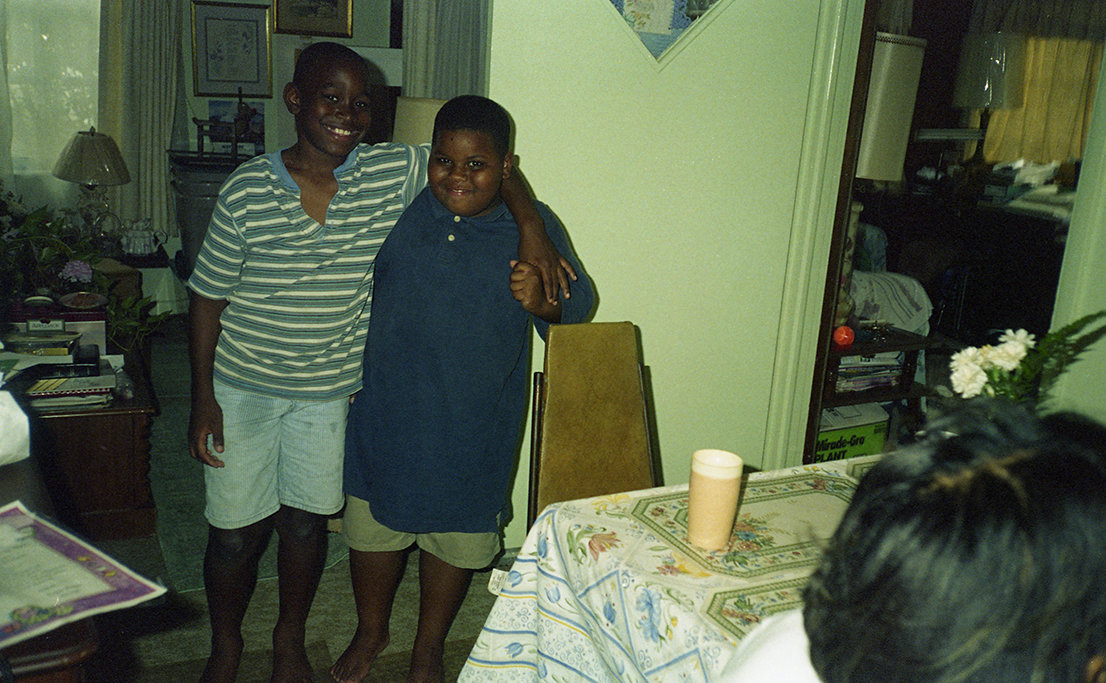
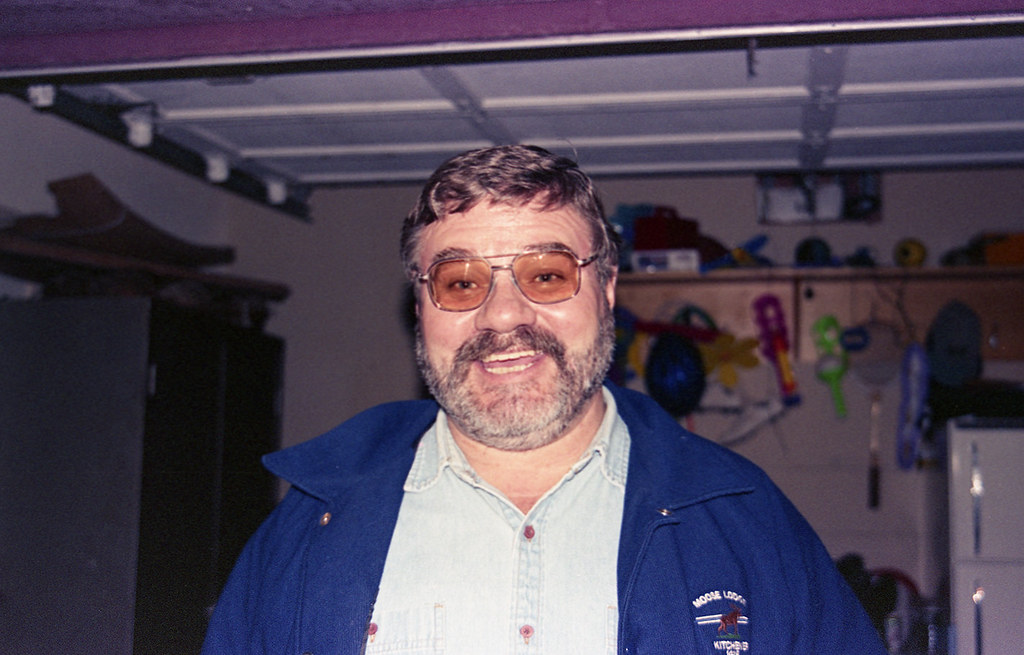
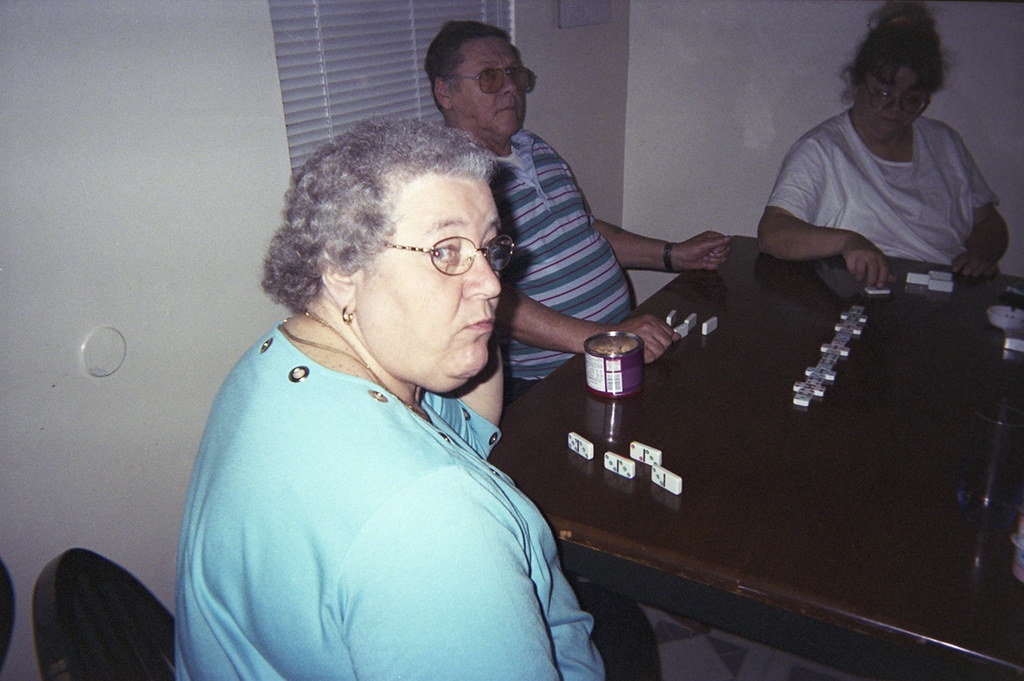
I've written plenty of times about found photographs. But Levi Bettwieser, a photographer and video producer from Boise, Idaho, takes the found imagery phenomenon a step further: He specializes in found film — old undeveloped rolls that he finds at flea markets and thrift stores, or via online auctions. He then develops and prints them and shares the results on his excellent website, the Rescued Film Project.

The photos shown at the top and bottom this entry are among the many thousands of images Bettwieser has produced from these film rolls. As usual with found photos, some are excellent and some are, well, not so excellent, but all are interesting simply by virtue of having been orphaned. All the usual questions about found photography apply here: Who are the people in these photos? Where are they now? And so on. But Bettwieser's project adds additional questions to the mix: Why didn't the people who shot these rolls of film get around to developing them? If the film was neglected, how did it avoid being thrown out?

If you want to know more, there's a good article about the Rescued Film Project here — recommended.

(My thanks to Mary Bakija for letting me know about this one.)

Wednesday, March 9, 2016

Who Was Robert James Campbell?

Click to enlarge

The woman in the photo shown above is named Jessica Ferber. The photos spread out around her are the tip of a very large iceberg that floated into her life 13 years ago — a stash of photos, negatives, notes, letters, documents, and other materials that were left behind by a homeless man in Vermont who died in 2002. Ferber had just graduated college when she volunteered for the task of going through the deceased man's belongings, just to see if there was anything of value.

She ended up with more than she'd bargained for. The homeless man, Robert James Campbell, had been a professional photographer, and his work indicated that he'd had close ties to the New York jazz scene of the late 1950s and 1960s. Ferber, who had studied photography in college and was working at a photo processing lab at the time, immediately fell in love with Campbell's photos and felt compelled to answer the questions that the materials were raising: How had such a talented artist ended up homeless? Why had he held onto so many of his photos and negatives? Why did Google searches turn up so little evidence of his photographic career? Why had only two people — both from the homeless shelter where he had stayed — attended his funeral?

In short: Who was Robert James Campbell?

Ferber's 13-year attempt to answer that question became an obsession. She changed to a night job so her days would be free to research, cut back on socializing with friends, and learned everything she could about the jazz world that Campbell had inhabited. (She's written a good synopsis of the project here — highly recommended.) Her odyssey has now resulted in an excellent book, called Rebirth of the Cool, which features a few short essays and dozens of Campbell's photographs, many of which are stunners. Here's a sampling (if you can't see the slideshow below, click here):

You can find some additional info and photos here.

Ferber's story feels very familiar to me. Just as Campbell's belongings dropped into her lap, the Manhattan Trade School report cards dropped into mine. We both felt a strong responsibility to explore these materials and do right by the people behind them. And we both ended up sharing those people's stories with the public.

But Ferber went deeper than I did. Her project appears to have been the defining experience of her adult life, while the report cards have always been one passion among many for me. Even now, there are many dozens of report cards whose backstories I could (and really should) still investigate, and perhaps I will at some point when I have more time, but the project is back-burnered for now.

Does this mean Ferber is more obsessive than I am? Does it mean I'm lazier than she is? Does it reflect the fact that her project is focused on a single person who died recently, while mine encompasses hundreds of people, many of whom died decades ago? I think all of those things are probably true, at least to some degree.

In any case, Ferber's project is a winner, and Rebirth of the Cool is a great book. Don't miss.

Thursday, October 22, 2015

Trying to Unlock the Mysteries of Old Polaroids

Click to enlarge

We know the date when this Polaroid was taken — Nov. 18, 1978 — and we know it shows a child named Nuchie and her father. But who were they, and where was the photo taken, and by whom?

Zun Lee doesn't know. The photo, which he purchased on eBay, is one about 3,500 discarded and found Polaroids that he's accumulated, all of them showing African American families in everyday situations. He's interested in documenting black life, but he's also fascinated by the question of how these photos became separated from their owners in the first place. In this excellent New York Times story and accompanying slideshow, he describes the photos like so:

There looms over them that question of dislocation and dispossession that made these images available to us. What are the circumstances that allow families to lose these images? It cannot be a good circumstance. You can possibly conjecture a history of gentrification, foreclosures. Some of the stories may not be so grave, maybe they just wanted to get rid of them. In any case, there are a multitude of interesting stories you could conjecture [regarding] how these images are available to us.

I'm sure most of us who are fascinated by found photographs have gone through that same thought process. How did these photos become orphaned and end up in this flea market (or scattered in an alleyway, or up for sale on eBay, or whatever)? Didn't anyone want to keep them?

Lee is trying to answer those questions through a new project called Fade Resistance, via which he hopes to use social media to help find the people and families shown in the photos and then return the Polaroids to them. It has the potential to be an amazing project — I'll be rooting for him.

Friday, July 3, 2015

Another Lost Photo Album

Click to enlarge

I recently wrote about Robert Townley, the guy who found an old photo album floating in the Georgetown Canal. That entry struck a chord with PermaRec reader Josh Koonce, who just sent me the following note:

The Robert Townley piece inspired me to do something with two photo albums [shown above — PL] that I rescued from an evicted storage unit in Chicago about four years ago. At the time I was working for an online retailer who used a storage facility as warehouse space. Everyone knows how these storage auctions work these days, but often there is stuff left over after the auction that the buyer won't even take. It usually gets dumped. These albums were in that category.
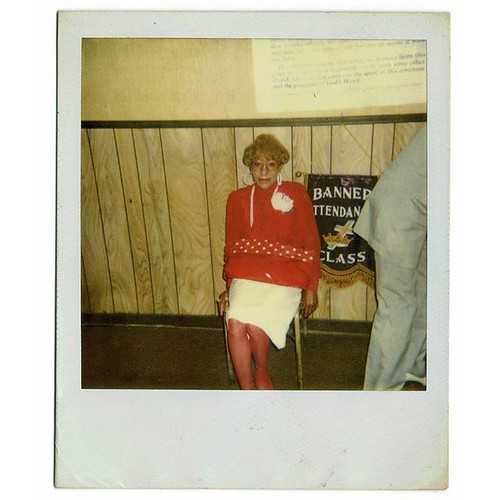
Josh says the blue album contains about 75 photos, three funeral booklets, and a newspaper clipping; the one with the wood veneer cover contains about 130 photos. The photos appear to document the life of an African-American family, presumably from Chicago. Here's a small sampling:
#foundphoto #found #foundphotography #Chicago #selfstorage #nofilter #film #archive #vintagestyle #vintage #bluedress #suit #formalwear #found #foundphoto #Chicago #selfstorage #nofilter #film #archive #vintagestyle #vintage On reverse of print: "Dec 1976" #foundphotos #found #Chicago #photooftheday #film #archive #vintagestyle #vintage #bluedress #suit #formalwear Banner Attendance Class? #found #foundphoto #Chicago #selfstorage #nofilter #film #archive #vintagestyle #vintage #poloroid #instantcamera

Josh wants to find the family shown in the photos. "There is an address in one of the albums, and I drove by it, but the house appeared unoccupied," he says. "I searched the internet for the few names in the albums and didn't come up with much. There is also a church funeral bulletin in the blue album -- a lead I should probably follow up on."

For now, Josh is beginning to post the photos on Instagram, Flickr, and Twitter. If you recognize the family or have any leads, you can contact him via those accounts.

Monday, June 29, 2015

A Mystery Floating in the Water

Have you ever seen an intriguing object bobbing along in the water? Robert Townley, a web developer who lives in Washington, DC, was recently walking along the Georgetown waterfront when he saw a booklet of some kind floating in the water. He took the photo you see above and then borrowed a net from a nearby fisherman to retrieve the book.

It turned out to be a photo album, and it apparently documented the first week of a baby's life. Obviously, the photos are now water-damaged, but many of them are still heart-tuggers:

There's a much more detailed version of this story, along with more photos, on Townley's website.

Townley is now wondering, just as you probably are, "Who are these people, and how did their baby album end up in the Georgetown Canal?" He's set up a Facebook group to help investigate the album's backstory and, ideally, return it to its rightful owners. Feel free to join the group and contribute to the sleuthing!

(Big thanks to Mike Engle for letting me know about this one.)

Saturday, April 4, 2015

Artifacts in Briefcase Reveal Long-Ago Affair

In May of 1969, a 39-year-old German businessman named Günter K. began an affair with his 24-year-old secretary, Margret S. Both were married. Over the next 19 months, they engaged in an extended series of sexual romps while traveling hither and thither. Günter's wife eventually learned of the affair and confronted Margret, who threatened to withhold sex from Günter unless his wife apologized to her — which, incredibly, she did.

We know all this because of a large cache of unusually detailed documentation — photographs, receipts, a journal, snippets of hair, empty birth control packaging (examples of which are shown throughout this blog post) — that was found in a briefcase purchased at a German estate sale 30 years after Günter and Margret's affair. Those items were the subject of a book and gallery exhibition in Germany in 2012, and now the exhibition is making its American debut under the title "Margret: Chronicle of an Affair — May 1969 to December 1970" at the White Columns gallery in New York.

The White Columns web page for the show provides good background info. Here's an excerpt:

The archive [of materials found in the briefcase] consists of hundreds of color and black-and-white photographs showing the same woman (Margret S.) in various places and poses: sitting at a typewriter at the office, traveling, or in hotel rooms, undressing, changing, or getting dressed. In the archive, inscribed with dates, are samples of Margret's hair (from both her head and pubic region), her fingernails, and empty contraception packages, as well as a blood-stained napkin. Receipts from hotels and restaurants, as well as travel documents and tickets from theaters, reveal insights into the places the couple visited as well as acknowledging their preferences and interests. Personal notes and diary entries, mostly written with a typewriter, resemble official records. The focus of virtually all these writings is the sexual act, its frequency, its endurance, etc. — all factually underlined yet at the same time described in a coarse and often obscene language. In its conceptual denseness — resulting partly from the obsessiveness of the documentation — the collection seems to reverberate with the practices of artists such as Sophie Calle, where the viewer often finds themselves in a conflicted space, exposed to their own voyeurism.

Faaaaascinating. I haven't gotten over to White Columns yet to see the exhibit, but I definitely plan to. You can see more photos from the show here.

Based on what I've read so far, it's not clear to me if any attempt has been made to find Günter and Margret (who, if they're still alive, would now be 85 and 70, respectively). I hope to learn more about that when I check out the exhibit.

Monday, May 12, 2014

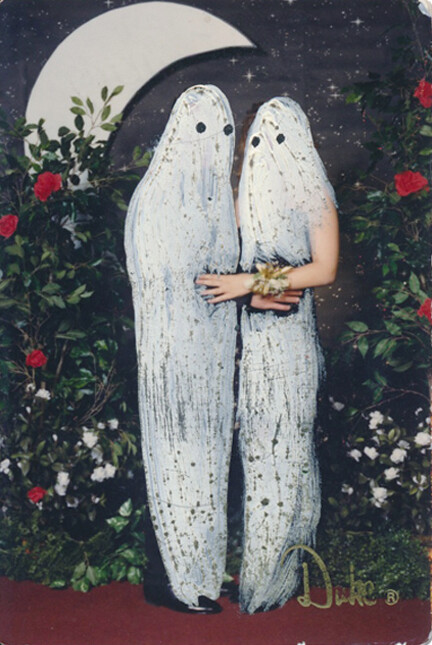
Last month I wrote about the artist Angela Deane, who acquires found snapshots and paints over the people in them to turn them into ghosts. Now I've become aware of another artist who repurposes found snapshots: Vik Muniz, a Brazilian who cuts up old photos and, as you can see above, creates new collage-based images out of them.

Muniz just had a gallery show here in New York, where I live. Unfortunately, I found out about it two days after the show ended — dang. You can learn more about Muniz at his website and at his Artsy page. Several more of his collage images are shown below (for all of these, you can click to enlarge):

(Special thanks to Heather McCabe for letting me know about this one.)

Tuesday, April 1, 2014

ghost.png
Click to enlarge

Permanent Record is all about uncovering the stories lurking within found objects. It's a determinedly fact-based approach, employing archival research to determine what really happened.

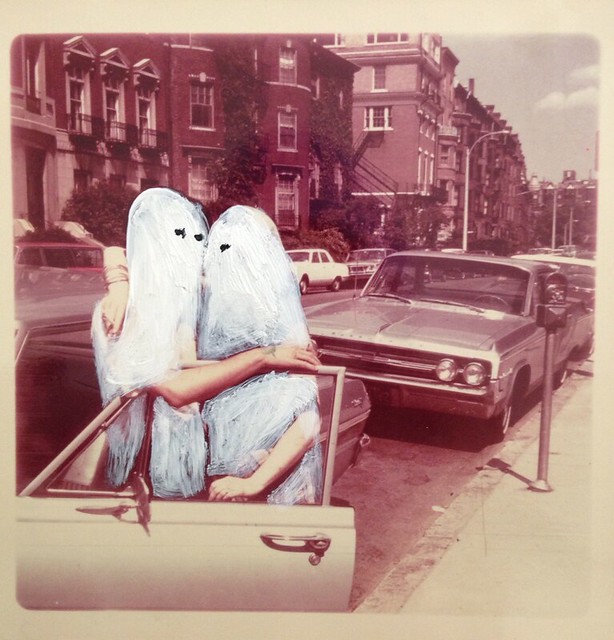
But found objects also provide lots of opportunities to spin fantasies about what might have been, or to project ourselves into other people's stories, or just to mess around with our perceptions of reality. That's the approach taken by the Florida-based artist Angela Deane, who has a very interesting specialty: She procures old snapshots and paints over most of the people in those photos, transforming them into ghosts. The resulting images, which she calls ghost photographs, can be seen on her Tumblr site (from which all the images in this PermaRec entry were taken).

Deane's response to found objects is obviously very different from mine, which is precisely why I find her project so interesting. It would never even occur to me to modify or alter an artifact like she does. But hey, that's why she's an artist and I'm a journalist, right?

In any case, Deane and I both find inspiration in found objects, so I wanted to learn more about her project. She recently agreed to answer a bunch of my questions via email:

Permanent Record: When and how did you decide to start this project? What was the impetus?

Angela Deane: I started it by a happy accident, really. In the fall of 2012 I had an artist residency in New Mexico. I had bought a bunch of photographs on eBay and at thrift stores, which I planned to use to create collages. When I spread out the photos in my studio, I started wondering what would it be like/mean/look like to paint a ghost over a photograph, to erase the particular of an identity or the ownership of an experience. And so I launched in.

Hours later I sat back and stared down at about 40 or so "ghosted" pictures and was blown away. I knew I was on to something.
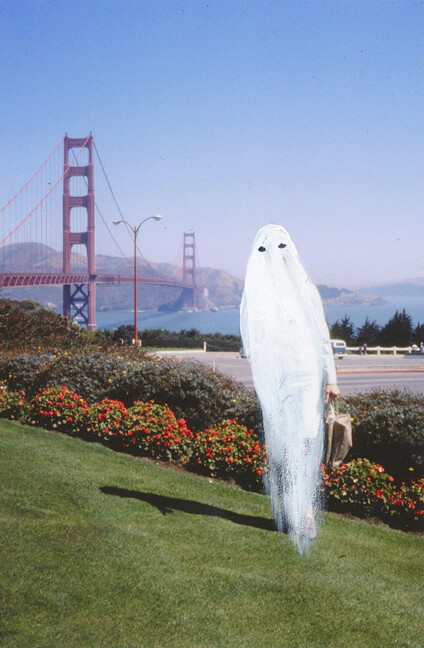
ghost3

PR: Roughly how many ghost photos have you made? Have you posted all of them on your Tumblr site? If not, how many more have you done besides the ones on the site, and how do you decide which ones go on the site and which ones don't?

AD: I'm on about number 325. Only a handful are on the Tumblr site. Being fairly new to it, I'm taking my time and picking and choosing mostly on whim. Recently I've been sourcing photos based on themes (embraces, birthday parties, parades), so they may post in waves of these moods for some time to come.

PR: Where do you get the found photos? Like, do you hunt for them at flea markets? Did you already have a big stash of them when you started this project?

AD: My initial stash was probably about 100, sourced mostly from eBay and from some from thrift stores in Miami and other places in Florida. In New Mexico I met this guy who had a whole garage full of photos — he even had a deal with all the local thrift stores to give him any of the photos they received first — so I struck a deal with him and got to go through a lot of boxes out there. Got some great ones. I'm back south for the spring and summer, so I'll definitely be hitting up some flea markets! I'll be looking for some good vacation photos, I think.
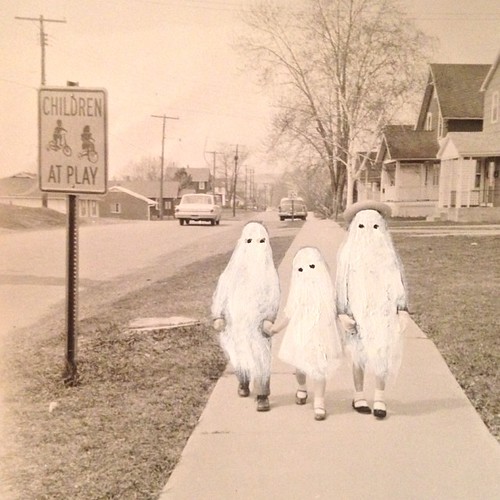
ghost2

PR: How do you decide if a photo is "good enough" or "right" for being painted? Is there a particular type of scene (or feel, or whatever) that you look for?

AD: Mmmm, it remains much of a mystery why I choose the ones I do. In general I'd say I look more for color photos (black and whites make it a little more morbid; more about death, which isn't really how I think of them). I like snapshots. In essence they're just these little moments, generally when people are feeling good, are engaged with one another or with nature. I like those moments where you can feel a pulse in the inattention of what's taking place. Does that make sense?

PR: Why ghosts?

AD: There's a line from a Band of Horses song that goes, "We are the ever-living ghost of what once was." I think of these ghosts not as of people that have passed but each and every one of own experiences that has passed. How to hold memories has always been something that has provoked me to create lots of my art in life. Can we retain them as experiences or do they just turn into anecdotes?

These are intended as ghosts of moments. And in painting away the specificity of the people experiencing them, I like to think it opens things up for any of us to place or project ourselves into that space. They could be our memories now. Of course, that is what a life ends up to be — a collection of moments, experiences, memory — so ultimately I suppose it does grapple with mortality. But I don't think of them morbidly.

And I notice that the ghost photos make most people smile or laugh, which is great. I think the choice of the snapshots contributes to this. A writer on Flavorwire the other day described them as "ghosts having fun" and then did a riff on the whole celebrity mag thing and said, "Ghosts: They're just like us!" I loved it.
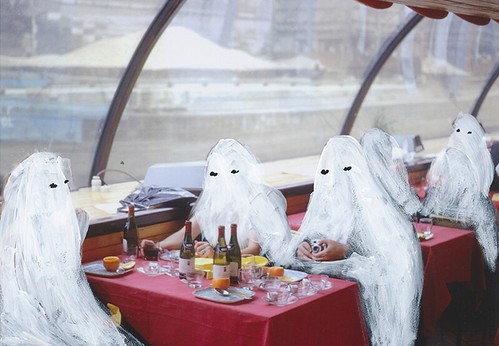
ghost4

PR: What paint (or white-out, or whatever) do you use to paint the ghosts?

AD: Mostly acrylic, sometimes gouache.

PR: How long does one of the photo paintings typically take you?

AD: Most of them take only about 30 minutes or so, but lately I've been doing some with upwards of 100 or 200 ghosts in them, and I spend a few hours with those.

PR: At first I thought you turned every person in each photo into a ghost. But then I saw you sometimes leave some people un-ghosted (like the people in the background of this shot). Is there a rule or system you use when deciding who gets ghosted and who doesn't?

AD: Not really; just a gut feeling. Sometimes I imagine myself as the un-ghosted people, looking on at the "ghosts" and "spaces to project other people in" and want to keep them intact so they can be more concrete witnesses to something magical happening. It gives a different focus to the ghosted characters. And once in awhile it's just as simple as finding their face simpatico, or liking their stance, and therefore wanting to leave them intact.
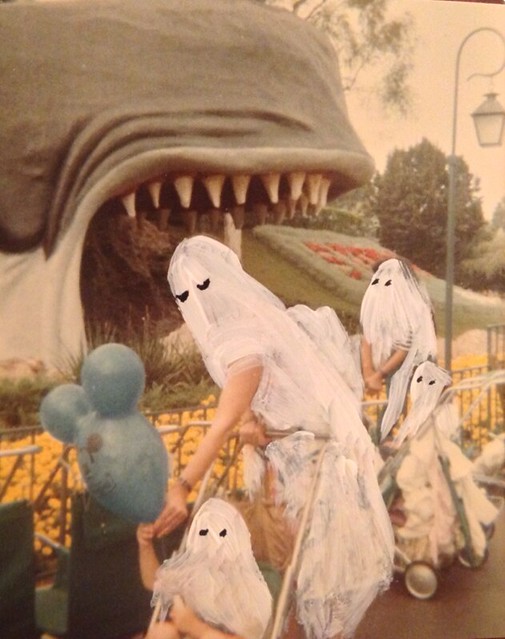
ghost6

PR: Do people send found photos to you to paint, either for commissions or just as a "I thought you'd like to have this" kind of thing?

AD: Yeah, I have a few commissions under my belt. I love doing them. This past December I had a show with F.L.A. Gallery and was put in touch with Amy Sedaris, who is crazy for ghosts and commissioned me to paint a bunch of family photos to gift to her siblings. Very cool!

PR: Have you had any other ghost photo gallery shows besides that one?

AD: Yeah, I've had a couple. The last was in Los Angeles at a friend's spot called "Matters of Space" in Highland Park. It was well-received and has brought me a couple projects in the works, which I can't get into yet but are very exciting. The F.L.A. Gallery show was also terrific and was so beneficial, as it was the first time I'd seen so many of the photos framed in a group rather than just in my studio.

PR: Have you ever tried to find any of the people in any of these photos, and/or has anyone ever told you, "Hey, I recognize that photo"?

AD: Only once, out in New Mexico! And actually I never painted over that photo because it's so great — an older man out in his front lawn, standing proud. Sometimes there are names written on the back of the photos, but I've never thought to Google anyone. Maybe I should..? Hope they'd be cool with being turned into spirits.

I also haven't done any personal photos of my own yet. But may do a few soon. Some goofy ones from junior high or something, maybe my softball team portrait.

PR: How long do you think this project will keep going?

AD: I keep getting nervous that I'm not "over" it yet. But I gotta tell you, my curiosity remains piqued with each one that I make. And they're just beginning to get out into the world to such a nice reception, which makes me feel okay for wanting to paint maybe 3,000 of these guys. These last few years I've been bouncing around cities (Miami, New York, Seattle, Gainesville), so the fact that these are so portable — very different from my larger-scale paintings — is pretty addictive.

PR: Any other thoughts about found objects?

AD: Just that I love them. Much of my décor is second-hand. I love the hunt of it, I love the slow meandering and contemplation of the hunt — it's never speedy. Stories that are embedded yet unknown, endless mystery in objects and a reminder that time just continues on.
ghost5

My thanks to Angela for answering all my questions. I was particularly struck by this passage from one of her responses: "How to hold memories has always been something that has provoked me to create lots of my art in life. Can we retain them as experiences or do they just turn into anecdotes?"

I totally relate to this notion of experience morphing into anecdotes. You start by experiencing something, and then proceed to remembering that experience. But if it's a memory that you tell or explain to others, sometimes the memory gets superceded by the telling and retelling of the memory, until you no longer remember the original experience — you just remember how you've told the story, like a script that you've internalized. Or at least that's what I've often found to be the case. Even the experience that gave birth to the Permanent Record project — the night I found the old Manhattan Trade School report cards at my friend Gina's birthday party in 1996 — falls into this category. I don't really remember much about that night anymore; what I remember is the countless times I've told the story about that night. That troubles me a bit, because it feels like the original experience has gotten lost along the way.

For those who want to see and hear more about Angela's work, here's a good video interview with her, which was produced in conjunction with one of her recent gallery shows:

(Extra-special thanks to Heather McCabe for bringing Angela's Tumblr site to my attention.)

Monday, March 31, 2014

In 2007, a 26-year-old Chicagoan named John Maloof was working on a book about Chicago history. Maloof lived across the street from an auction house that was selling a stash of several thousand old negatives shot by a Chicago photographer several decades earlier. The auction house had acquired the negatives from a storage locker after the photographer had let the locker's account go delinquent. Maloof thought the negatives might be helpful for his book project, so he bought them for $380.

When Maloof looked at the negatives, he was quickly struck by how evocative they were. The photographer — a total unknown named Vivian Maier, who died shortly after Maloof acquired the negatives — clearly had a special feel for street photography. Her senses of framing, composition, portraiture, storytelling, pathos, and wit were all superb. But Maloof couldn't find any information about her. It appeared that none of her work, including the photos Maloof had acquired, had ever been exhibited or published. The more Maloof looked at the photos, the more convinced he became that he'd stumbled upon the work of a major overlooked artist. His hunch became even stronger when he scanned some of the negatives and posted them on Flickr, where they immediately generated lots of very positive response. (That's one of Maier's photos shown above, and the other photos scattered throughout this entry are hers as well.)

Thus began John Maloof's trip down a deep, deep rabbit hole that continues to this day. He has essentially become the chief custodian and cheerleader of Vivian Maier's legacy. Or, to put it another way, he's devoted his life to hers. Along the way he learned that Maier spent most of her adult life employed as a nanny, so he interviewed many of the families that hired her, including some of the now-grown children she looked after. He also visited her family's ancestral village in France. And he sought out and acquired thousands and thousands of additional Maier negatives (many of them salvaged from another storage locker she left behind), along with hundreds of rolls of film that she shot but never got around to developing (ditto). In short, Maloof is trying to be as encyclopedic about Vivian Maier as he can be. But there are still many pieces of the puzzle that he hasn't yet been able to put together, because Maier was intensely secretive and seriously eccentric. Among other things, she appears to have had a hoarding disorder. (Storage lockers and hoarding — this story reads like a reality TV treatment.)

This odd backstory has probably helped Maloof's efforts to promote Maier's work, because it adds an element of intrigue. In any case, the art world has embraced Maier's photography, which is now compared to the works of Diane Arbus, Robert Frank, and other great American populist photographers. Maloof has successfully shepherded her photos into an assortment of gallery shows, book projects, and more. Prints of her work, sold by a New York gallery that has partnered with Maloof, now sell for prices starting at about $1800.

And now there's new documentary film called Finding Vivian Maier. I saw it last Saturday and was blown away. It's a great story, superbly told. If you're into found objects and PermaRec-ish stories, it's absolutely essential viewing — don't miss. (As a bonus, Maloof, who co-directed the film, was on hand at the screening I attended, so I got to hear some of his commentary and participate in a short Q&A session he conducted.) Here, take a couple of minutes to check out the trailer:

Some of you may be thinking, "This Maloof guy is just profiting off of this dead woman's work. That's exploitation!" That's an understandable gut reaction, but I don't think it's accurate. While I could be wrong, I don't get the impression that Maloof is getting rich off of any of this (he needed a Kickstarter campaign to help finance the documentary), especially since a lot of the money that comes in from sales of Maier's prints is getting rolled back into the project's overhead (Maloof still has thousands of negatives to scan and hundreds of rolls of film to develop). I do think he's making a living off of all this, and good for him — that's a fair trade for the time and energy he's invested. It's pretty clear to me that he cares deeply about Maier and her work, and that he's made some pretty serious sacrifices to devote himself to this project. He didn't go looking to acquire something valuable. But once he realized what he had, he felt (and still feels) a strong responsibility to bring it to light and share it with the world. By his own account, he's also fairly obsessive, so it's his nature to keep following the rabbit hole, wherever it leads.

I relate to all of this. When I found the Manhattan Trade School report cards in that discarded file cabinet years ago, I knew had to do something with them — that was the responsibility I took on when I grabbed the cards. Frankly, given how important I think the report cards are, part of me feels a little ashamed for not having made them a full-time pursuit, the way Maloof has done with Maier's photography. I respect and admire how far he's taken this project.

Anyway: If you want to know more about Maier and her photography, look here. Meanwhile, Finding Vivian Maier is tremendous. See it!

Saturday, December 22, 2012

Screen shot 2012-12-21 at 3.01.55 PM.png

Screen shot 2012-12-21 at 3.02.23 PM.png

Screen shot 2012-12-21 at 3.05.46 PM.png

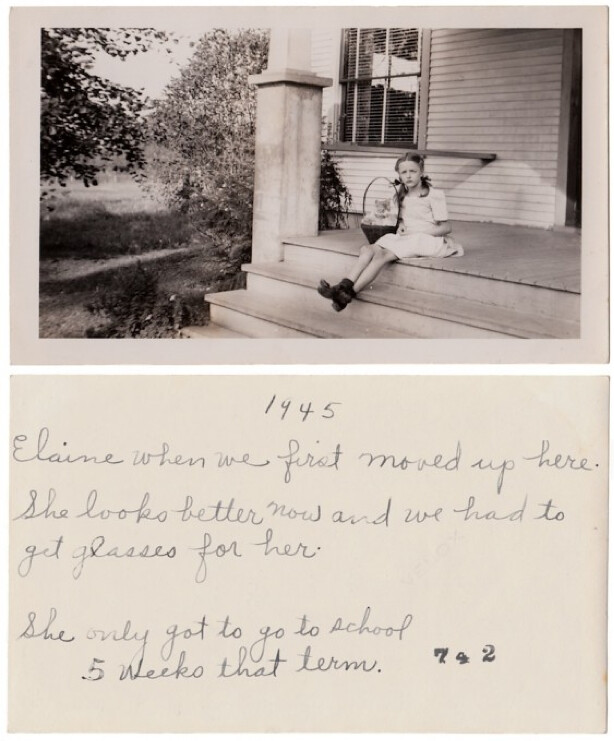
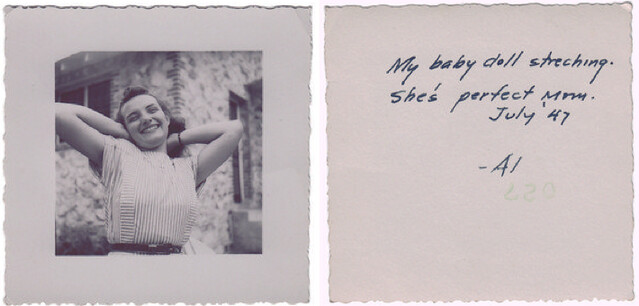
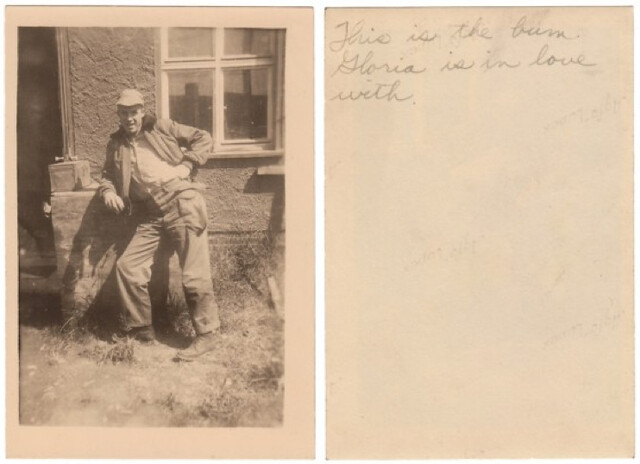
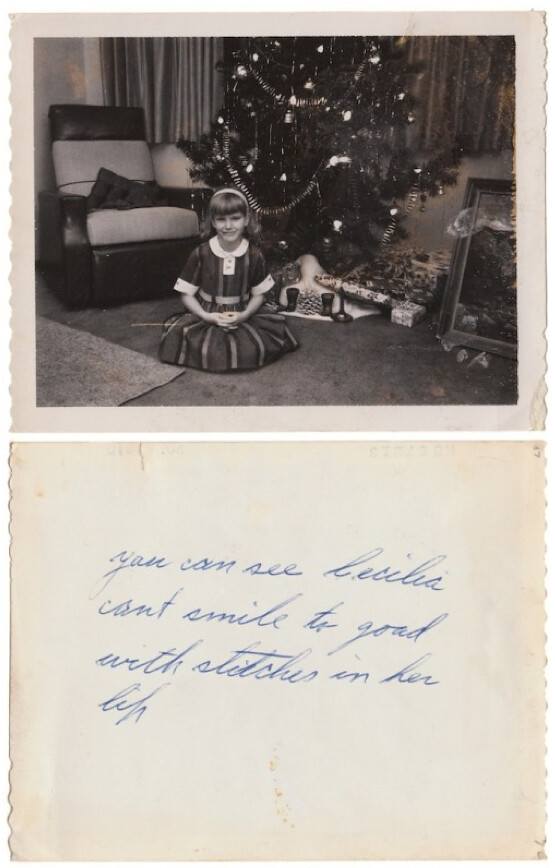
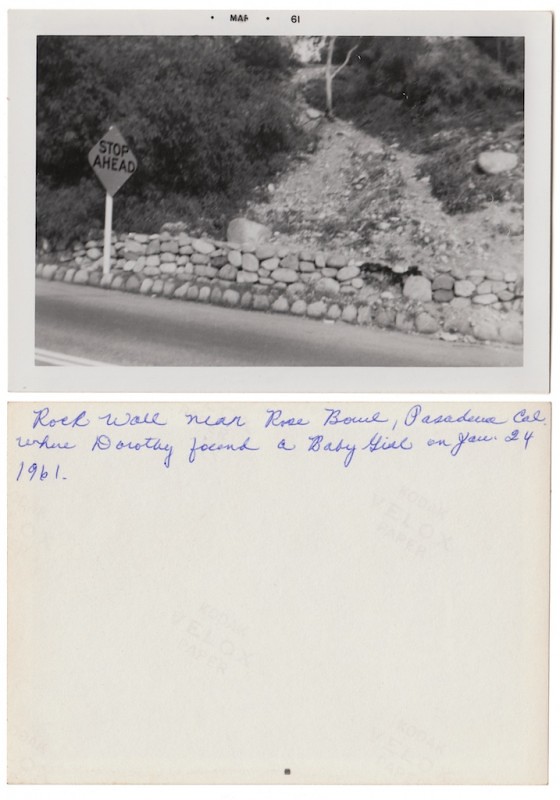
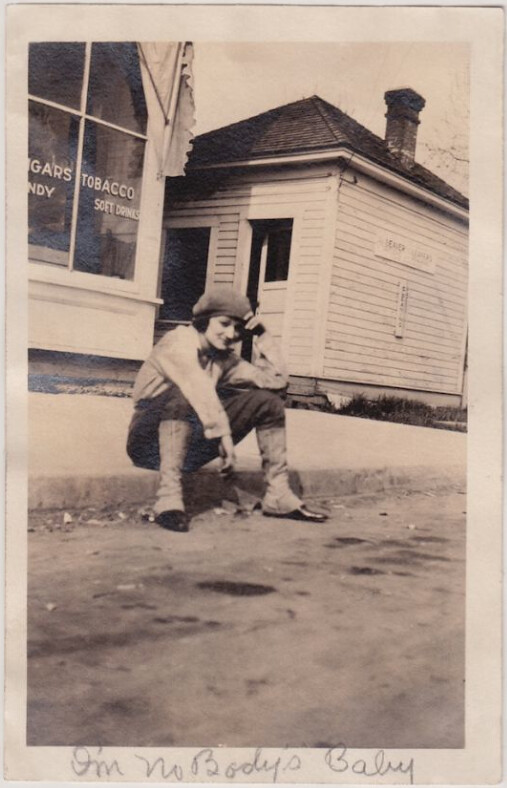
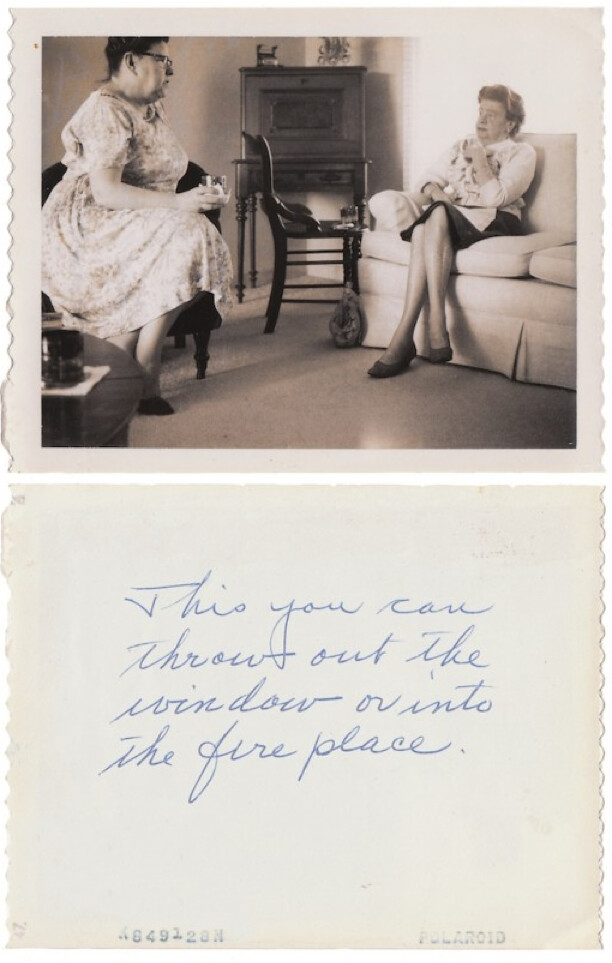
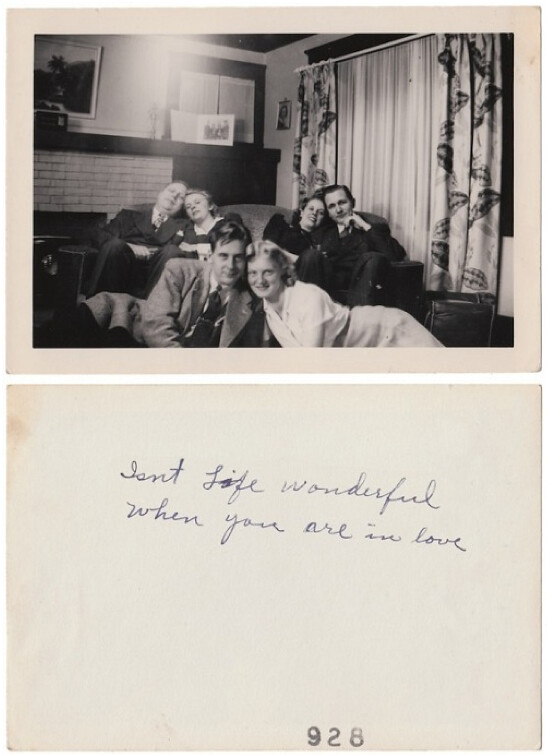
The three front/back photo pairings you see above are all from the book Talking Pictures: Images and Messages Rescued from the Past by Ransom Riggs, who puts an unusual spin on a common hobby. He collects old snapshots that he finds at flea markets and junk shops (nothing new about that), but only if they're annotated with handwritten inscriptions -- usually on the back, but sometimes on the front.

Several hundred of photos from Riggs's collection are compiled in Talking Pictures, and the result is a compelling series of partially told stories that leave you wanting to know more. As you page through the book and read the annotations, you can't help but wonder "Hmmm, what happened to that couple?" or "How did that guy end up with a black eye?" or "Did that smallpox-ridden child survive?"

It's a great book, and very reasonably priced. Highly recommended to all PermaRec readers.

I'll close this entry with an assortment of additional images from the book -- enjoy.

Screen shot 2012-12-21 at 3.26.29 PM.png

Screen shot 2012-12-21 at 3.05.07 PM.png

Screen shot 2012-12-21 at 3.03.30 PM.png

found-a-baby-girl-560x800.jpg

Screen shot 2012-12-21 at 3.04.26 PM.png

Screen shot 2012-12-21 at 3.28.06 PM.png

Screen shot 2012-12-21 at 3.06.05 PM.png

Wednesday, September 5, 2012

TightSidebySide_01T.jpg
Click to enlarge

On the left is a Victorian-style photo portrait; on the right, an illustration based on the photo, which was done by a Brooklyn artist named Lauren Simkin Berke.

Berke has a very Permanent Record-ish project called To Be Kept, which goes like so: She obsessively collects old photographs from flea markets and antiques shops (some of them Victorian portraits like the one shown above, but also 20th-century snapshots not unlike the ones I recently blogged about) and then creates drawings based on them -- about one per weekday, which she's been posting on her blog since 2006. Some of these pieces ended up in a gallery show last winter, and now she's running a Kickstarter campaign so she can publish a To Be Kept book.

Berke's Kickstarter page has a nicely worded explanation of why she finds these old photos so compelling:

I find it strange that these documents are for sale as part of a consumer marketplace, instead of being in albums on bookshelves in the homes of the families of those in the photos. I find myself at the intersection between a fascinated voyeurism and a determination to know these documents as well as humanly possible in order to give them a new, longer life.

When I learned about Berke's project, I sent her a note and basically said, "Hey, I'm into found artifacts and passive voyeurism too!" She quickly wrote back and mentioned that she'd recently acquired some old report cards from the late 1930s.

Hmmm, report cards, you say? I asked if I could have a look, and she graciously made the following scans for me (click to enlarge):

OregonReportCards_38-41_2T.jpg OregonReportCardsEnvelope_01T.jpg

As you can see, these are three years' worth of report cards, and the envelope one of them was mailed in, for one Jack Malcom, who attended high school in Gresham, Oregon (which is just outside of Portland). Among the notable details:

• One of the subjects listed on the report cards is "Soc. Problems." Never seen that before.

• The earliest of the three cards -- the one at far left -- has an embarrassing typo, as one of the subjects is listed as "Bookeeping." This was corrected ("bookkeeping," with two k’s) on the subsequent two cards.

• As was common at the time, Jack's mother signed the cards with her husband's first name: "Mrs. Roy Malcom." Her signature has a bit of flair, which I like.

• The Malcoms lived in Troutdale, which is adjacent to Gresham and must have been a very small town at the time, because the person addressing the envelope didn't even bother to include a street address.

"I purchased the cards at a shop in Portland called Ampersand," Berke told me. "I stop in there whenever I'm in Portland, as they keep a well-stocked bin of unsorted vintage snapshots."

I was curious to know if Berke had tried to track down Jack Malcom and/or his family, as I've done with the Manhattan Trade School report cards, so I asked her. She gave a really thoughtful, interesting response, along with an intriguing story about a future project:

I did Google him. He lived in Gresham (it seems for all his life, though I'm assuming he would have served in WWII), where he was a florist. He died in 2009 at age 85. He was on the metropolitan arts commission in Portland, and left a fair amount of money to arts, educational, and historical organizations when he died.

In general, I am not trying to get items back to the family they came from. The assumption is that they are orphaned, and would not be for sale if anyone related to them were alive, or cared. In Jack's case, it seems he had no family.

Most of my work is with photographs, and not text-based ephemera. There are often fragments of text -- or in the case of Victorian studio portraits, there is often a full name and address of the photographer and/or their studio. But I have had very little luck in getting further information, even when I have a full name and address. It would likely take going to historical societies and such. For the most part, I have given up on focusing on finding these details, preferring to focus more on what there is to be seen in the images of the photographs.

When I purchased the report cards, I also purchased an unopened letter from the mid-1940s. The letter was sent from San Francisco to Cambridge, Massachusetts, and I just happened to be on my way to San Francisco myself at the time (and my best friend lives in Boston, near Cambridge). I immediately decided to wait to open the letter until I was in San Fran, and to make a replica of it and the send it to my best friend, re-creating the letter's intended journey. My friend's then-boyfriend (now ex) works at Harvard and thought he could find out if the intended recipient was alive, and if so get an address. Since they broke up, I'm not sure he's going to follow through, but I am going to find someone else who can. If the letter's intended recipient is still alive, I most certainly intend to get him a copy of the letter.

Faaaascinating! My thanks to Berke for sharing all of this and I urge everyone to please consider supporting her Kickstarter project.

(Special thanks to Kirsten Hively, who brought To Be Kept to my attention.)

Thursday, July 19, 2012

IMG_0001.jpg
Click to enlarge

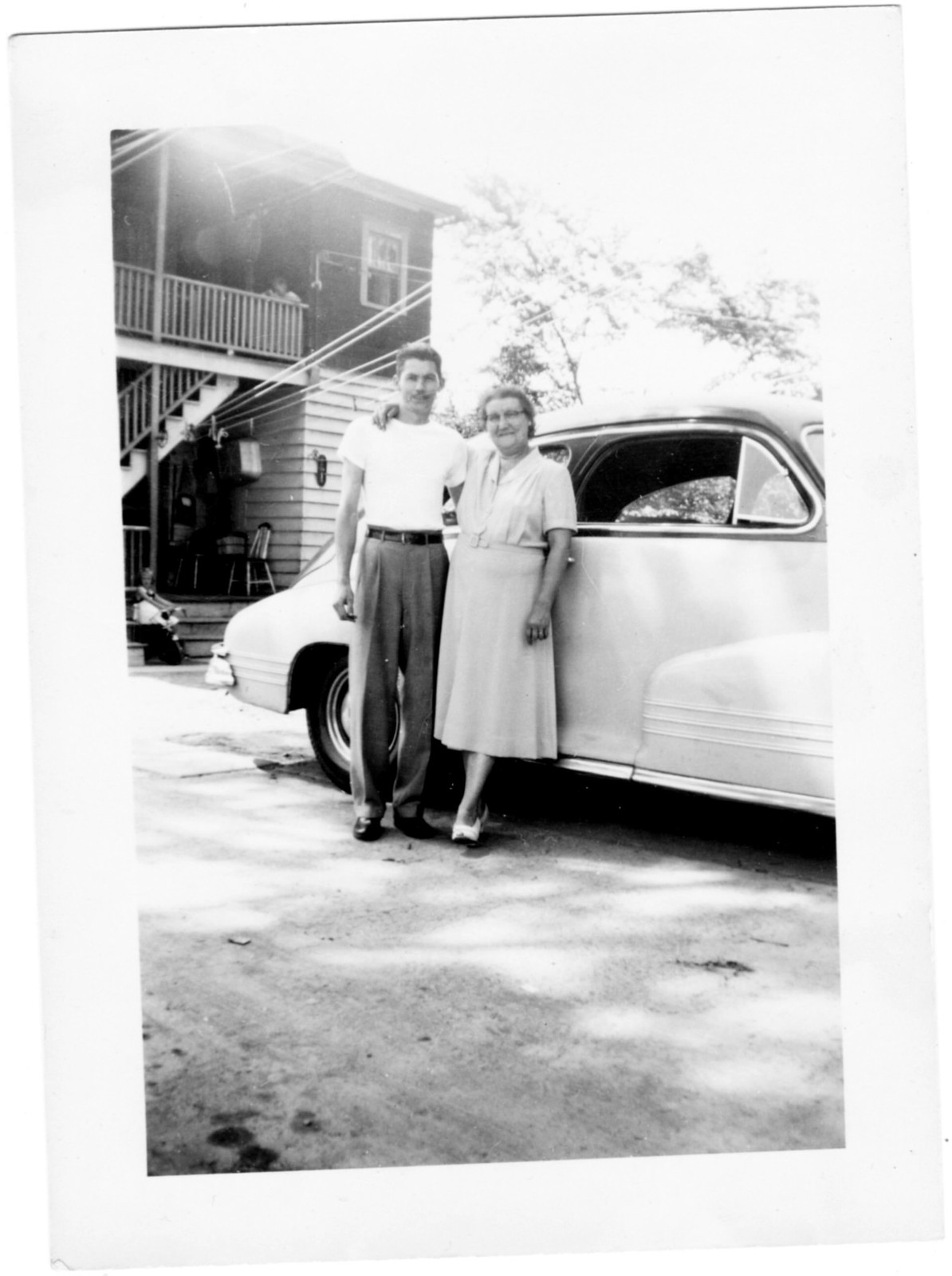
A few days ago I wrote about Russell Ries and the cigar box full of old photos he'd acquired at a flea market. That prompted me to dig out a small stash of snapshots I found at a junk shop in Reno back in 1994. My favorite is the one shown above. I love so many things about it -- the woman's festive outfit, her vivacious face and body language, the handwritten "GiRLS" with the lowercase "i," and so on. When I first saw it, I remember thinking, "That's no girl. That's a woman." I wondered what had happened to her; I still do.

When I bought this photo and a few others back in ’94, I did so sort of on a whim. I had the instinct to collect old, interesting things, but I was young and broke and hadn't yet figured out what sorts of things I wanted to collect (or, as I've since discovered, what sorts of things would collect me). I was sort of casting about in search of my niche, my collector's identity. "Oh, maybe I'll collect old paperback novels" or "Hey, these old snapshots are cool -- maybe that's what I am, a photograph collector!"

So I bought several photos that day. The shop in Reno had a big pile of them, and I spent a bit of time picking out the ones I liked best. Here's another one (for all of these, you can click to enlarge):

IMG_0004.jpg

I love old-school country bars and taverns, and this one looks like it's right up my alley. And look at those faces -- I totally want to have a beer with them! In my fantasy world, this bar would be in Wisconsin (I have a thing for Wisconsin taverns), but the two Utica Club signs on the wall suggest that this place was probably located in upstate New York. Wherever it was, I hope it's still there. Next round's on me, guys.

Next up we have a proud woman and, I'm assuming, her son:

IMG_0003.jpg

My god, look those slacks, that chest and shoulders, that posture -- they don't make guys like that anymore. You think maybe he'd just bought that car, and the photo was to commemorate the occasion?

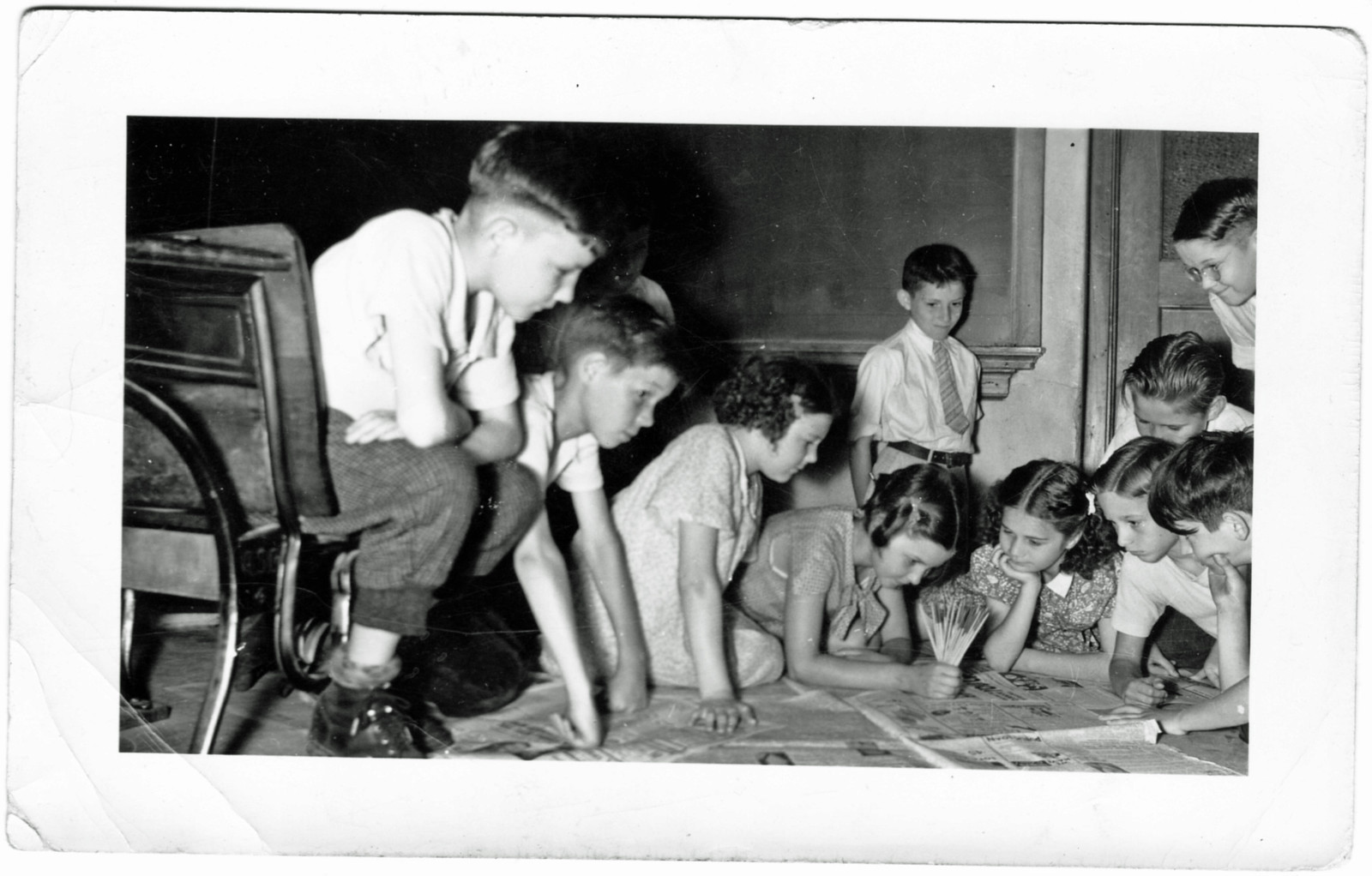
I don't always respond all that strongly to photos of children, but I remember smiling the moment I saw this one:

IMG_0002.jpg

I really like how everyone's attention is focused on the girl who's holding the … well, what is she holding? Pick-up sticks? Something else? In any case, everybody seems to be completely oblivious to the camera's presence, which often makes for the best photos.

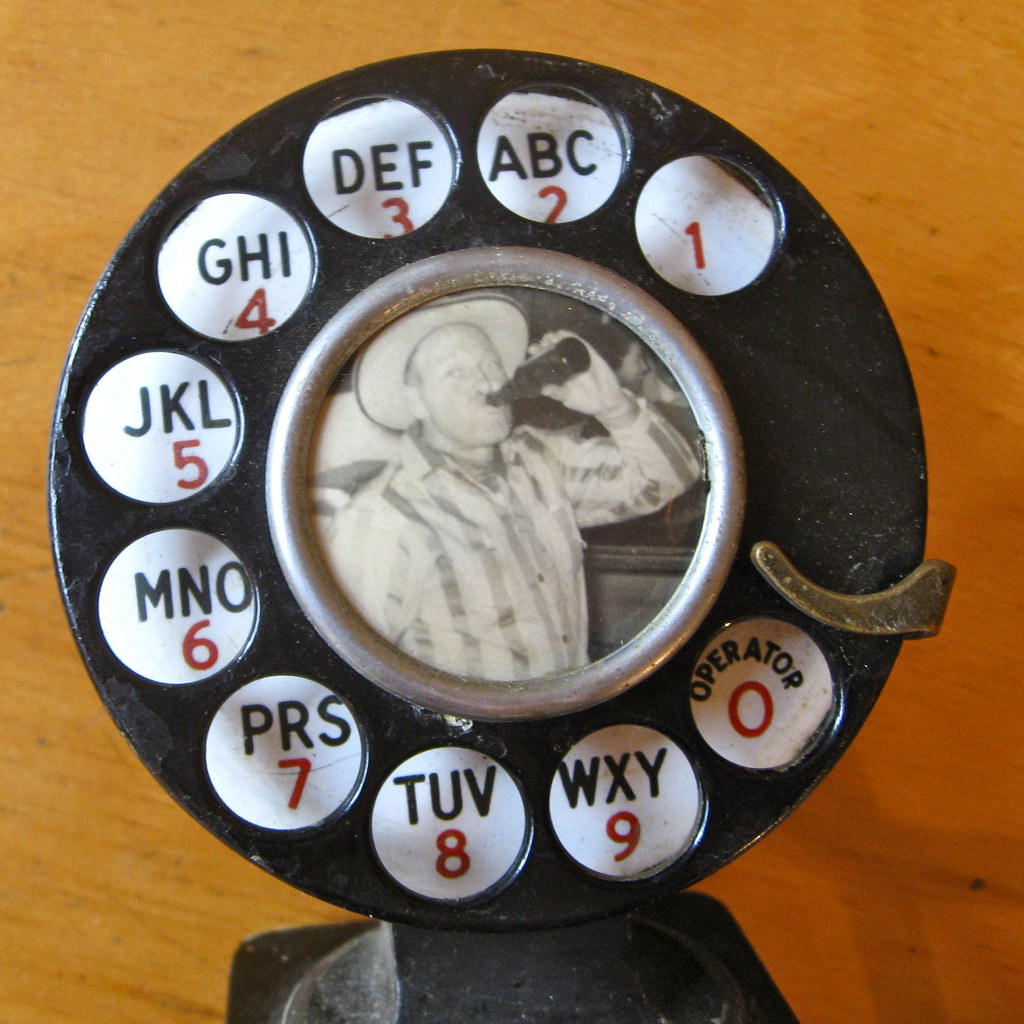
One of the photos I acquired that day ended up being repurposed. I cut out the center of it and mounted it in the dial of an old phone I had recently bought (another thing I thought I might collect):

IMG_1797.JPG

I decided his name was Otis, and I really liked the way he spun around when I dialed a number on the phone. Not a bad little art project, although I now feel bad for having destroyed a photograph.

I'm no photo expert but I know what I like, and I like these shots a lot. Maybe I dote on them a bit because they were the first discarded snapshots I ever purchased, but they really do strike me as excellent photographs. They're not technically perfect, but they all have really nice compositional elements, at least to my eye. I'm just as smitten with them today as I was back in 1994.

After I acquired these photos, I got in the habit of looking for old snapshots at flea markets and antiques shops. But I never found any that I liked as much as those first ones, so I repeatedly found myself thinking, "No, these aren't as good as the ones from Reno -- I'll pass." After a few months of that, I decided maybe I wasn't a photo collector after all and moved on to other collecting pursuits. (Soon thereafter, in September of 1996, I found the Manhattan Trade School report cards, which eventually formed the basis of Permanent Record.)
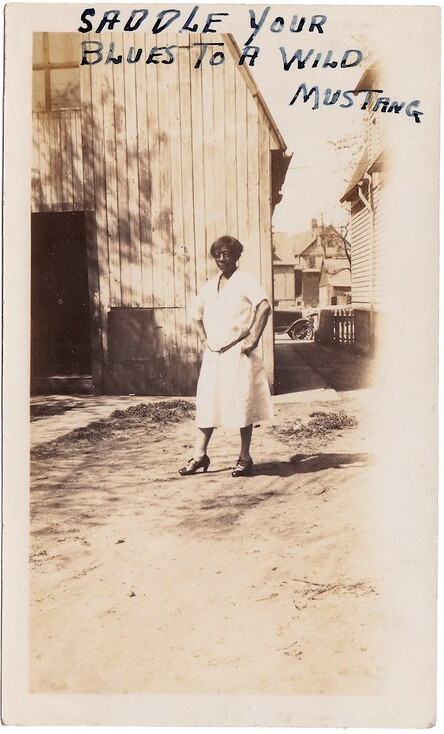
But I still love those snapshots I found in Reno. Who were the people in these photos? What happened to them? How did the photos find their way to ratty little shop in Nevada?

If you can answer any of those questions, let me know.