Wednesday, January 29, 2014

ring.png
Photo by Colin McConnell / Toronto Star

One winter day in the mid-1970s, when I was maybe 10 or 11 years old, I was walking home from elementary school in Blue Point, Long Island, when something glinting in the snow caught my eye. I bent down and discovered that it was a class ring from our local high school. I don't recall the class year, but it was the same as the year in which I found it, so it belonged to someone who was due to graduate in a few months' time.

I brought the ring home and showed it to my parents, who saw that the owner's initials had been stamped into the ring's inner shank. They brought it to the high school, and we were later told that it had been returned to its rightful owner.

I hadn't thought about this episode until a few days ago, when I learned about a Toronto-area man named John Slade (shown above), who had a childhood experience remarkably similar to mine. In 1979, when he was nine years old, he found a then-current high school class ring in the snow while walking to his elementary school. Thirty-five years later, he hasn't been able to track down its owner, although I suspect that will change now that this article has been published.

When I found that ring back in the mid-’70s, I assumed that its owner had simply lost it. When I got a bit older, I learned that high school girls often wore their boyfriends' class rings as necklace pendants, or even on their fingers (after wrapping a bit of yarn around the shank to help the rings fit on their smaller hands). Once I became aware of that ritual, it occurred to me that the ring I'd found might have been tossed into the snow by the owner's girlfriend in a pique of disgust after a nasty breakup. If that's the case, then the discovery and return of the ring would have added an interesting epilogue to a little high school soap opera.

Oddly enough, I have no idea what happened to my own class ring, which disappeared at some point during my 20s. I'm not sentimental about it — no need to return it if you find it in the snow. On the other hand, I care a lot about the class rings that belonged to my father and brother, both of whom are deceased:

IMG_3459.jpg

I have those rings as keepsakes, and every now and then I'll wear one of them when I want to feel closer to a departed family member.

I do a fair amount of thrift-shopping, but I don't recall having seen many (or perhaps any) vintage class rings for sale. There are lots of them, however, on eBay and Etsy. Since they tend to be stamped with the original owner's initials, these artifacts would seem to offer lots of possibilities for PermaRec-style reconnections. Hmmm — a subject for further study, perhaps.

(My thanks to Taha Jamil for alerting me to the story about John Slade.)

Tuesday, January 14, 2014

The current issue of the Southern-themed magazine The Oxford American has an excellent article about Charlie Rich, the great pianist and singer who's best known for his 1973 hit "The Most Beautiful Girl in the World" (and who also recorded a ton of less schlocky, underappreciated music). The article begins with its author, Joe Hagan, explaining that he'd recently come across over 40 fan letters that had been sent to Rich in the 1970s, and it ends with Hagan's subsequent attempts to track down the letter-writers.

The letters, several of which are excerpted in the article, are amazing. Here's a snippet from one of them (Hagan left all the misspellings and grammatical errors intact and I've done likewise):

Dear Charlie,

The first thing I want to say is: I hope to god this letter gets to you. From the first time I ever heard your record, “The Most Beautiful Girl,” I thought it was the prettiest song I ever heard. ... I see your picture in magazines + your a very nice looking man. Your my favorite country + western singer. You have a beautiful voice + I love to hear you sing. I used to cry when I heard “The Most Beautiful Girl” (T.M.B.G). ... I guess that song just got to me.

Well, to tell you about my self. I’m 15 years old, blonde hair, past the shoulders, green eyes + I weigh about 128 to 130 pounds. I’m about 5’4 feet tall. People tell me I look the age of 19. It’s really a compliment to me. ... I start school in a few days, in which I’ll be in the 11th grade. I’m fixing to get married to a 21-year-old guy named Donald McGowan. I love him very much + my mother thinks I don’t know what love is, but I’ve tried to tell her I do know what it is. ...

We’ve had a lot of family problems involving my boyfriend Donald. My mother told me if something didn’t work out between us + we couldn’t get married, she said not to ever come back to her house again. [My father is not living. He died when I was 14 years old (drinking problems).]

And then there's the girl who told Rich that she'd had a dream in which he performed on a floating platform in a pond. She jumped into the pond to swim toward him, after which they both swam back to shore and the following scene unfolded:

We went into the [apartment] and you dried off and put your other clothes on and we sat down at the kitchen room table and you said what do you want to talk about + I said well nothing I needed an excuse to get up close to you and you started laughing and I said what’s so funny and you said well for a while I thought you were going to say something nice like I love you or your really tuff looking, cause girls come up to me and say that all the time . ... then you said come over here and sit on my knee. I came over and you came real close and I thought you were going to kiss me and I said please do and you did kiss me and it sure was something.

Wow. How could you not try to track down the person who'd written that?

The center of Hagan's article, in between the part where he introduces the fan letters and the part where the seeks out the letter-writers, is a fairly lengthy assessment of Charlie Rich's life and career. This middle section features some wonderful writing — if you care at all about Rich's music, or about American roots music in general, you'll want to read it — but it runs over 5,000 words. If you're pressed for time or don't care much about Rich, you can get away with reading just the first and last sections, which are about the fan letters.

Only one gripe: There are no photos or scans of the letters themselves — just transcriptions. Disappointing. Aside from that, though, this is a sensational article that's right in the Permanent Record wheelhouse. Check it out here.

(My thanks to Peter Greenberg for bringing this one to my attention.)

Monday, January 13, 2014

.
In 1998, a 20-something guy named Jesse Reklaw was doing some Dumpster diving on the campus of an Ivy League university that he'd rather not name when he came across a bunch discarded of Ph.D. applicant files from the mid-1960s through the mid-1970s. Each file included a photo of the applicant, along with assorted paperwork, including feedback from university officials.

Reklaw was smitten with the photos and decided to create a zine that would show several dozen of them, each accompanied by a line of commentary taken from the applicant's file — sometimes a few sentences, sometimes as little as one or two words. You can see some examples above.

Reklaw called the resulting zine Applicant. There was only one issue, which he distributed from 1998 though 2005. The small press Microcosm then picked it up and published Applicant as a tiny book, which remains in print today.

I learned about Applicant only a few weeks ago. I'm not sure what took me so long — I love projects involving found objects, and I was very active in the zine world in the late ’90s, when Reklaw published Applicant. I'm surprised it never came across my radar until now.

Better late than never. Once I saw Applicant, I was struck by its similarities to the original Permanent Record project with the old report cards, and I loved Reklaw's simple photo/caption pairings. Individually, many of them are quite affecting; cumulatively, they tell a series of stories. It's a great project. But it also left me with a lot of questions.

Reklaw is now an artist (you can learn more about him here). Last week I contacted him and asked if he'd be willing to do a phone interview. He readily agreed. Here's how it went:

Permanent Record: How did you come across the Ph.D. applicant files?

Jesse Reklaw: It was 1998, I had just dropped out of grad school myself, and I was feeling very bitter. I didn't really have a job, and I was keeping these weird hours. I would go over to the compost and recycling bins at the school I'd been attending and dig through those to find magazines that I'd tear up and make collages out of and crazy shit like that. And I just found them all right there in the recycling bin.

PR: How many individual files were there?

JR: It was stack three to four feet high. There were well over 100 files — maybe 120. Some of the files were huge, others were incomplete.

PR: What was your original thought in terms of what you'd do with them, and how did you eventually arrive at the decision to publish them?

JR: I am mostly a 2-D artist, and I had gotten a degree in painting. I'd been doing a lot of collage work, and I was really inspired by that notion of grabbing ephemera and sticking it down on a page and then photocopying it, so maybe that's where the impulse came from. It seemed very zine-y — that whole notion of found ephemera and bringing that to light.

PR: After you acquired the files, how long did it take you to decide on the zine approach?

JR: About two weeks. I immediately started reading through them, and as I did that I saw that there was too much information to put in one giant picture or collage, so the zine format made more sense. I'd never made a zine before. Well, I'd made comics zines, but never a zine that wasn't comics-based.

PR: In Applicant, you just show the head shots and a snippet of commentary for each one. Have you ever published any of the other paperwork from the files?

JR: No. I didn't want to get sued, for one thing. I wanted to make the zine to be like a story — I'd been trained in narrative. And by juxtaposing the images and the commentary, I was able to create that. A lot of the additional commentary became very repetitive.

PR: So what did you do with all the other paperwork? Do you still have it?

JR: No. For the first 100 or 200 copies of the zine, I stapled in pages from the original application files.

PR: You mean you threw in an additional page or two as a sort of "bonus treat" in each copy of the zine?

JR: I stapled them in as endpapers. I rotated them about 30 degrees, trimmed them, and stapled them in as endpapers.

PR: How many copies of the zine did you distribute?

JR: I made about 200 with the endpapers made from the original application sheets, and then about 800 more that had facsimile endpapers, because I had run out of the original paperwork from the files. So figure about 1,000 copies over the course of seven years, and most of those were distributed by Microcosm [the same company that published the version of Applicant that's currently in print]. It was getting to be such a pain to assemble the zine and hand if off to Microcosm, and they're such a wonderful company, so I just trusted them to publish it.

PR: And how many copies of the Microcosm edition have there been?

JR: They're on their third printing of 3,000 copies.

PR: Is the Microcosm edition more or less identical to the zine version? Like, in terms of trim size, content, and so on?

JR: Yeah. The cover is a little different, and I insisted on the Microcosm version having a real spine [i.e., with the title, author, and publisher all listed], which the hand-made zine didn't have. And it doesn't have the endpapers. But otherwise it's the same.

PR: With 10,000 copies in circulation, have you ever heard from any of the people whose faces are shown in Applicant, or maybe from someone who recognized one of them?

JR: Yeah, the latter. One woman, who went to the school where I found the files and is now a neuroscientist, one of her professors from when she got her degree is shown in the book.

PR: So did she contact you and say, "Hey, I know this guy!" or what?

JR: You know, it's funny, I knew her through a different project where I draw people's dreams as comic strips, and she was one of the people whose dreams I drew, and then she got a copy of Applicant and recognized the guy.

PR: Wow, that's an amazing coincidence! Did either she or you notify the guy?

JR: No way. No way.

PR: So you asked her not to.

JR: Yeah.

PR: Why?

JR: I just don't want to get sued. There are a lot of famous cases, like when Andy Warhol took what he thought were these random photos of Italian men and put them up in a gallery with adjectives underneath them. But they were real people — you can't just use someone's likeness without asking them.

PR: It's interesting that the files included photos in the first place.

JR: Yeah, that was required back then, just to show them that you could comb your hair or something. And then some of the comments in the files refer to their physical appearance.

PR: Yeah, it seems like it would be better if it were a blind process.

JR: Which is how it is now.

PR: You don't list the names of the people whose head shots are shown, but I assume you know their names, or at least you did at one time. When you found the files, Google and other online search tools didn't yet exist, but now it would be fairly easy for you to find what had happened to these people. Have you done that?

JR: I haven't done that either. Part of it, again, is the legal risk. I might be tempted to contact one of them, and that would be stalking.

PR: Really? One could call it just research, or even curiosity.

JR [laughing]: Yeah, "research." That's what I'm gonna tell the police the next time I'm camped out outside somebody's window.

PR: Well, that would be stalking, but it's not illegal to Google someone's name. But if you don't want to go there, for whatever reason, of course that's totally fine.

JR: Yeah, it just seemed like that wasn't part of the art project.

PR: Have you ever created an online version of Applicant?

JR: No, but I've had plenty of people offer.

PR: Why haven't you done it?

JR: At this point I feel like this project has fulfilled my artistic interests. Also, from a design standpoint, I think it works better as a book than as a website. And if I put it online, I think people will stop getting the book.

PR: Have you ever done anything else with the files or the photos aside from publishing them? Like, have you ever done a gallery exhibit or something like that?

JR: No. I sort of had a manic phase last summer where I was getting rid of all my things, so I was selling them at the Portland Zine Symposium for 10¢ each.

PR: Oh wow, that was my next question, whether you still had the original files.

JR: Well, the application paperwork from the files was recycled into the endpapers. All I had saved were the photos. That's what I was selling for 10¢. I still have some that I saved for myself. I can send you one or two if you want.

PR: No, you don't have to do that. So you had removed the photos from the files, because they had been stapled in or something like that, right?

JR: Yeah. Right from the start, I loved the photos. That's what I was always more interested in.

PR: What size are they? Like, are they little passport-size photos?

JR: Yes, totally. And they're all black-and-white.

PR: In your preface, and also in our discussion here, you've addressed the question of whether it's ethical or even legal to publish this content. How hard did you wrestle with that, and can you describe your thought process?

JR: It did concern me, and I asked a lot of family members and friends, most of whom advised me not to do it.

PR: From a legal standpoint or an ethical standpoint?

JR: Legal. No one cared about the ethics. No way. I was more concerned about the ethics. Like, is it fair to run this guy's photo and say he's best defined by the words "Rather tense"? That's a call I had to make.

PR: Yeah, it's hard to distill something down to a single sentence or phrase. So you had to do a lot of editing.

JR: Yeah. Mostly I went through the three pages of the application written by the student and the three pages written by their referee, and I used a highlighter to mark everything that kinda shocked me. And then I read through them again and sorted them by political theme and took the phrases that best represented each student. I took some of my personal favorites, took the ones that made me laugh, and then tried to tell a story.

PR: And now, years later, how do you feel about the ethical aspect of it? Are you comfortable with the decisions you made?

JR: Yeah, totally. If anything, I think maybe I was being too sensitive then.

PR: Did this whole experience make you feel better about dropping out of grad school?

JR: Oh, yeah, a big part of publishing this, and what kind of kicked me over the line in terms of doing it, was that I decided, "This is my master's thesis." Like, here's what I had to say about grad school.

PR: Once I started writing about the report cards, people started contacting me and saying, "Oh, if you're into old report cards, you'll probably like these old documents I have." And they'd start sending me all sorts of old stuff. Has that happened with you?

JR: Only once. A friend had moved into an old house that had been owned by a literal mad scientist — the guy's last name was Dement, I'm not kidding! He did a lot of work with X-rays for the U.S. government, but he was also an inventor. And in their basement they had, like, piles of X-rays of people's faces and skeletons and stuff, all of which was very striking. And then there were 20 or 30 journals about all his experiments, with crude drawings of all these machines he'd designed. If I'd had two months to spare, I would have made a zine about that.

PR: What would you say you've learned from this project?

JR: To just go with a feeling. I was so mad about grad school, and then suddenly this was in my lap, and it all clicked. Like, you'd think someone who'd just dropped out of school would go looking for a job, but instead of I spent the whole summer tearing through this four-foot pile of other people's lives, and it was a great experience.

Applicant always seems like a singular object. It's a bit impenetrable — I don't know how to do it again. I don't quite know why it was successful. I know I'll never find this kind of treasure trove again. You know, it's not like I did anything — I wasn't the author, I'm just the editor.

————————

Big thanks to Jesse for sharing his thoughts. If you want to purchase a copy of Applicant, it's available from Microcosm and from Amazon.

Thursday, November 14, 2013

Cover.jpeg

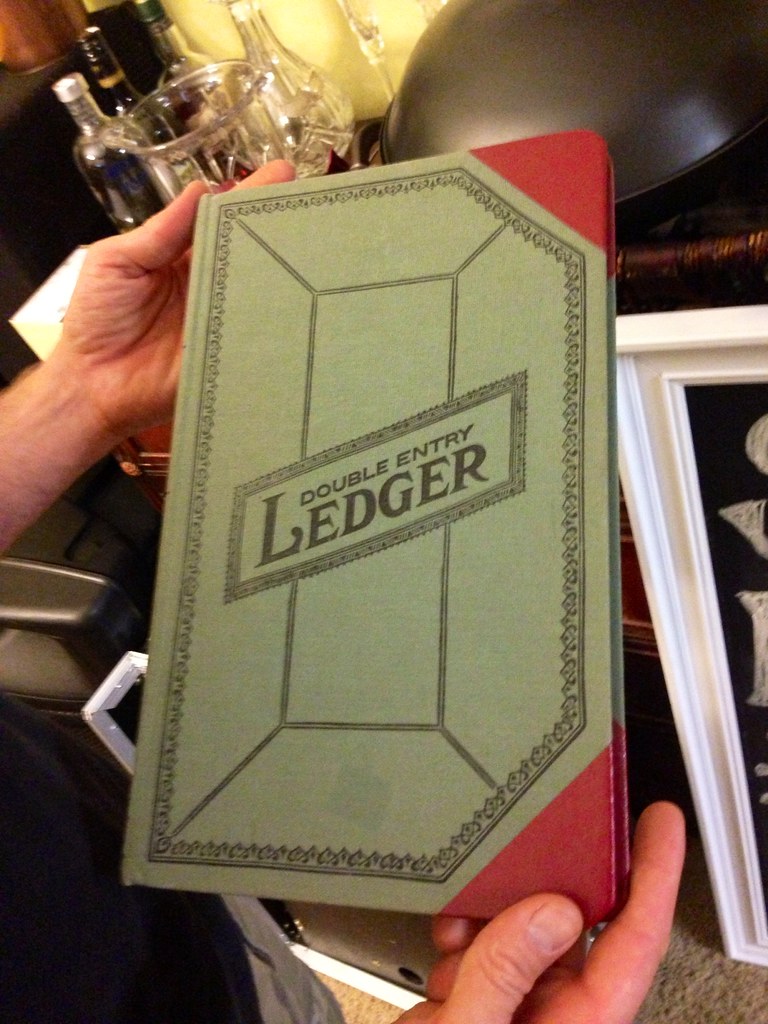
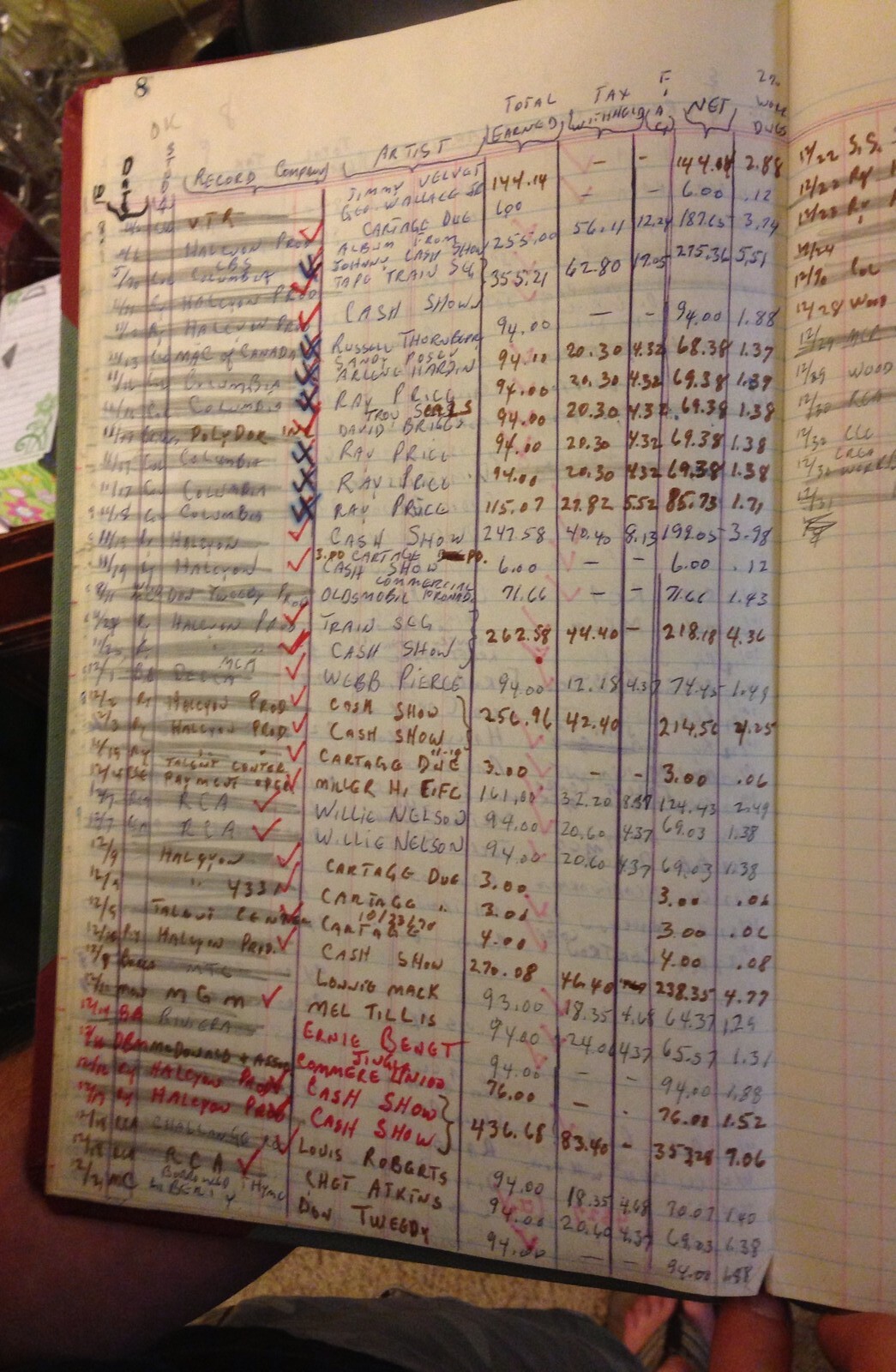
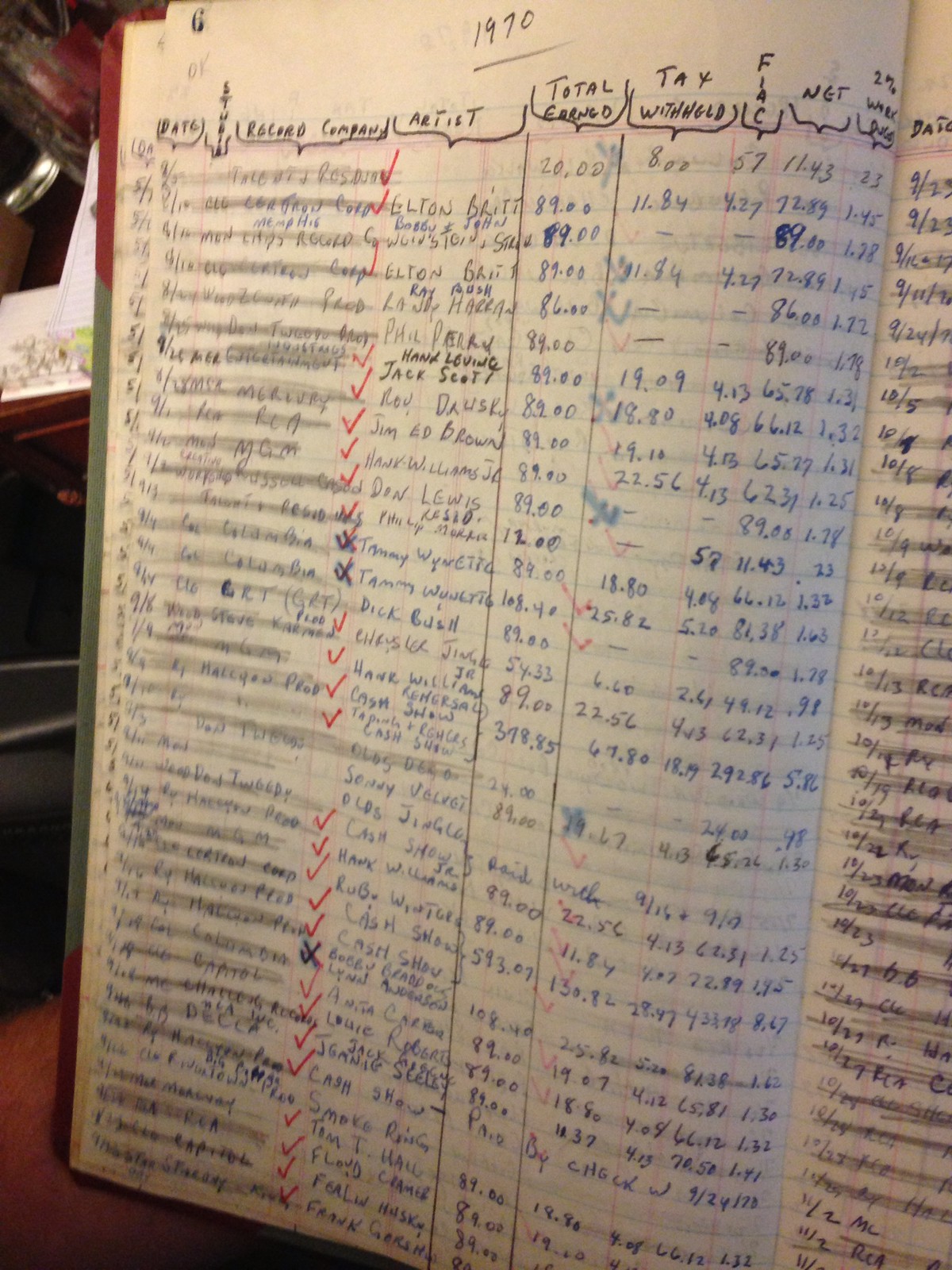
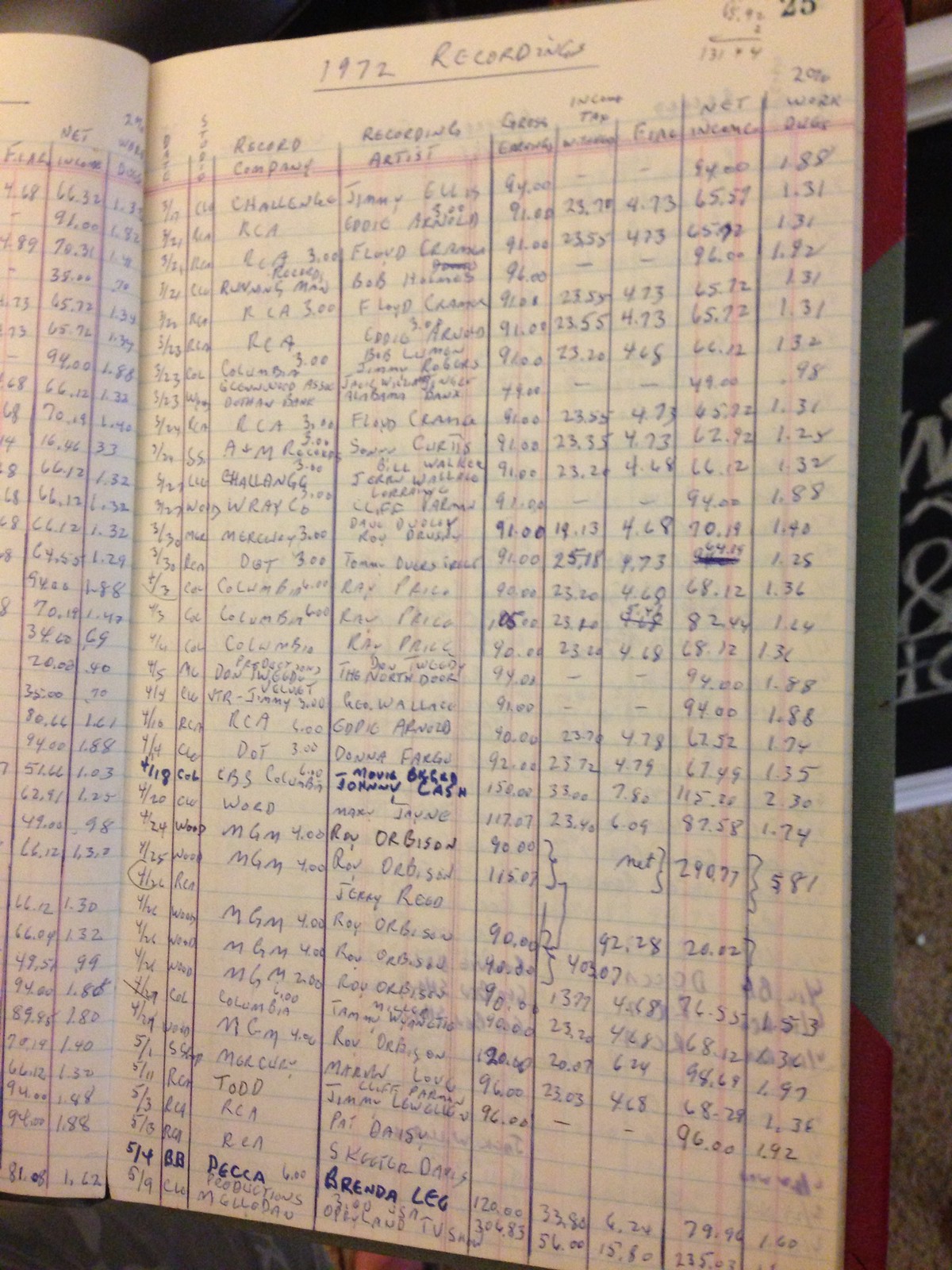
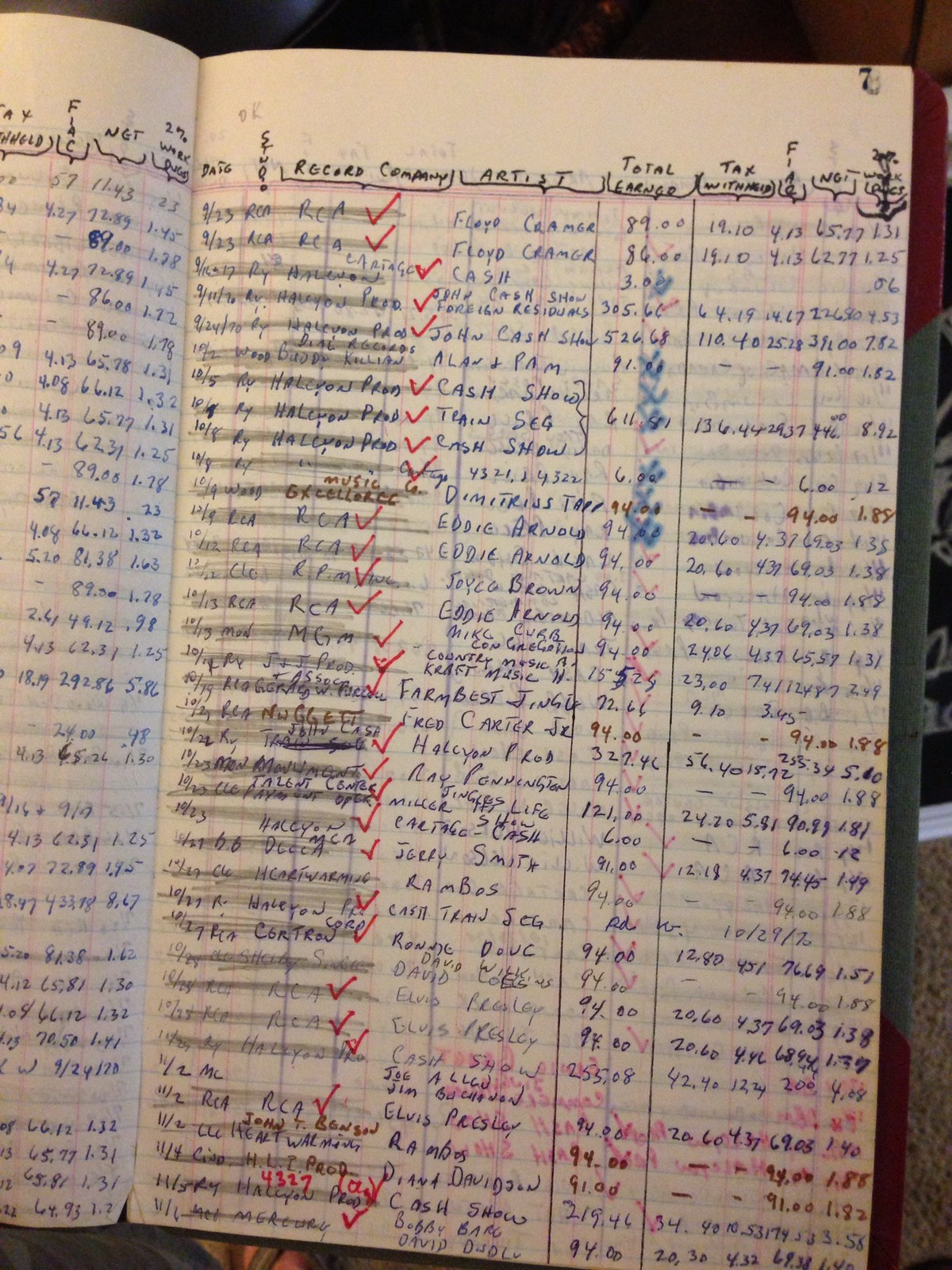
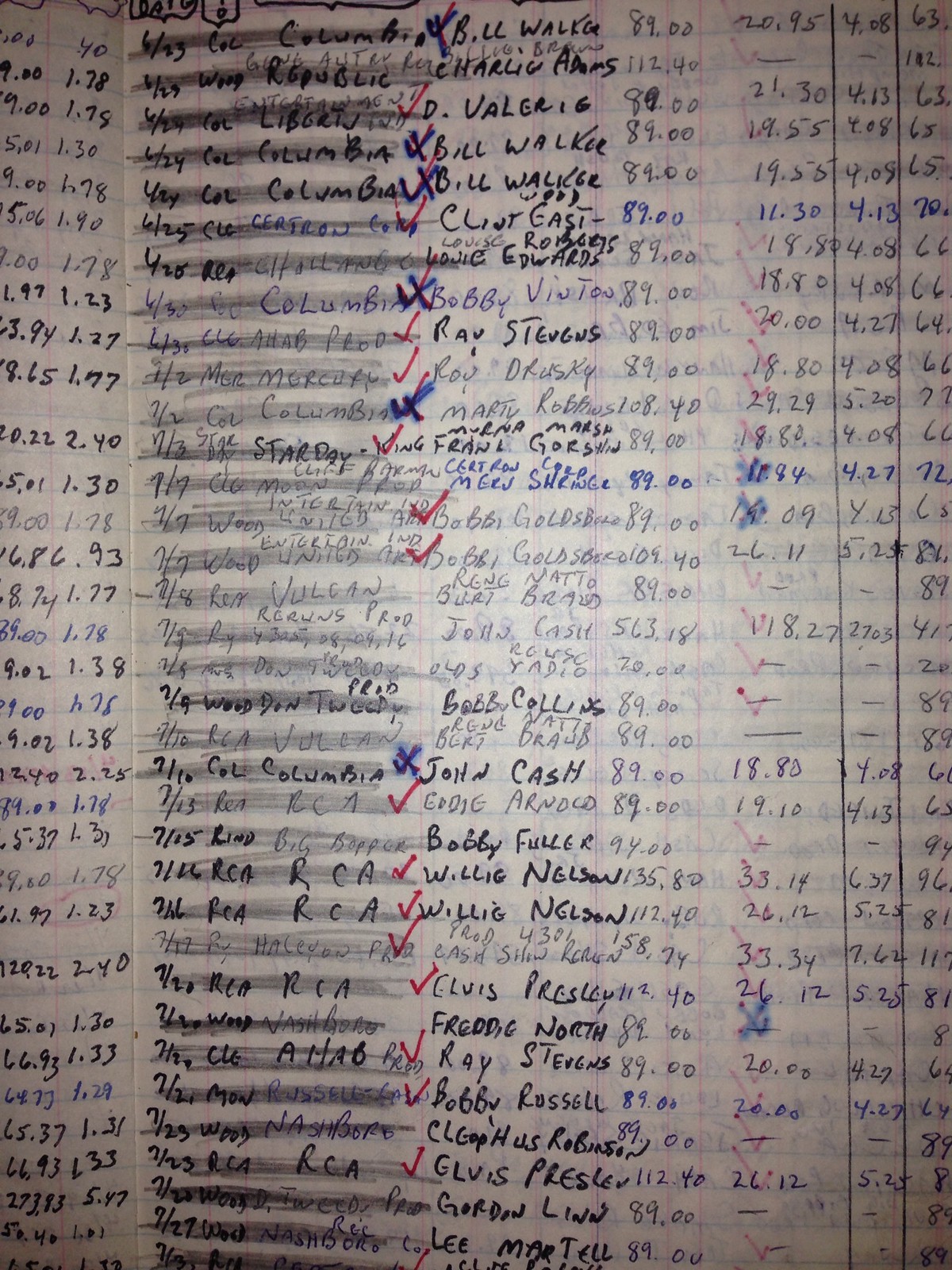
I've written before about ledgers. Today, as you can see above, we have a new one to look at, and it's a doozy. It comes our way from PermaRec reader Russell Ries Jr., who recently sent me the following note:

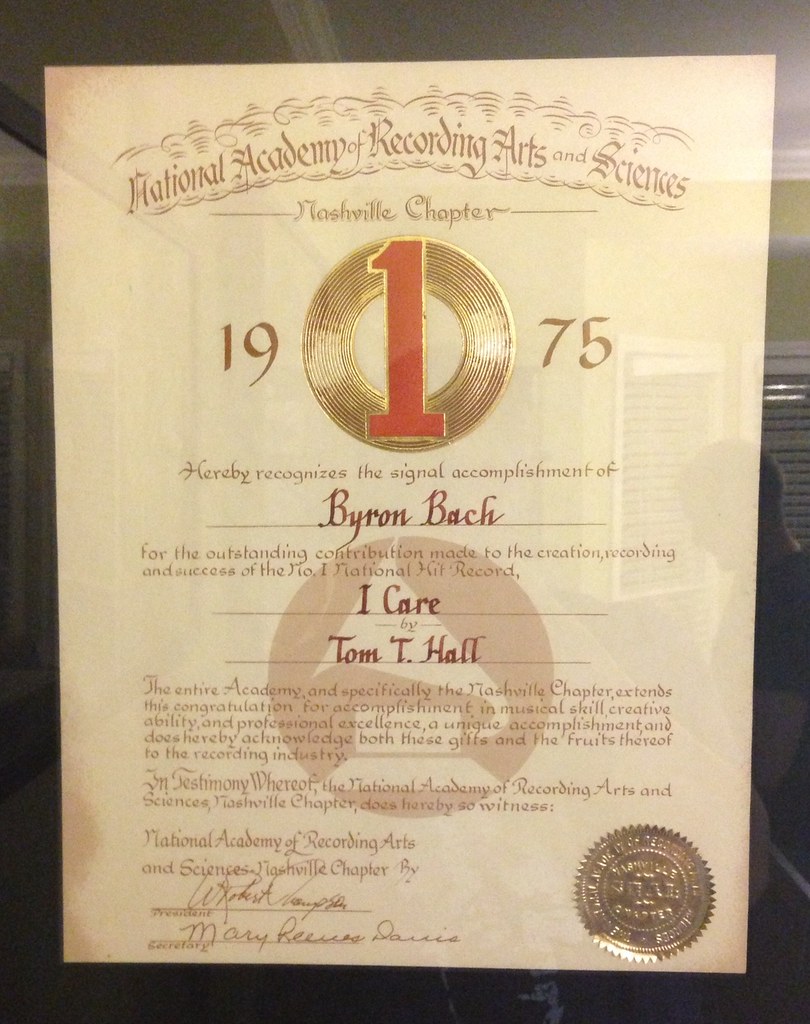
I was recently hanging out at my friend Rich's house when I saw something on his wall that I'd never noticed before. It was a gold record commemorative certificate that had been given to Rich's grandfather [for all the photos that follow, you can click to enlarge]:

Gold Record.jpeg

Turns out Rich's grandfather, Byron Bach, had been a longtime cello player in Nashville and did a bunch of studio work around town. He worked a whole lot with Johnny Cash, whom he referred to as John.

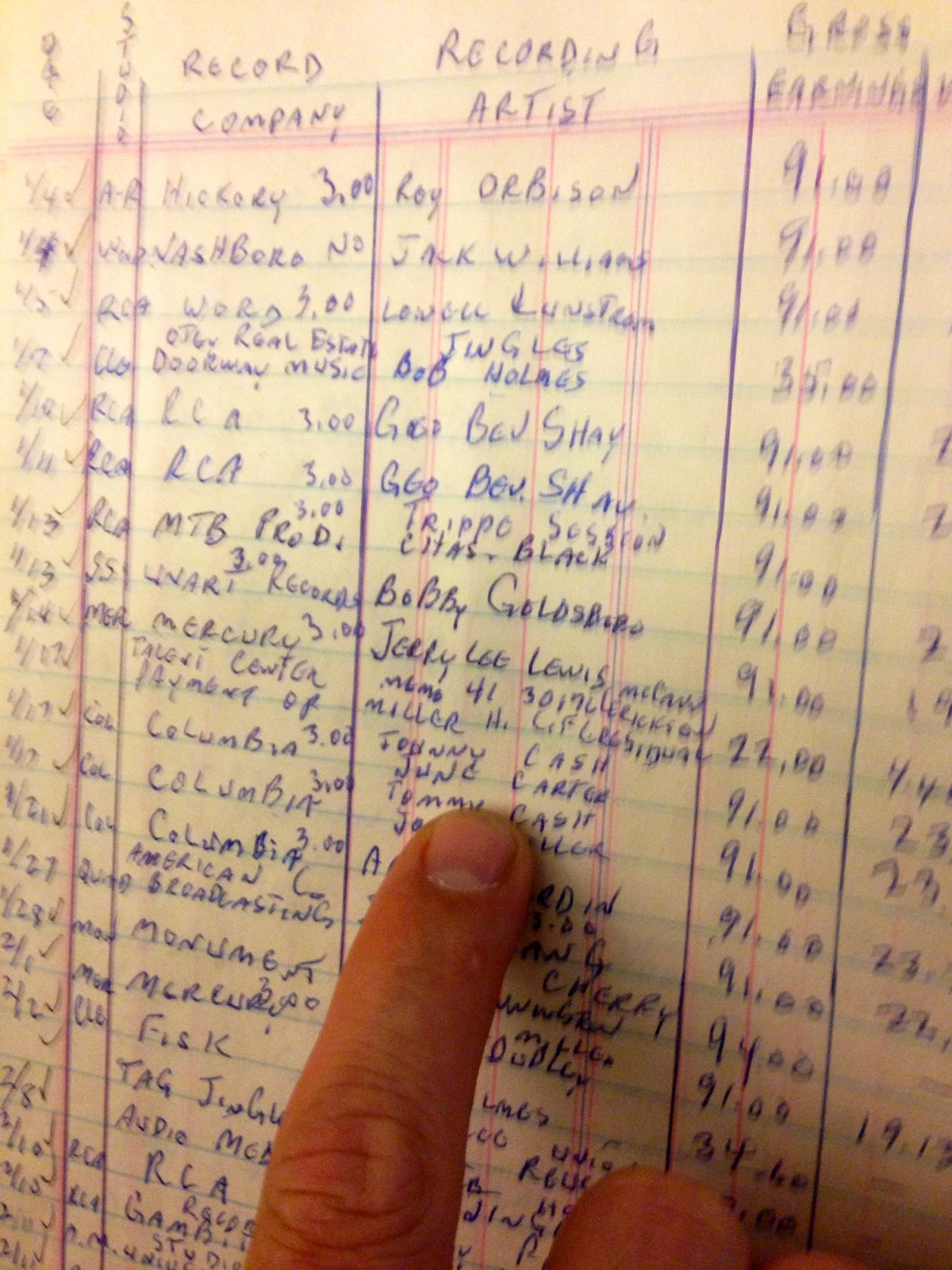
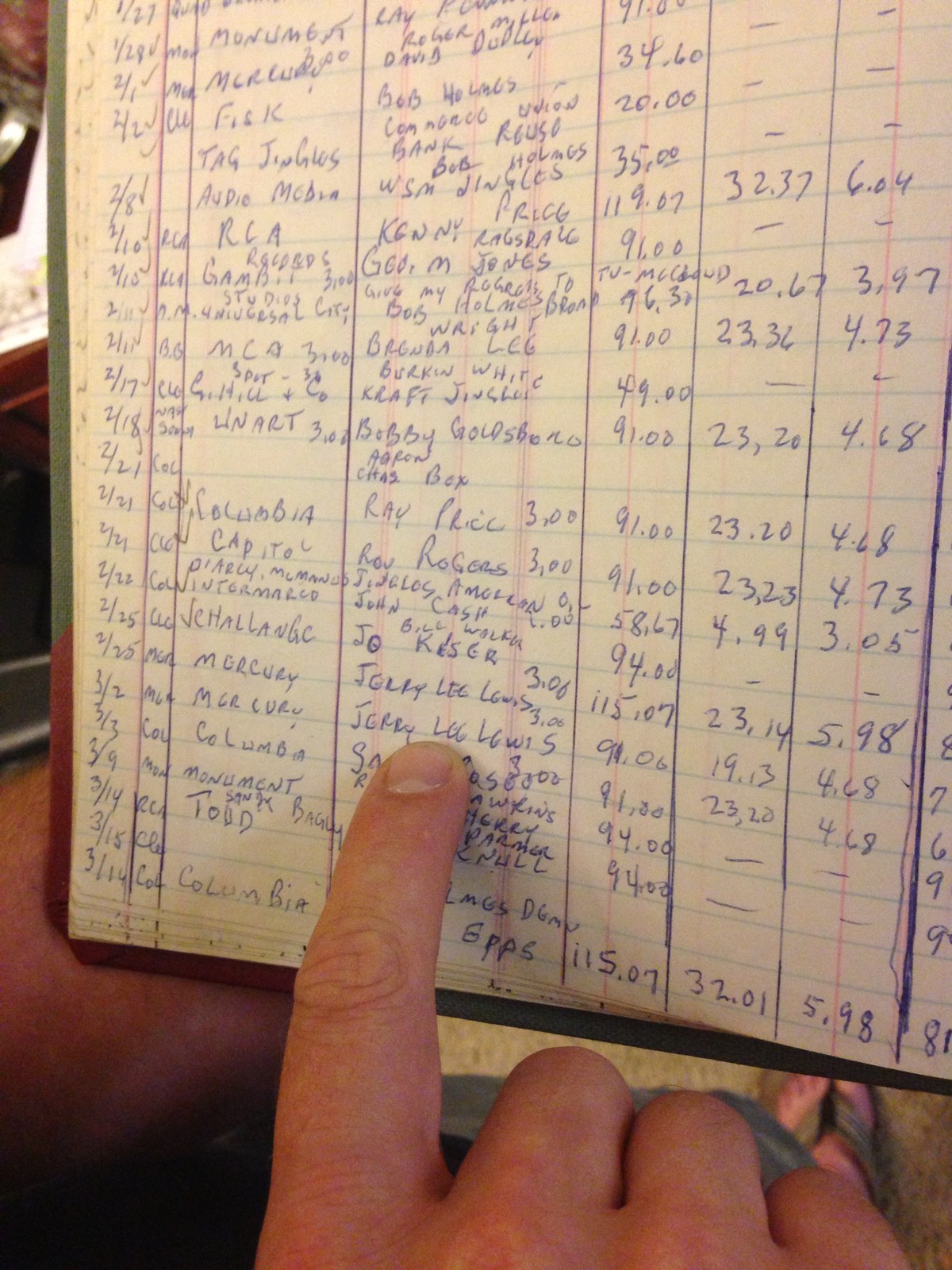
Despite knowing Rich for years, I'd never heard anything about his grandfather. After we talked about him for a minute, Rich said, "Would you like to see his ledger that he kept?" Obviously, I said yes. The ledger showed all the studio sessions he worked on, and the names inside blew me away: Elvis, "John Cash," Willie Nelson, Roy Orbison, Jerry Lee Lewis, Ray Price Loretta Lynn, Clint Eastwood, George Jones, June Carter Cash, etc.

John and June.jpeg Jerry Lee Lewis.JPG Details 4.jpeg

For each entry it has the date; the names of the record company, studio, and artist; how much he was paid; how much he withheld for taxes; how much he made after taxes; and so on.
I took a bunch of photos. Rich said you're more than welcome to use them and write about them.

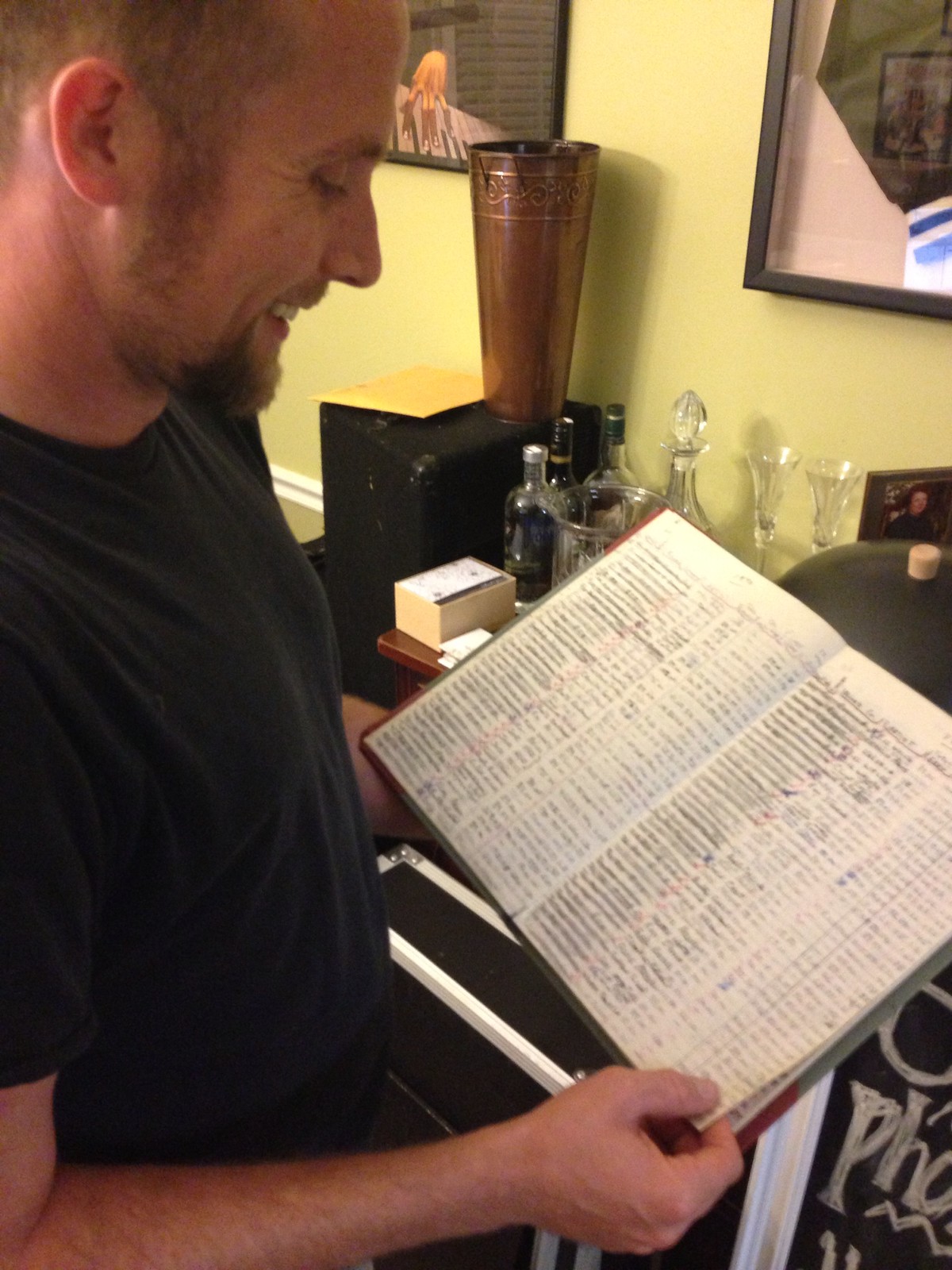
Man, what a trove of music history! Judging from Russell's photos, the ledger mostly covers the 1970s — not a bad time for Nashville. Here are the rest of the pics Russell sent me. The last one shows his friend Rich holding his grandfather's ledger. Enjoy!

More Activities.jpeg Details 3.jpeg Details 5.jpeg Details 2.jpeg Details 1.jpeg Details 6.JPG Rich with Ledger.jpeg

Wednesday, November 13, 2013

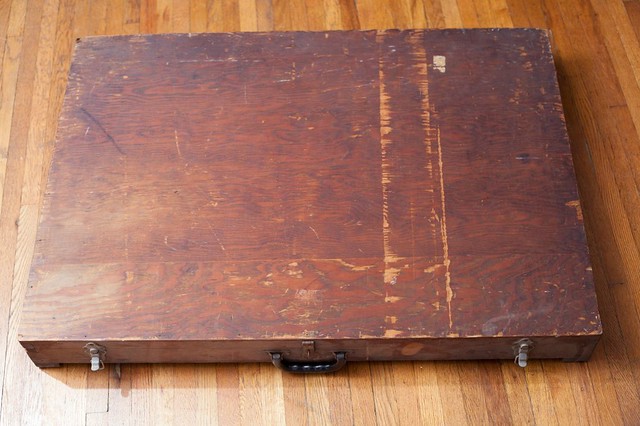
box.jpg

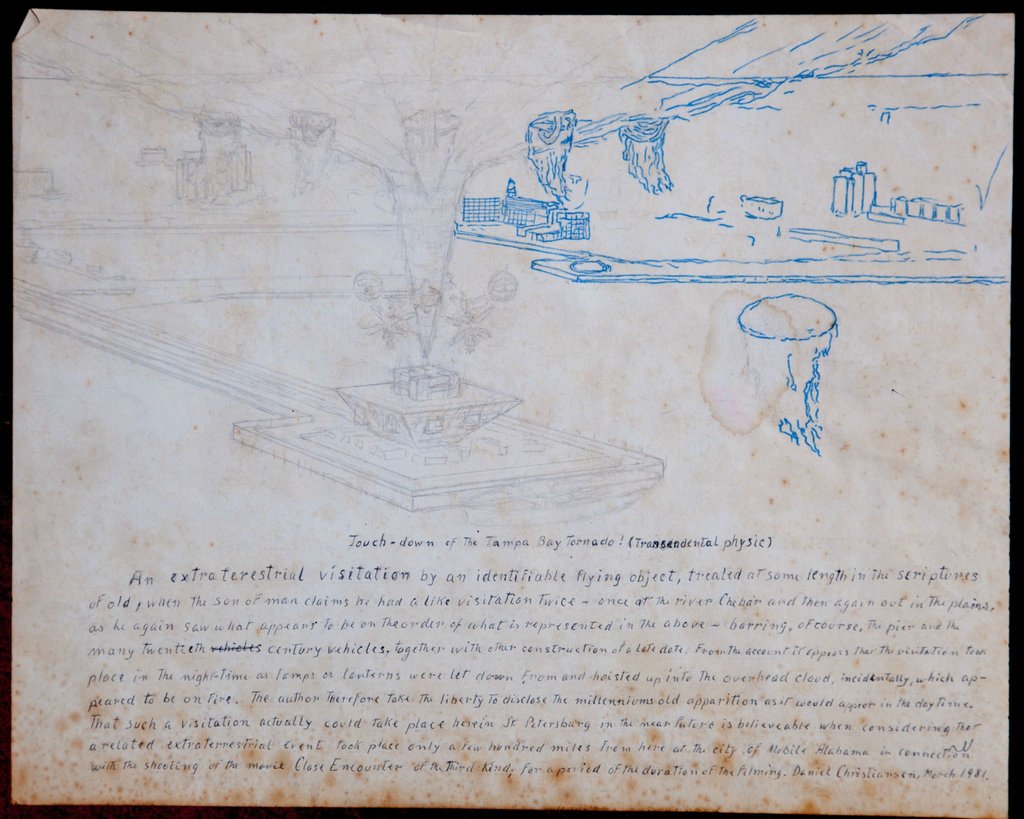
The wooden case you see above was recently found in the trash by someone on Reddit. It's large — 29" by 38" — and had all sorts of goodies inside, including hand-drawn maps, bizarre depictions of extraterrestrial visitations, and technical drawings (for all of the images below, you can click to enlarge):

map.jpg et.jpg tech.jpg

There's more — a lot more. And it was all found in a box that was left in the trash! Amazing. You can get the full scoop here.

In other PermaRec-ish news:

• A Civil War general's Medal of Honor was found inside a book at a church fundraising sale. Further info here.

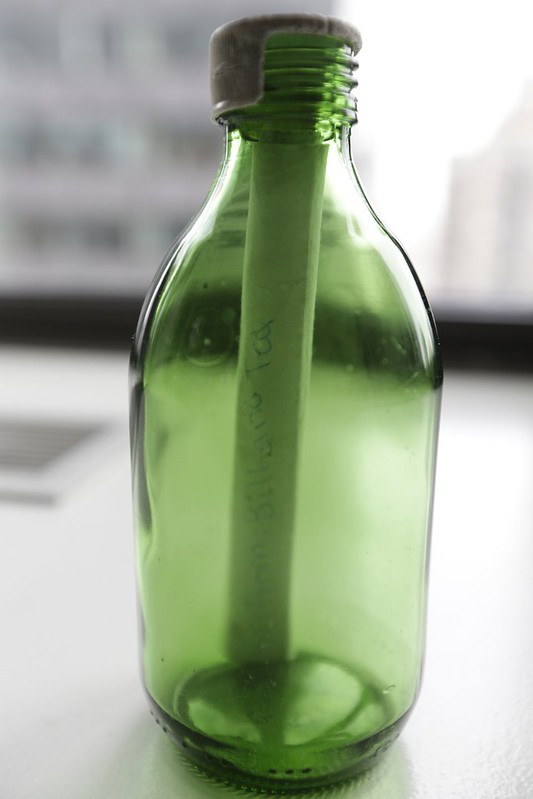
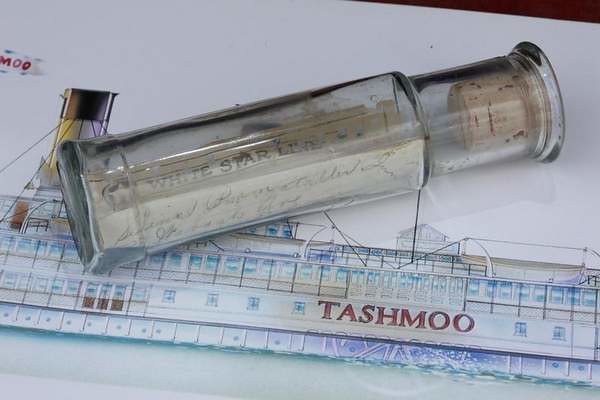
• A Canadian man has found a message in a bottle dating back to 1906, but he refuses to open the bottle.

That's all for now. Sorry for the lengthy break between posts — it's good to be back. More soon.
(Big thanks to Adam Brodsky and James Poisso for their contributions.)

Wednesday, July 17, 2013

I've run several items lately regarding messages in bottles. The folks at New York magazine have apparently been noticing all the bottle-borne messages in the news as well, because they've put together an entertaining timeline on the history of messages in bottles. Check it out here.
Thursday, July 11, 2013

bottle.jpg

Another day, another message in a bottle. I feel more of a personal connection to this one, because the bottle was found in Patchogue, Long Island, which is one town over from where I grew up.

The bottle, which originally contained ginger ale, was tossed into the Great South Bay in 2001 by a 10-year-old girl named Sidonie Fery. It apparently traveled only a mile or so to the west, where it was found last November by municipal workers involved in the cleanup from Hurricane Sandy. One of the workers, named Brian Waldron, noticed the note inside the bottle and took it out. The note included a phone number, which led Waldron to Sidonie Fery's mother, Mimi Fery.

Unfortunately, Sidonie died in an accident in 2010, so Mimi was extremely grateful to have this additional memento from her life. Sidonie probably didn't intend for her mother to be recipient of the note inside the bottle, but it turned out to be the best possible outcome.

Further details on all of this are available here.

(My thanks to James Poisso for yet another great story tip.)

Wednesday, July 10, 2013

letters.png

The gentleman shown above is Chuck Kunellis, who lives in Sacramento, California. The letters he's holding were sent by his father, Chris Kunellis, during World War II. The elder Kunellis sent them to his wife — Chuck's mother — while stationed in Italy during the war. But for reasons that remain unclear, the letters were never delivered and instead ended up with an American stamp dealer, who recently sold them to an Australian stamp collector named John Armstrong.

Armstrong was intrigued by the letters and did a bit of internet sleuthing that led him to Chuck Kunellis, to whom he then sent the letters. Unfortunately, Chuck's father (who sent the letters) and mother (the intended addressee) are now both deceased, but he's still excited to have these newly discovered family artifacts.

You can read more about this here, and here's a video report:

(My thanks to David Sonny and Sue Kendall for letting me know about this one.)

Monday, June 24, 2013

IMG_0149.JPG
Photo courtesy of Bryn Mooth; click to enlarge

Last summer, a Cincinnati food writer named Bryn Mooth was poking around in an antiques shop and spotted a bundle of old recipe cards from the 1930s, which she bought for $3.95. That led her on a fun odyssey that recently culminated in her making contact with the original owner of the cards. I've written a short article about this for the food site Grub Street — check it out here.

(Big thanks to Jeff Ash for letting me know about this one.)

Friday, June 21, 2013

detroit.jpg
Photo by Kathleen Galligan, Detroit Free Press

What have we here? It's a bona fide message in a bottle! The note was written 98 years ago ago by two Detroit residents named Selina Pramstaller and Tillie Esper. They put the note in the bottle and dropped it in the St. Clair River just off of Harsens Island, which was once the site of a popular Detroit amusement park.

The idea behind a message in a bottle, of course, is that it'll float away and be discovered by some distant stranger (like the one I wrote about last year). But this bottle didn't float off — it just sank to the bottom of the river, where it was recently discovered by a recreational diver named Dave Leander.

Leander soon connected with a local historical society that's now trying to track down the descendants of the two women who wrote the note (no success yet, but they've already found a fair amount of information on the women themselves, so I suspect tracking down a relative should be feasible in the not-too-distant future). You can read more about all of this here.

(My thanks to James Poisso and Taha Jamil for letting me know about this one.)

Wednesday, June 19, 2013

Screen shot 2013-06-18 at 9.15.38 PM.png
Photo by Paul Bersebach, Orange County Register

Okay, this one's a little freaky-deaky. The woman shown above is a California resident named Marion Shurtleff. She's holding a 65-year-old essay that she found in a Bible that she recently purchased at a used bookstore.

Here's the freaky part: The essay was written by her.

According to this story, Shurtleff didn't even look closely at the sheets of paper tucked into the Bible for about two months. Then she took a closer look, recognized her own childhood handwriting, and saw her name on the first sheet. She had written the essay to get a Girl Scout merit badge back in 1948, when she was a 10-year-old girl in Kentucky -- 2,000 miles from where she now lives.

The used Bible in which Shurtleff found the sheets of paper was not as old as the papers themselves. So someone had saved her essay and then put it in the Bible at some point, and then Shurtleff just happened to purchase that Bible by bizarre coincidence.

I have to admit, I'm having a hard time wrapping my head around this one. You can read more here, and here's a video report:

(Special thanks to James Poisso for alerting me to this one.)

Tuesday, June 18, 2013

milwaukee.jpg
Photo by Angela Peterson, JSOnline; click to enlarge

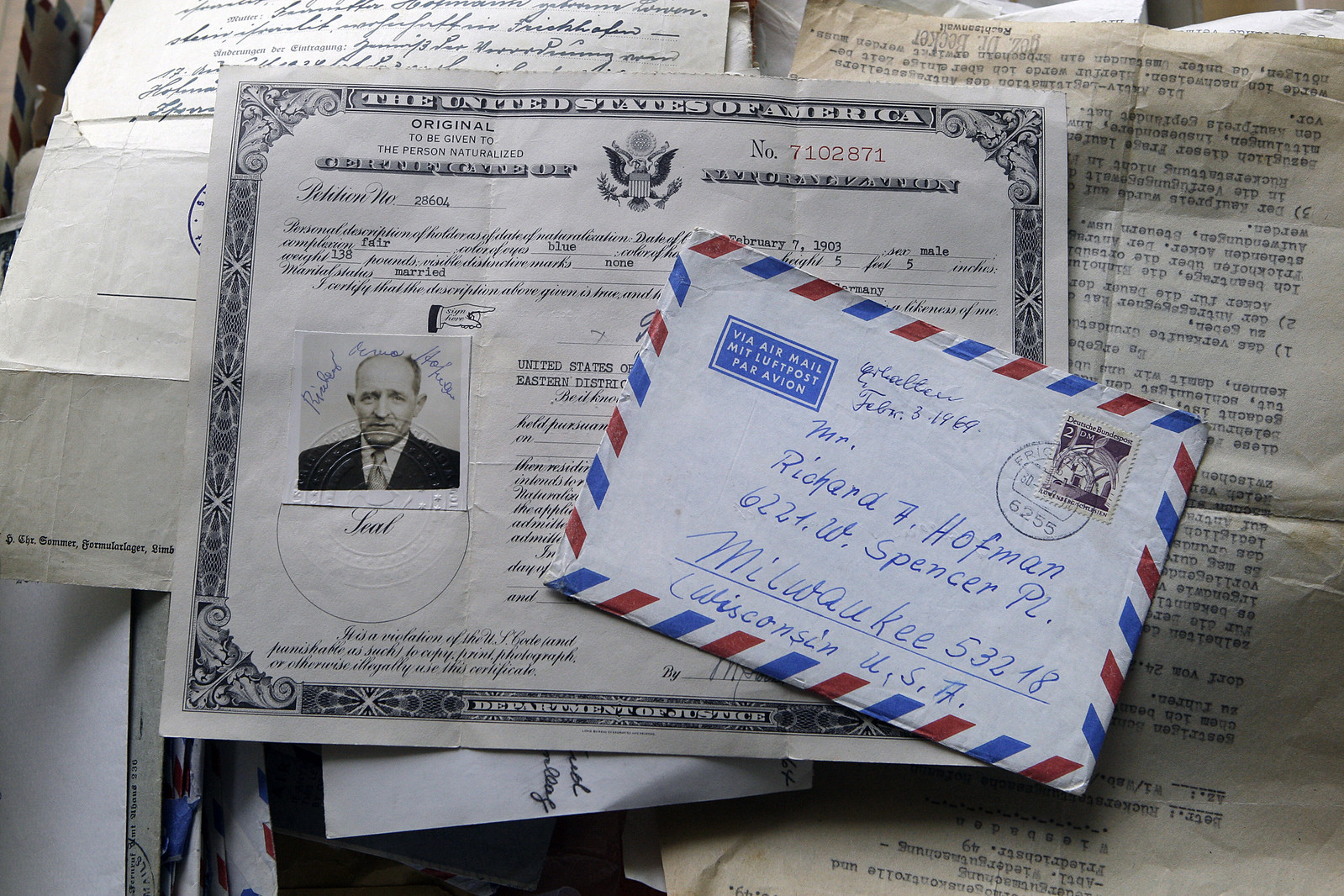
The documents you see above were part of a large stash of old papers, photos, and other ephemera that a Milwaukee woman named Lisa Crum found in the garage rafters of a home that she purchased more than a decade ago. Crum wanted to return the materials to their family of origin, but many of the documents were in German, which complicated her efforts. But she was never gave up. Her family moved to new homes twice after the found the documents, and each time she brought the papers with her.

Now her efforts have finally borne fruit. With the help of a local museum, Crum recently made contact with Lori and Steve Zeitlin, who are descendants of the now-deceased couple that had saved the photos and papers. The connection has extra resonance because, as it turns out, many of the documents track the family's efforts escape the Nazis during World War II.

You can get the full story in this excellent article, which is accompanied by this slideshow. It mentions that Crum always felt that the documents were her "responsibility," and that she and the Zeitlins "call each other family now."

So much of this feels familiar to me. It took me more than a decade before I made contact with anyone connected with the Manhattan Trade School report cards. During that time, I moved to a new apartment but took the cards with me, knowing that they were my responsibility. When I eventually began contacting some of the students' descendants, it forged a series of intense bonds, some of which still remain. It's great to see other people experiencing this same kind of connection via found objects.

(My thanks to Nicole Haase for letting me know about this one.)

Wednesday, May 29, 2013

6.png 5.png 1.png

The photos you see above are part of a remarkable project that is very much like Permanent Record. In fact, it's so PermaRec-ish that I can't believe I hadn't heard about it until just now.

Here's the deal: Two years ago a photographer named Jeff Phillips found a bunch of old slides in a Missouri antiques shop. He was intrigued by the images, so he bought the entire stash — over 1,000 slides — for $60.

The slides, including the three shown above, chronicled the life and travels of a couple. A few of the slides were inscribed with names: Harry and Edna.

Phillips decided he had to find out who Harry and Edna were, and what had become of them. So he started a Facebook page called "Is This Your Mother?," where he began posting some of the slides. Within three weeks, some of his more genealogy-minded followers, using clues provided in some of the photos, had solved the puzzle, and Phillips soon found himself in contact with Harry and Edna's descendants. (Harry and Edna themselves had passed away in the 1980s.) The descendants initially thought it was a bit odd that a stranger was so interested in their family, but they soon warmed to Phillips and his project, which filled in many gaps in their family history.

There's so much about this that feels familiar to me — the need to find the story behind the artifacts, the generosity of volunteer researchers who helped put the pieces together, the connection with the family members connected to the artifacts. It's exactly what happened to me with the Manhattan Trade School report cards.

Kudos to Phillips and his readers for producing such a satisfying project. You can read more about it in this article and on Phillips's website.

In addition, 30 of the slides are being featured in an exhibit at the Foundry Art Centre in Saint Charles, Missouri. The show opened two weeks ago and will be up through June 21.

(My thanks to reader James Poisso for tipping me wise to this one.)

Thursday, May 9, 2013

hatbox.png letter.png

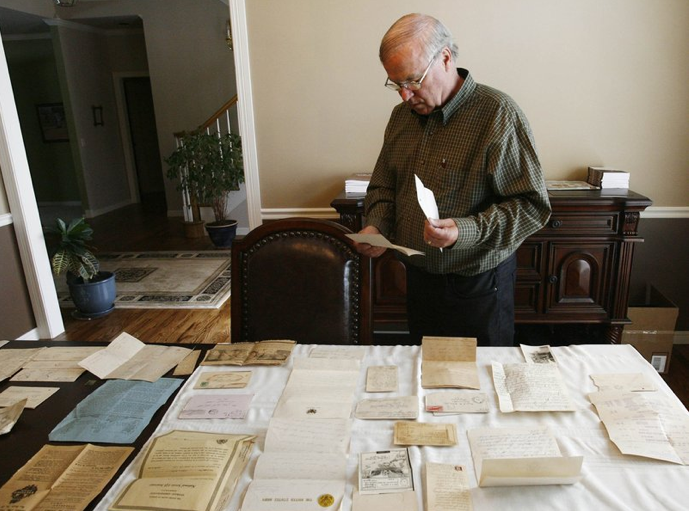
The photo at top is an old hatbox filled with about 250 letters from the 1940s. Below that is a photo of one of the letters and a snapshot that was tucked inside of it.

The hatbox was purchased in 1998 at an estate sale by an Oklahoma woman named Pamela Gilliland, who paid $1 for it. She didn't realize the letters were inside until a few days later. They were all from a pair of brothers who served in World War II and were writing home to their parents. After one perfunctory attempt to locate the family went nowhere, Gilliland put the hatbox and the letters in a closet, where they've sat for the past 15 years.

Gilliland recently learned about a Tulsa-based amateur historian named Doug Eaton, who's had some experience connecting military artifacts with their original owners. She contacted him, and he's now agreed to help her. Here's a shot of him with some of the letters (click to enlarge):

eaton.png

This seems like a good basis for a book, no? Read more about it in this article from the Tulsa World.

(My thanks to reader James Poisso for bringing this one to my attention.)

Wednesday, May 8, 2013

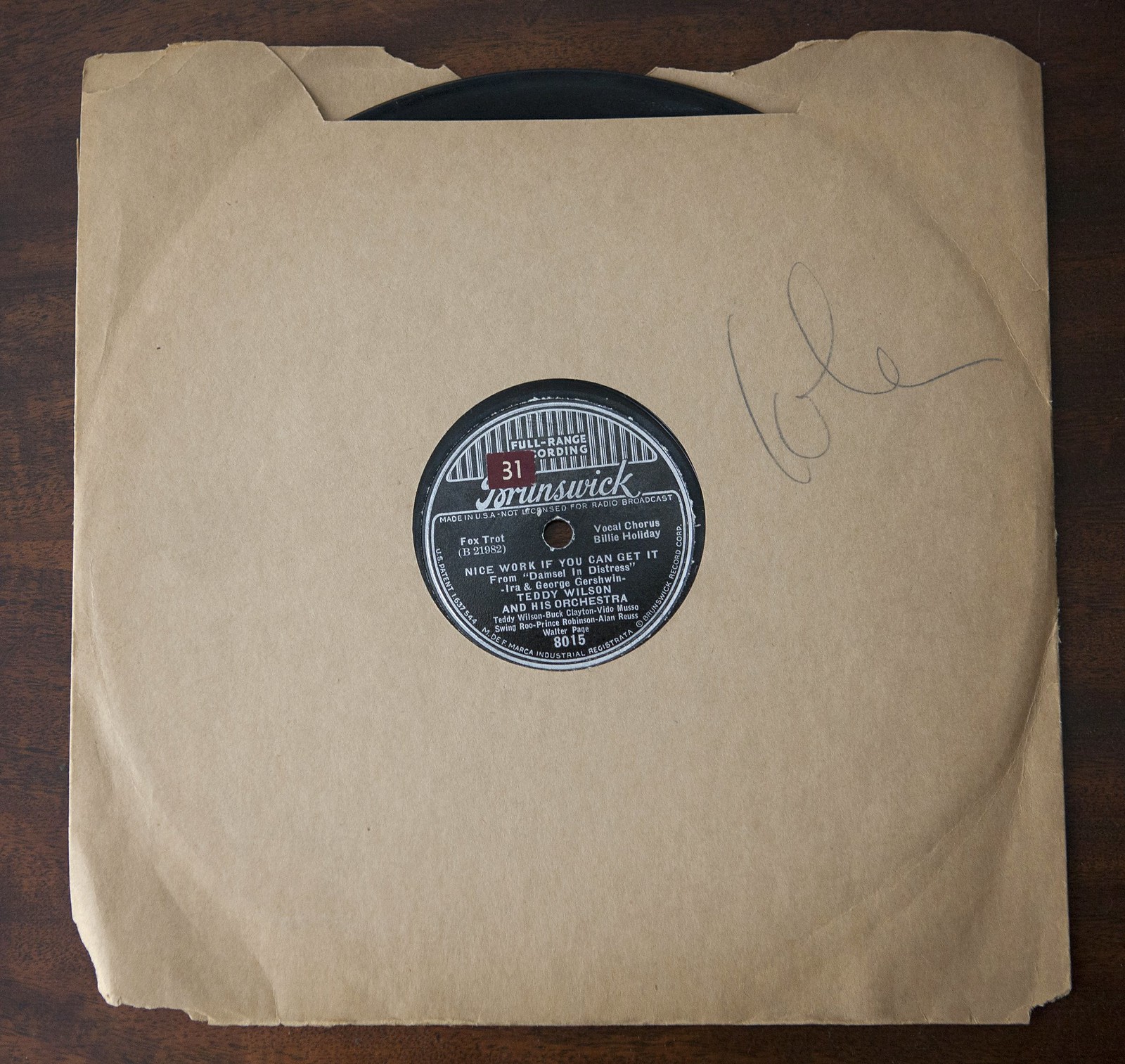
nicework.jpg "Nice Work If You Can Get It"

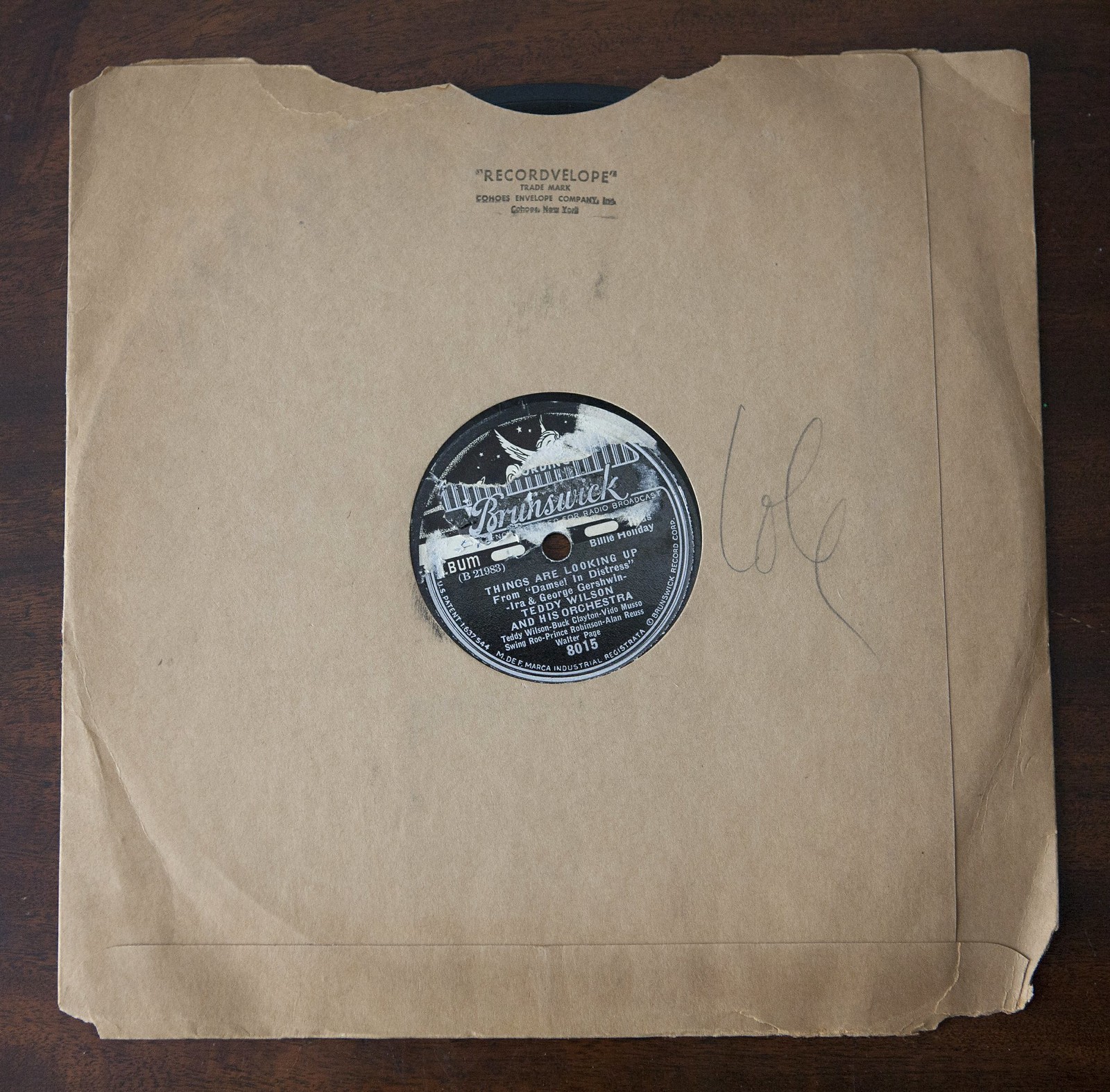
thingsarelookinup.jpg "Things Are Looking Up"

Photos by Ted Barron; click photos to enlarge; click song titles to listen
.

My friend Ted Barron, who runs the excellent music website Boogie Woogie Flu, recently purchased a 78-rpm Billie Holliday record from 1937. As you can see in the photos above, both sides of the record's sleeve were inscribed with the word "Cole."

Tucked inside the sleeve was a postcard. Postmarked in Jersey City, N.J., on Feb. 21, 1953, it was addressed to one Max Cole at "Station W.O.V." in New York (click to enlarge):

postcard.front copy.jpg postcard.back copy.jpg

The text of the postcard reads as follows:

Hi, Max,

A bunch of the fellows and myself catch your show from 6:30 to 6:55 every morning on the way to work. Our only regret is that we can't hear your whole show. If you have a chance, we would appreciate a Sinatra record during the time mentioned above. The boys from Continental Can in Paterson would really enjoy this.

Thank you,

Al Russo
Tom Napp
Tony LaManna

Wow, that postcard offers so many potential avenues of investigation! One at a time:

Max Cole — the postcard's addressee, and whose surname is written on the record sleeve — was a giant of New York City radio, where he worked for 60 continuous years. Prior to that he was an actor, although that chapter of his career was interrupted by his military service in World War II. (You can get further details in this fascinating obituary.) Cole's first radio job after the war was at the New York station WOV — the station to which the postcard was addressed. Which leads us to...

WOV was a New York radio station with a long and complicated history. It was at 1130 on the AM dial from 1928 through 1941, at which point it moved to 1280. (In 1959, the station was sold and its call letters changed to WADO, which still operates at the 1280 frequency today.) Max Cole worked there from 1946 through 1955. During that period, the station's studios were located at 132 W. 43rd St. — the heart of Times Square — which explains why the postcard was processed by the Times Square Station post office:

tss.jpg

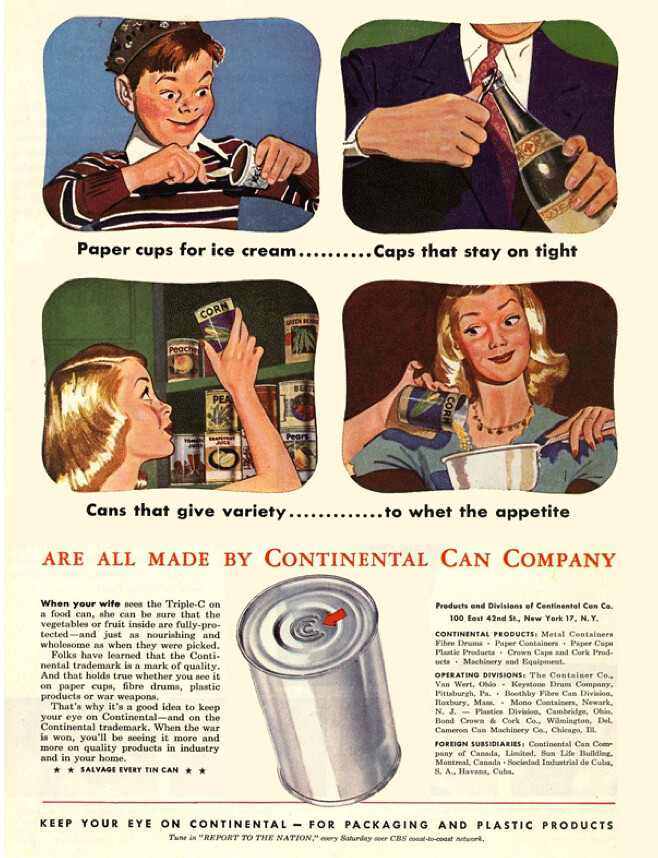
Continental Can Company, where the men who sent the postcard worked, was one of America's two primary can manufacturing companies in the 20th century. (The other was the American Can Company.) By 1954, one year after the postcard was sent, Continental Can had 81 plants spread out across the country, including the one in Paterson, N.J., where the postcard guys worked. Here are two of the company's ads from the 1950s (click the lower one to enlarge):

1959-Continental-Can-Company-LIFE-.png ccc.png

Although the postcard guys worked at the plant in Paterson, the postcard itself was mailed from Jersey City, so at least one of the three men who sent it presumably lived there. Interestingly, Google Maps shows that the drive from Jersey City to Paterson takes 27 minutes. That matches up perfectly with the postcard's reference to the employees listening to Max Cole's radio show "from 6:30 to 6:55 every morning on the way to work."

In 1959, six years after the postcard was sent, the Paterson plant laid off 200 workers due to a steel strike:

concan.png

Were the postcard guys still working for Continental in 1959? If so, did they get caught in the wave of layoffs?

Changes in the packaging industry eventually led to Continental Can's demise (you can read more about that, and the rest of the company's history, here), although I'm not sure exactly when the Paterson plant closed. The building is listed as a notable sale on the home page of a New Jersey realty company. Details of the sale, which took place in the fall of 2011, are as follows:

cont can.png

Al Russo, Tom Napp, and Tony LaManna are the three Continental Can employees who sent the postcard. If we assume that they were at least 25 years old when the postcard was mailed in 1953 (and possibly quite a bit older than that), they would now be at least 85 years old. In other words, there's a strong chance that they're now deceased, so I went looking for obituaries. I found this obit for an Alan Russo, who lived in the right place and was about the right age, although there's no mention of whether he worked for Continental Can. I also found a death notice for an Anthony LaManna, again without corroborating details. I was unable to find anything regarding Tom Napp. (There were several death notices for people named Tom Knapp, but they weren't the right age.)

Frank Sinatra — well, you know who he was. It makes sense that the Continental Can guys would have requested one of his songs, since Sinatra was born in nearby Hoboken. I really like that the postcard refers to him simply as "Sinatra" but that someone — presumably Max Cole — wrote in Sinatra's first initial, just for clarification (click to enlarge):

sinatra.jpg

"The Song Is You" is a song title written in the lower-left corner of the postcard, and is apparently the Sinatra song that Max Cole chose to play for the Continental Can employees. The tune, which was written in the early 1930s by Jerome Kern and Oscar Hammerstein II, was a favorite of Sinatra's. He recorded it eight times during his career, beginning with a 1942 session for the Bluebird label. That's probably the version Cole played. This one goes out to the boys at Continental Can:

Several of Sinatra's subsequent versions of the tune are available here.

Interestingly, it appears that "The Song Is You" was not Cole's first choice of what to play for the Continental Can employees. If you look closely at the lower-left corner of the postcard, you can see that another song title was written and then erased before "The Song Is You" was written (click to enlarge):

song is you.png

The first song title is tantalizingly close to being legible, but I can't quite make it out. Can anyone else decipher it?

———

One Additional note: Although the postcard was postmarked in Jersey City on Feb. 21, it was processed by the Times Square Station on Feb. 22 (click to enlarge):

feb 21.jpg feb. 22.jpg

This is interesting for a couple of reasons. First, Feb. 22 was a Sunday in 1953. More notably, Feb. 22 is Washington's birthday, which was still a Federal holiday back then. (The default Monday for Presidents Day didn't come into use until 1971.) So the Times Square Station post office was apparently one of those rare branches that are always open, or at least always processing, even on holidays.

I'm more attuned to Feb. 22 than most folks because my parents got married on that date in 1948. The idea was that their anniversary would always be a holiday. Unfortunately, Presidents Day put an end to that.

———

So that's a pretty detailed breakdown of the info on the postcard. But there are still some unanswered questions. For starters, it's odd that the postcard ended up tucked inside a Billie Holiday 78, instead of in a copy of "The Song Is You." More importantly, what happened to Messrs. Cole, Napp, and LaManna? Would anyone like to delve a bit deeper into that research? It would be amazing to reconnect this postcard with the descendants of the guys who sent it.

(Special thanks to Ron Underberg for research assistance on Continental Can.)