Showing posts with label Old Ledgers. Show all posts

Sunday, January 25, 2015

The Ghost of an Apartment’s Former Inhabitant

Click to enlarge

What you see above is a New York City landlord's ledger entry for a tenant named Vivian Grant, who lived in a Manhattan apartment building in 1960. The ledger was found by a woman named Joanne O’Connor, who now lives in that same building. A few years ago she became curious about the building's history, so she poked around in the basement and discovered the ledger, which indicated that Vivian Grant had once lived in Apartment 2F. That happens to be the same apartment where Ms. O'Connor now lives, so she decided to learn as much about Vivian Grant as she could.

As it turns out, there was a lot to learn. Vivian Grant had died in as the result of a botched illegal abortion, which was a major news story at the time. Here's how the Daily News covered it (click to enlarge):

The more Ms. O'Connor learned about her apartment's former occupant, the more obsessed with the story she became. She spent long hours poring over microfilm, examining court records, tracking down relatives, visiting Vivian's grave. She even named her cat Vivian Grant.

All of this, and a lot more, is described in this excellent article, which I can't recommend highly enough. Engagingly told and endearingly written, it's a great story. PermaRec's highest rating — don't miss.

Thursday, November 14, 2013

Cover.jpeg

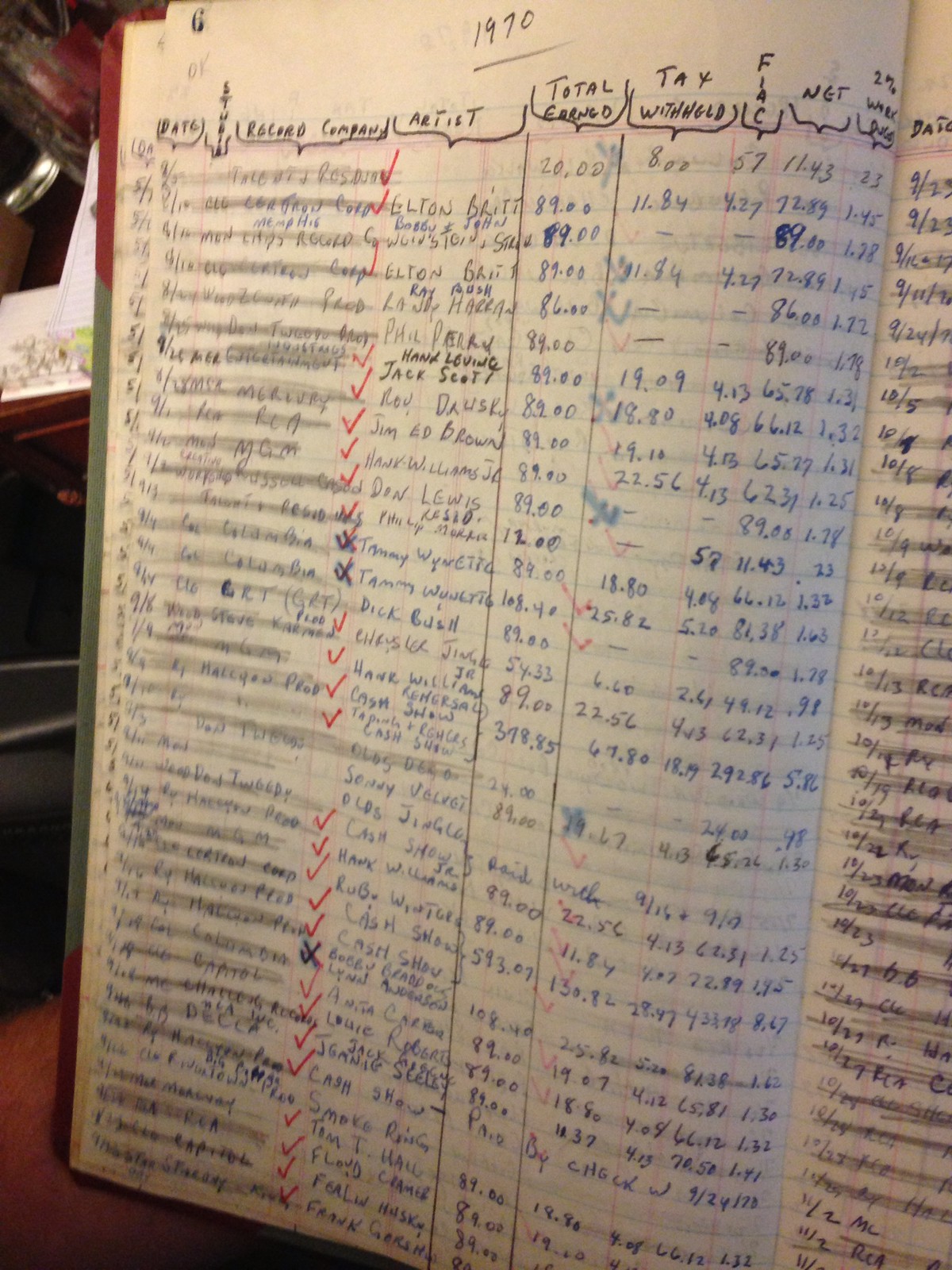
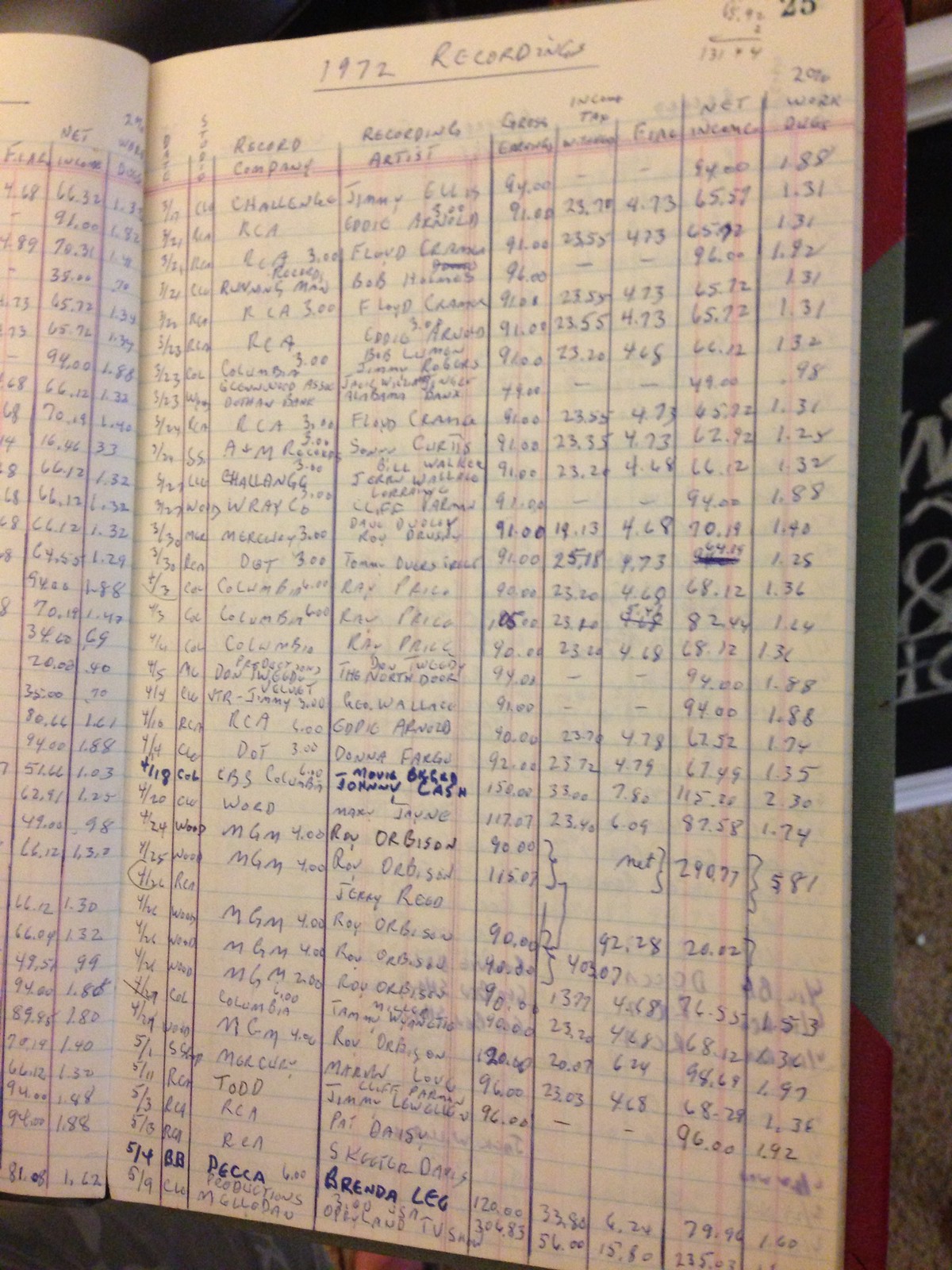
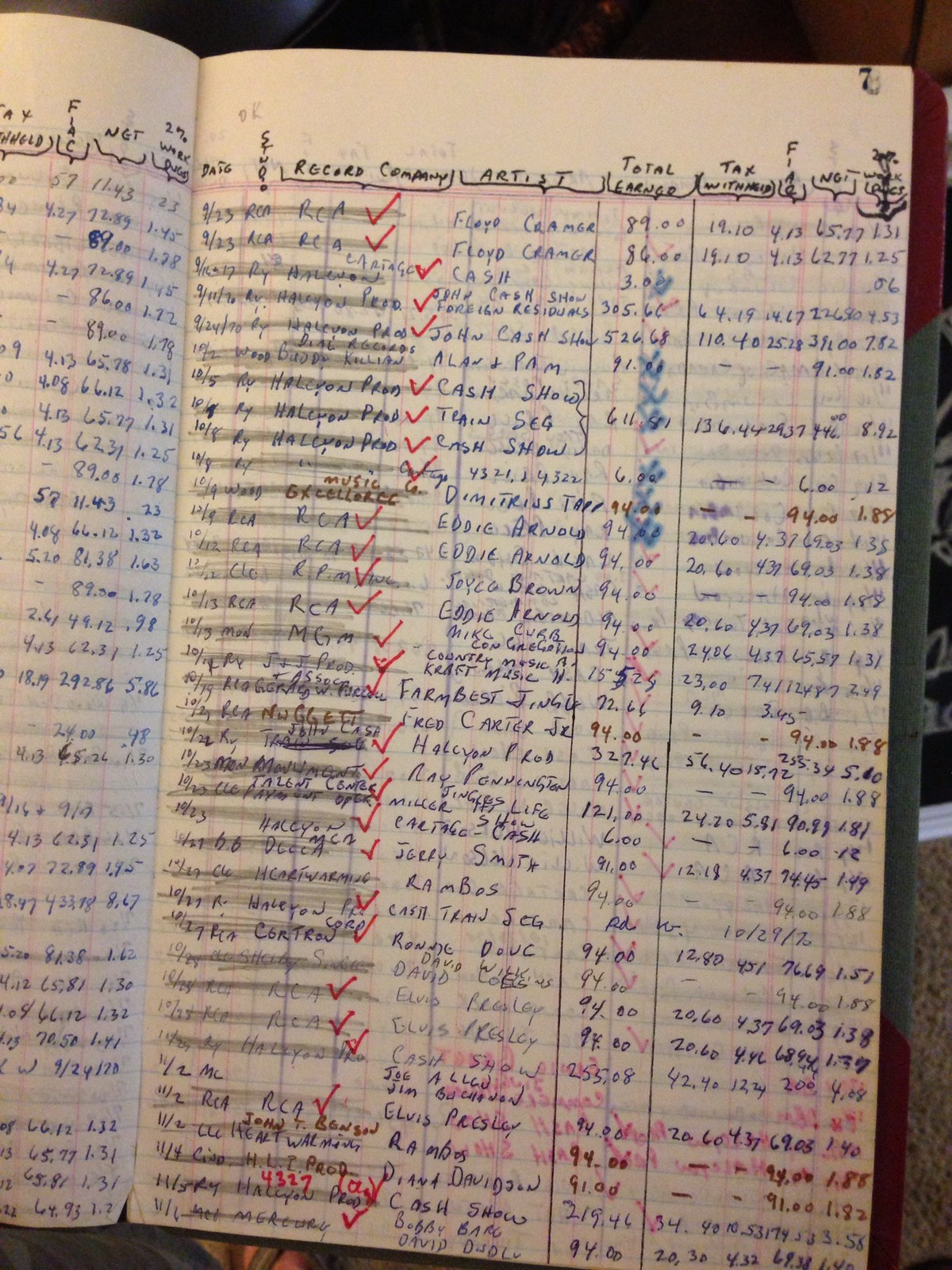
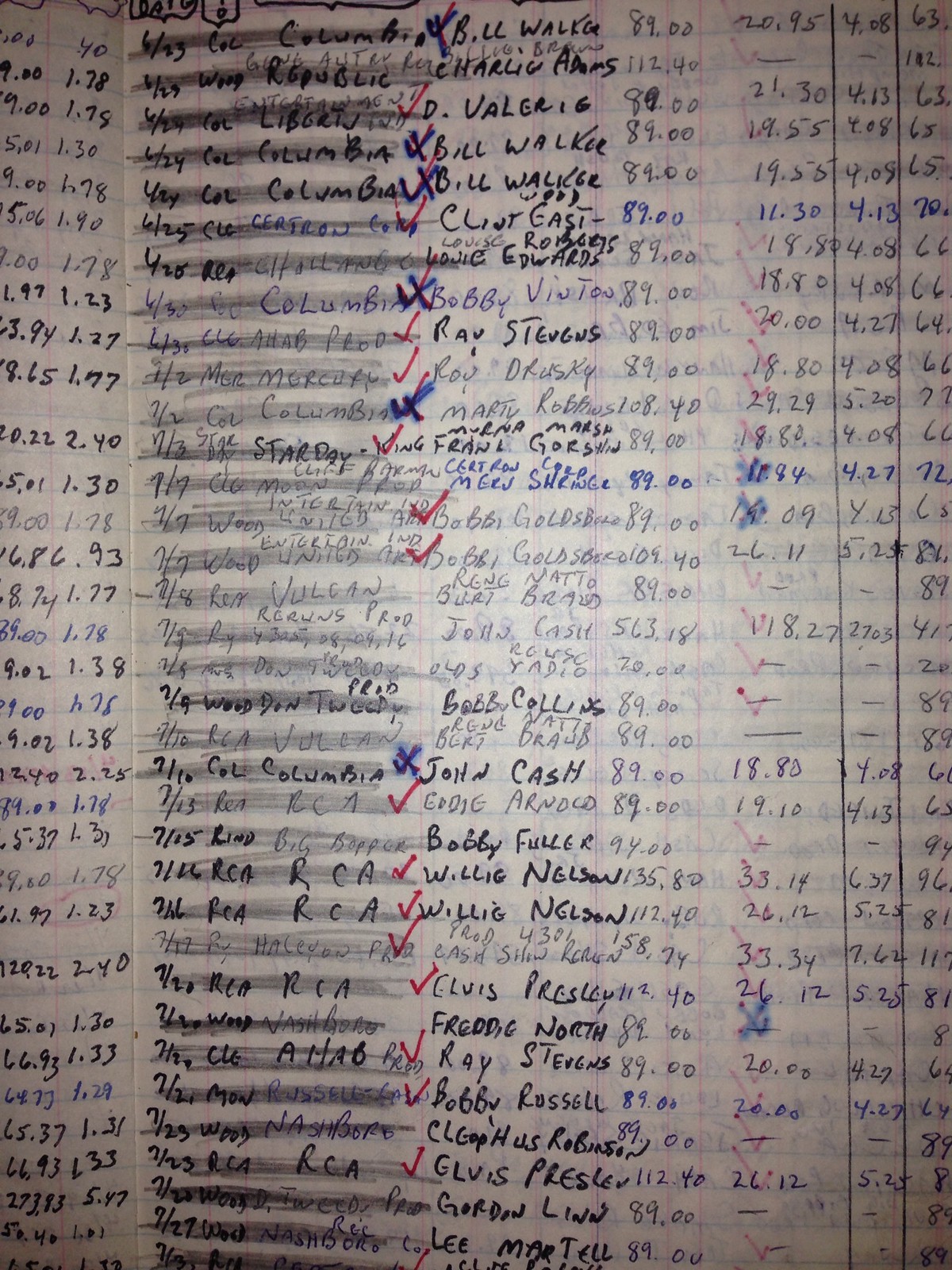
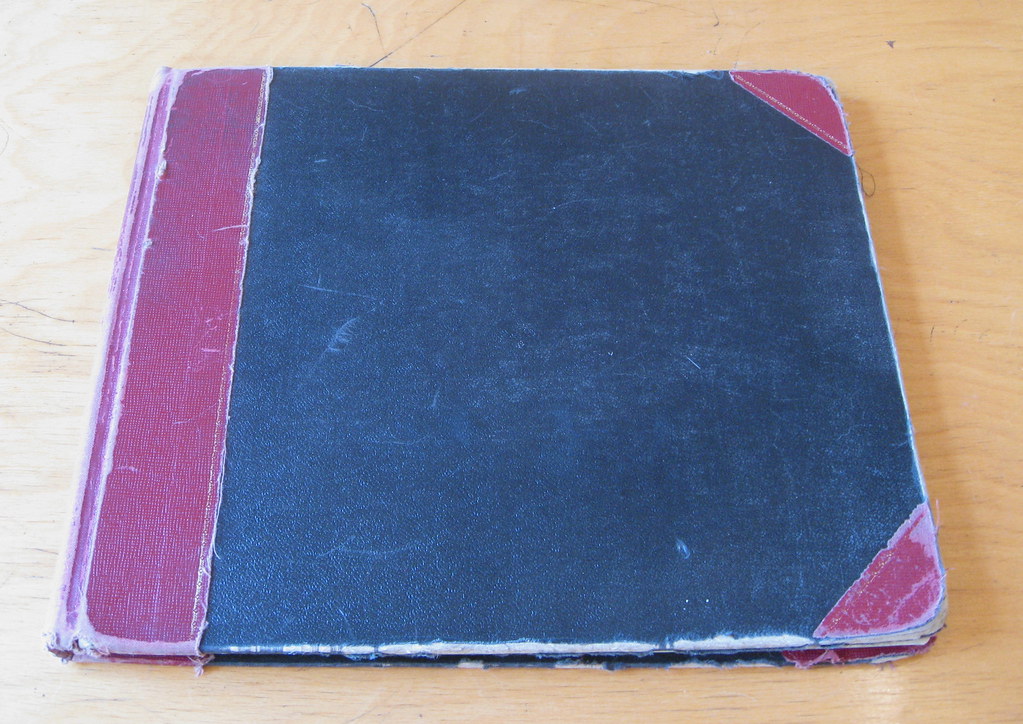
I've written before about ledgers. Today, as you can see above, we have a new one to look at, and it's a doozy. It comes our way from PermaRec reader Russell Ries Jr., who recently sent me the following note:

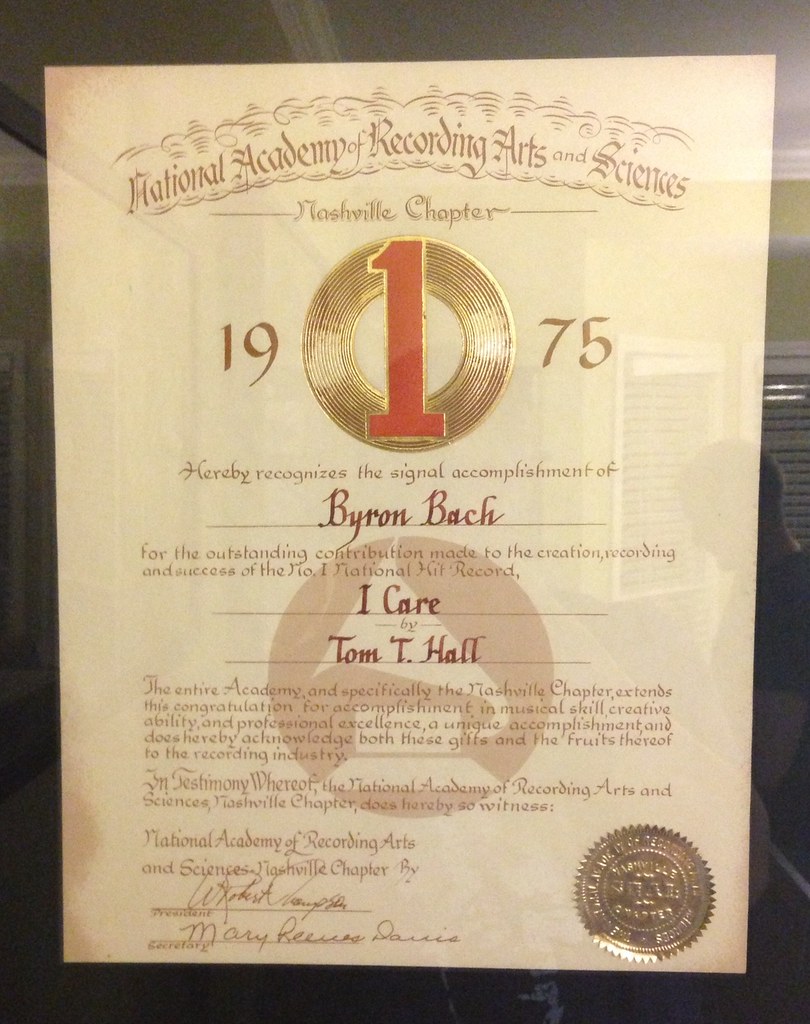
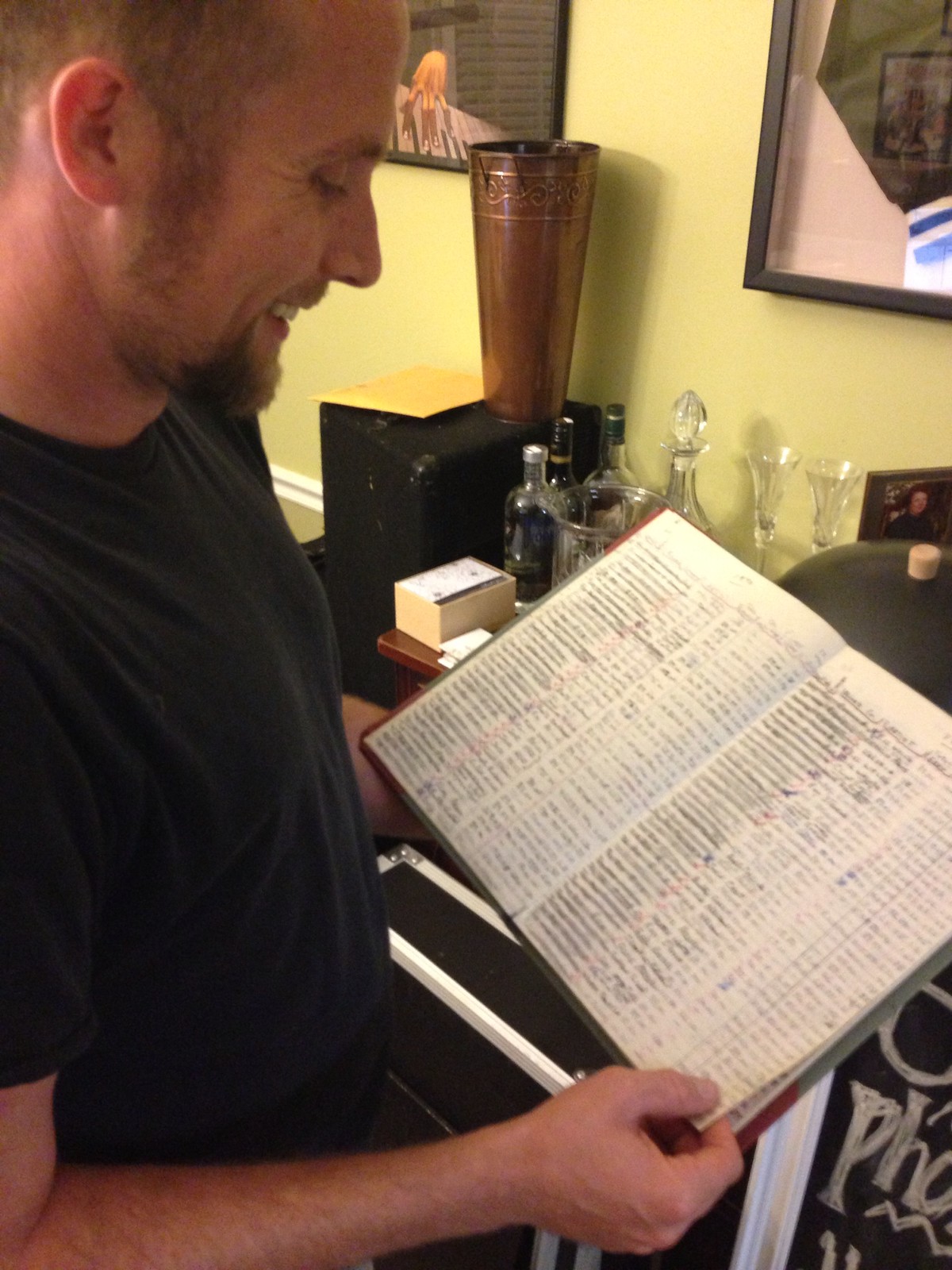
I was recently hanging out at my friend Rich's house when I saw something on his wall that I'd never noticed before. It was a gold record commemorative certificate that had been given to Rich's grandfather [for all the photos that follow, you can click to enlarge]:

Gold Record.jpeg

Turns out Rich's grandfather, Byron Bach, had been a longtime cello player in Nashville and did a bunch of studio work around town. He worked a whole lot with Johnny Cash, whom he referred to as John.

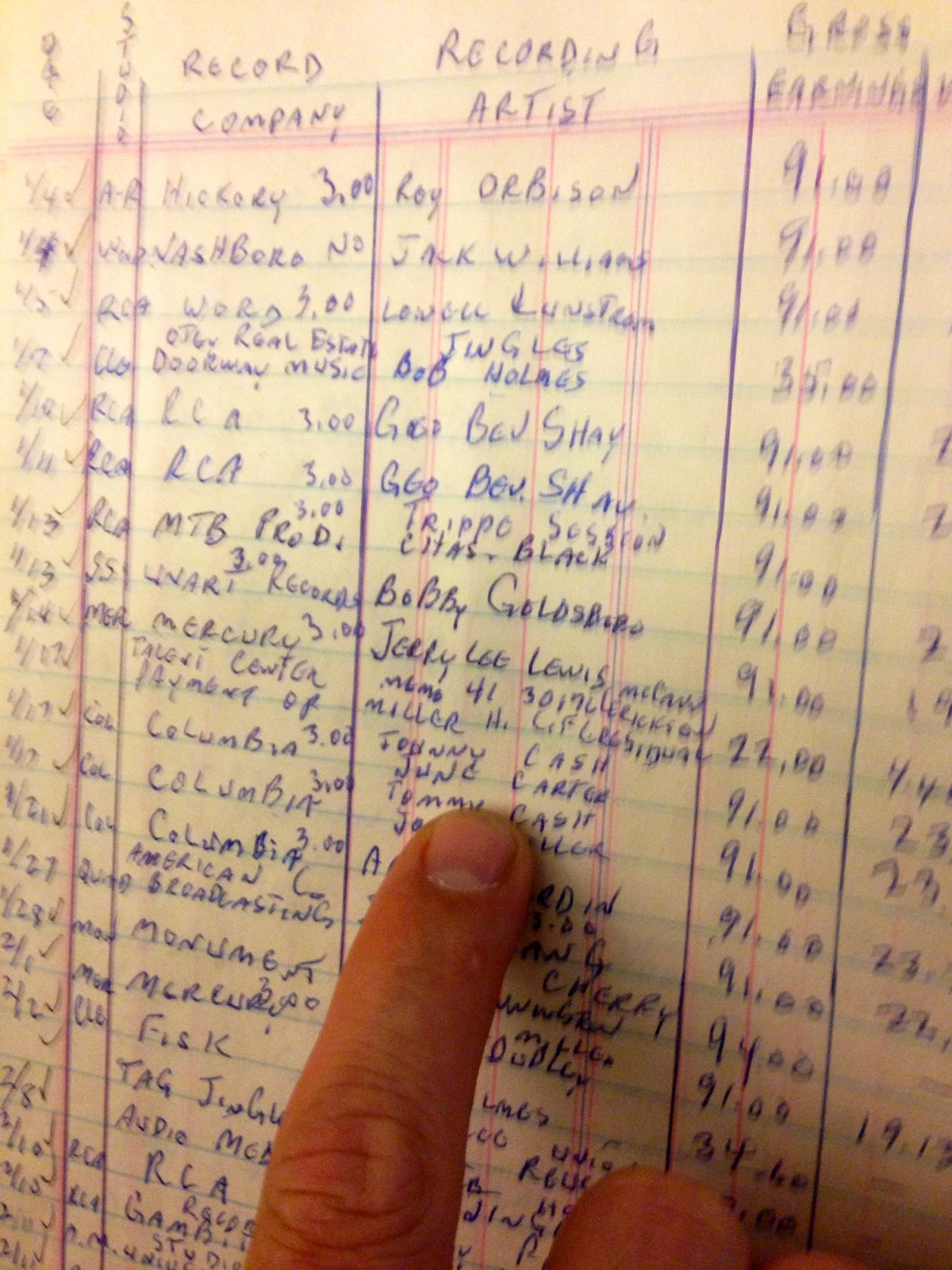
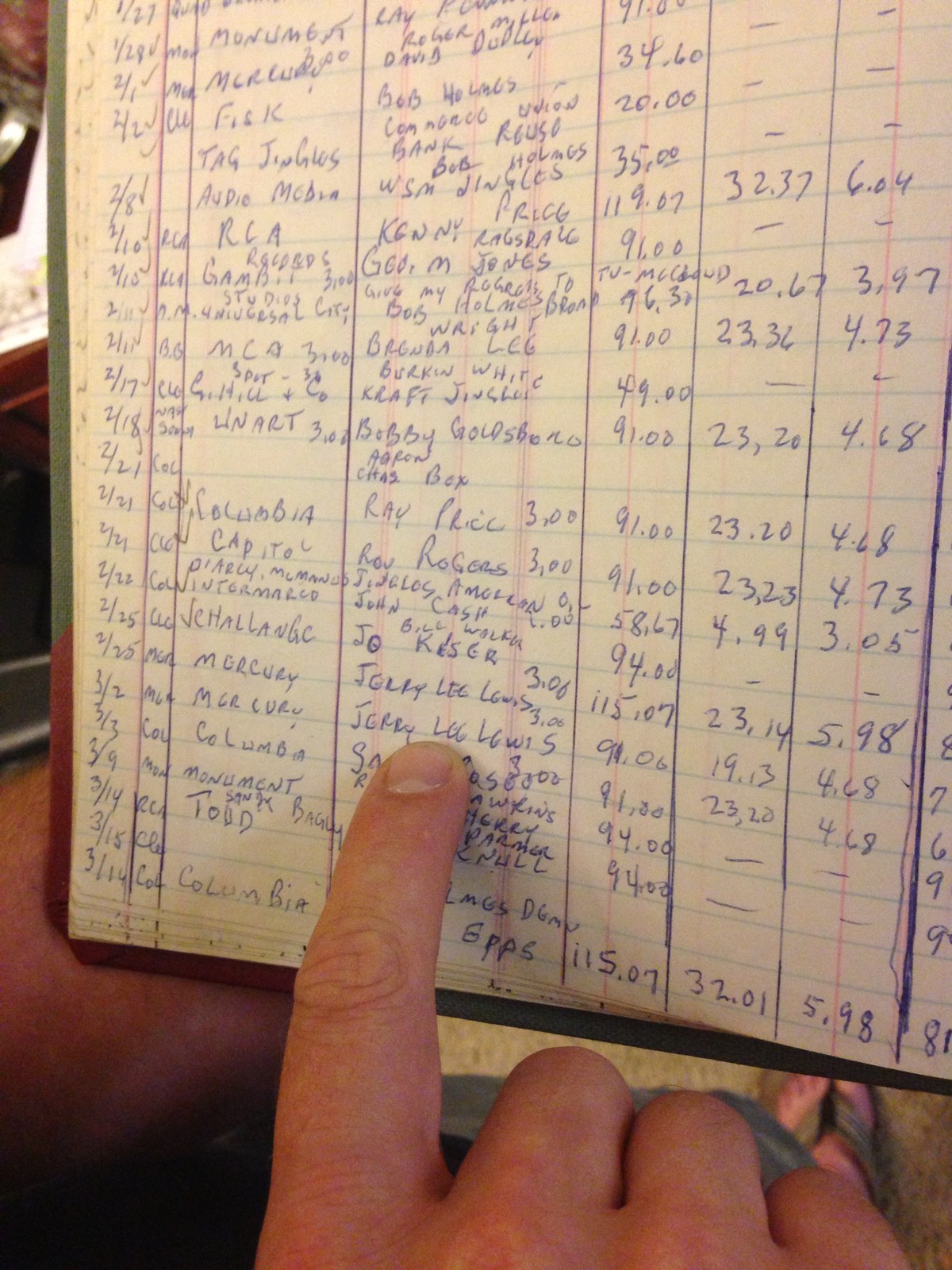
Despite knowing Rich for years, I'd never heard anything about his grandfather. After we talked about him for a minute, Rich said, "Would you like to see his ledger that he kept?" Obviously, I said yes. The ledger showed all the studio sessions he worked on, and the names inside blew me away: Elvis, "John Cash," Willie Nelson, Roy Orbison, Jerry Lee Lewis, Ray Price Loretta Lynn, Clint Eastwood, George Jones, June Carter Cash, etc.

John and June.jpeg Jerry Lee Lewis.JPG Details 4.jpeg

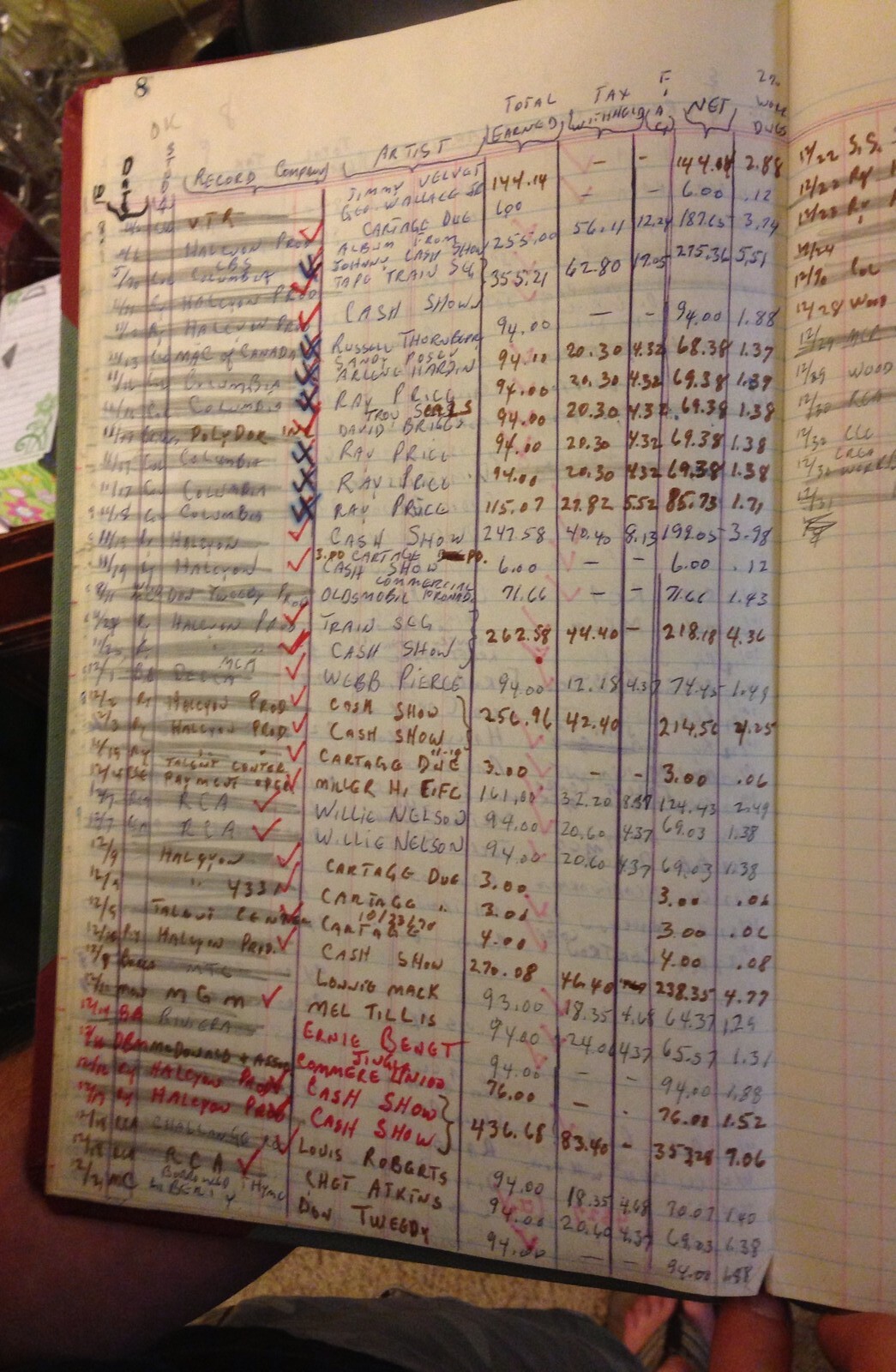
For each entry it has the date; the names of the record company, studio, and artist; how much he was paid; how much he withheld for taxes; how much he made after taxes; and so on.

I took a bunch of photos. Rich said you're more than welcome to use them and write about them.

Man, what a trove of music history! Judging from Russell's photos, the ledger mostly covers the 1970s — not a bad time for Nashville. Here are the rest of the pics Russell sent me. The last one shows his friend Rich holding his grandfather's ledger. Enjoy!

More Activities.jpeg Details 3.jpeg Details 5.jpeg Details 2.jpeg Details 1.jpeg Details 6.JPG Rich with Ledger.jpeg

Friday, November 2, 2012

Screen shot 2012-10-30 at 8.37.42 PM.png
Click to enlarge

What have we here? It's a photo of Hodel's Drug at the BaseMar Shopping Center in Boulder, Colorado. It was here that Oscar Hodel went to work each day and filled out the ledger that I eventually acquired.

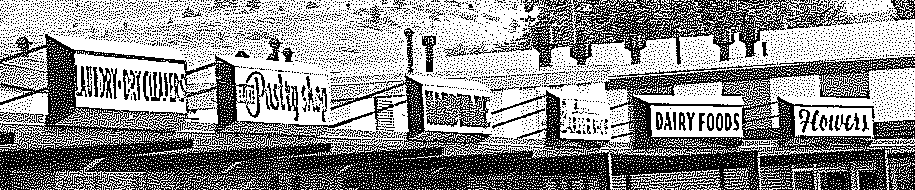
The photo was taken in 1956 -- the year that Hodel's Drug (and I think the shopping center itself) opened. While looking at the photo, I noticed something interesting. Check out the signs for the other shops (click to enlarge):

Screen shot 2012-10-30 at 8.53.41 PM.png

It's a little hard to read some of them but they say:

Laundry•Dry Cleaners
[Illegible] Pastry Shop
Hardware
[Illegible] Barber Shop
Dairy Foods
Flowers

So four of the six signs are completely generic, indicating a category of commerce rather than a shop name -- odd. I must say, I would have been very disappointed if the Hodel's Drug sign simply read "Pharmacy."

(Special thanks to Wendy Hall of the Carnegie Branch Library for Local History in Boulder for providing the photo.)

+ + + + +

As some of you know, I live in Brooklyn, New York. Fortunately, I came through Hurricane Sandy completely unscathed -- no flooding, didn't lose power, didn't even have any trees come down on my block or in my back yard. Same goes for my Mom and my brother, both of whom live in the New York area.

Obviously, millions of other people weren't as lucky. If you and/or someone close to you were affected by the storm, hang in there -- we're all thinking of you. In a bit of cosmic irony, however, on Wednesday I broke my arm in a bike accident. Typing is now very tricky, so content here on the PermaRec site may be spotty for a bit. Thanks for understanding.

+ + + + +

Slate update: As you may have guessed, the storm has futher delayed the publication of the next full-length PermaRec article on Slate. Will they get it up next week? Hope so.

Tuesday, October 23, 2012

1971yellowpages.png

What you see above is an entry from the Boulder Yellow Pages in 1971. The circled listing is for Hodel's Drug -- the pharmacy whose owner produced the amazing ledger that I recently wrote about. I'm a little surprised they had such a no-frills, bare-bones listing -- in part because I imagined them having a higher profile in the community, or maybe just because I can imagine Oscar Hodel writing "Renewed Yellow Pages ad, paid extra for boldface type" in the ledger.

The phone book entry is one of several Hodel-related clippings that have been sent my way. I'll get to that in a minute, but first let me back up a bit to the week when my original piece about the ledger ran. Soon after I posted that piece, I heard from PermaRec reader Gregg Fanselau. He said he had attended high school with several Hodels, and he gave me the contact info for one of them -- a guy named David Hodel -- in case I wanted to get in touch with him.

So I sent David Hodel a note, explaining how I'd acquired the ledger on eBay, asking if he knew how it ended up there, offering to return it to the Hodel family if they wanted it, and showing him the what I'd written about it. Here's what he wrote back:

Oscar [the guy who filled out the ledger] was my dad's older brother. I'm thinking probably one of his kids put the ledger on eBay. Ockie was a bit of an artist and I'm sure the illustrations [in the ledger, like the little turkey for Thanksgiving] are that side of him coming out. They always kept a record of the weather because it affected traffic at the store and gave a way to compare like days to like days.

We don't have any sentimental attachment to the ledger so the Boulder History Museum is probably a good start. My dad [who, like Oscar, was a pharmacist] gave some trays and other pharmacy-related items to the University of Colorado. They were from the era when pharmacists had to make their own capsules rather than have them pre-counted and packaged.

Hmmmm. I like that Oscar's nickname was Ockie -- that's a nice detail. Aside from that, though, David didn't offer me that much information, and I was surprised by how disinterested in the ledger he was.

Fortunately, it was around then that I heard from Wendy Hall, manager of the Carnegie Branch Library for Local History in Boulder, who had seen what I'd written about the ledger and generously offered to do a bit of research for me. The phone book clipping at the top of this page is one of several things she sent me.

Wendy also sent me this newspaper article published in August of 1956, shortly after the store opened (and about six and a half years before Oscar began keeping notes in the ledger I eventually acquired). It describes the physical layout of the store, provides background on the Hodel family, and gives us our first glimpse of what Oscar looked like (click to enlarge):

Screen shot 2012-10-17 at 10.27.22 PM.png

The article mentions that Oscar's brothers, Ron and Merv, operated another Hodel's Drug outlet in Denver, and that Merv "was a stellar member of the football and other athletic teams" at the University of Colorado. That sounds like boilerplate praise, but Wendy sent me some clippings showing that Merv (whose full name was Merwin) wasn't just a collegiate standout -- he actually played pro football, albeit briefly, in the NFL! Here are some items charting his athletic career, beginning with a 1949 article touting him as the most promising U. of Colorado athlete "since the days of All-American [and future Surpreme Court justice] Whizzer White":

Screen shot 2012-10-17 at 10.09.47 PM.png

Now fast forward to January of 1952. Merv has graduated and is drafted by the New York Yanks, a short-lived NFL franchise:

Screen shot 2012-10-17 at 10.06.33 PM.png

As you can see, the Yanks promptly traded Merv's contractual rights to the New York Giants (good thing, because the Yanks folded before the start of the ’52 season). But by May of that year, Merv had decided to forego a football career in favor of entering the pharmacy biz:

Screen shot 2012-10-17 at 10.06.49 PM.png

Now skip ahead another year and a half, to the fall of 1953. Merv has apparently had a change of heart and is preparing to play for the Giants:

Screen shot 2012-10-17 at 10.24.11 PM.png

Several weeks later, however, Merv had been sidelined with torn knee ligaments:

Screen shot 2012-10-17 at 10.06.21 PM.png

That's the last clipping relating to Merv's football career, and I'm pretty sure he never played pro football again after that. He apparently saw very limited action during his time with the Giants: His career stats show that he appeared in two games, carrying the ball five times for 11 yards, and somehow managing to catch two passes for minus-15 yards (a fairly remarkable, if unfortunate, achievement). Still, that was enough for him to be immortalized in the form of a football card, as you can see below:

Screen shot 2012-10-21 at 10.49.21 PM.png

Of course, Merv wasn't the one who created the amazing ledger -- that was Oscar, Merv's brother. And Oscar had a son, also named Oscar, who worked with him at the pharmacy. The father was Oscar A. Hodel; the son, Oscar M. Hodel. Our last clipping finds Oscar M., the son, entering the real estate business in 1973:

Screen shot 2012-10-21 at 11.32.46 PM.png

Note that he had "previously managed Hodel's Drug in the BaseMar shopping center" -- the same shop whose daily records were kept in the ledger by Oscar A. Hodel. As you may recall, the final month recorded in the ledger was March of 1972, and there were indications that the store's lease was about to run out. Looks like they did indeed shut down, forcing the younger Oscar to find a new line of work.

That's enough Hodel family history for today. Big thanks to Wendy Hall at the Carnegie Branch Library for Local History in Boulder for all the clippings.

Monday, October 8, 2012

IMG_2193.JPG

IMG_2141.JPG

Click photos to enlarge

Remember the mental hospital patient ledger that I recently wrote about? I'll have more to say about that shortly-ish (it's a lot of information to process, plus I'm still assessing the ethical implications), but in the meantime that ledger has gotten me curious about the larger world of vintage ledgers in general, so I've been seeking some of them out.

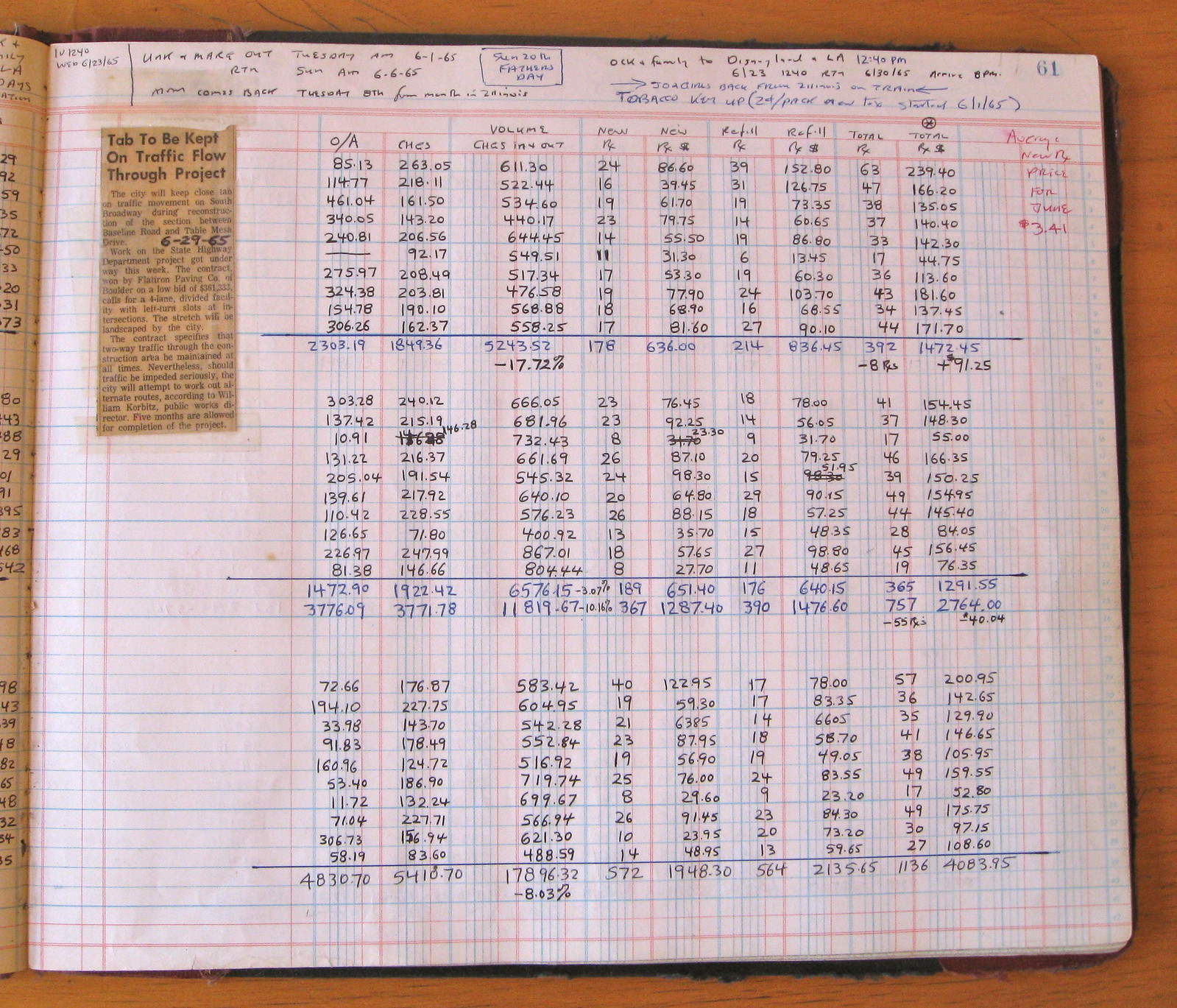
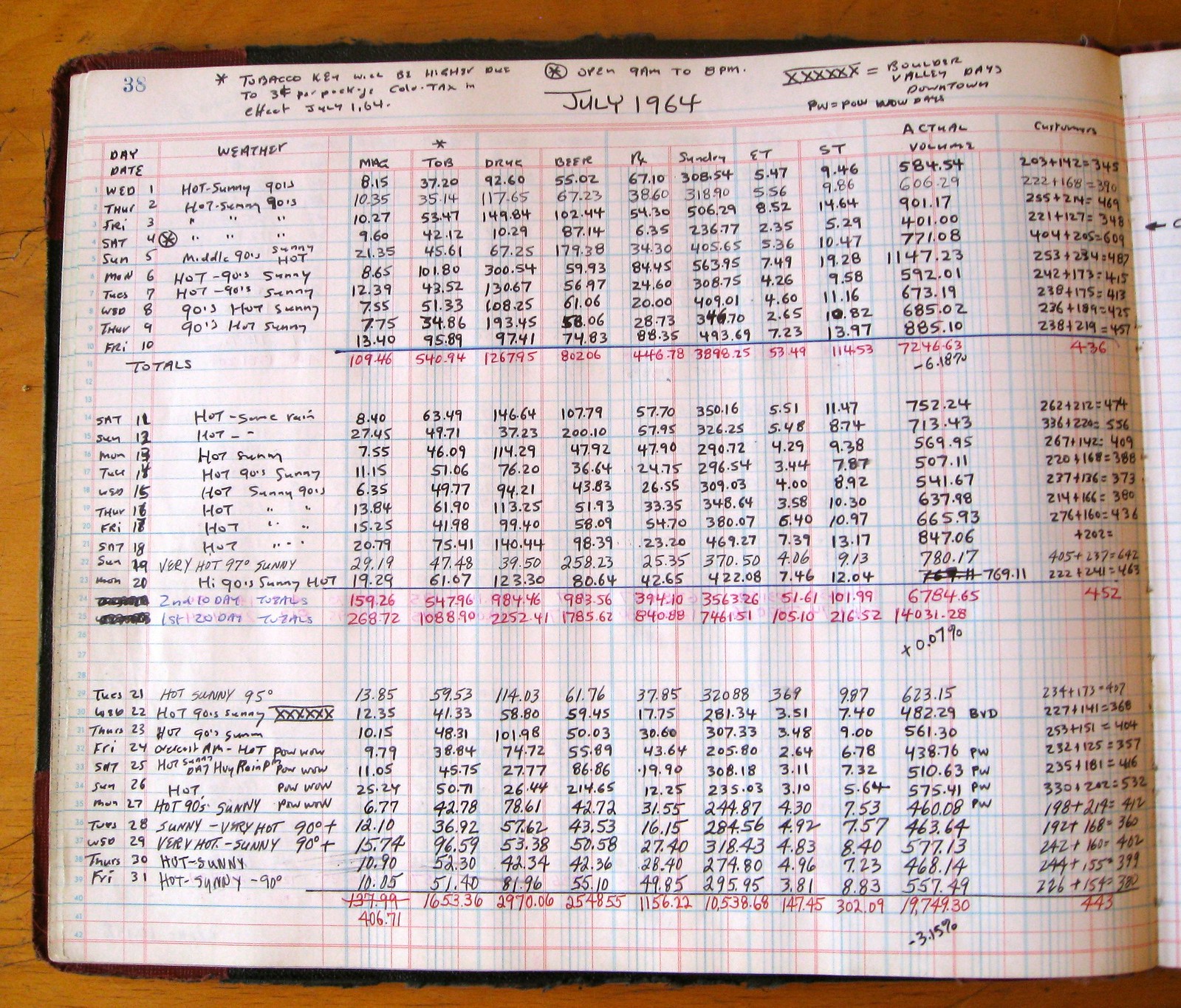
One of the most interesting ones I've acquired, which I found on eBay, is shown above. It tracks a little over nine years' worth of daily revenue figures (and lots of other things, which I'll get to in a minute) for Hodel's Drug, a now-defunct pharmacy in Boulder, Colorado. The ledger 152 pages and fairly large -- 13" by 15" when closed, and 30" wide when opened. The hardcover binding is thick, and the whole thing feels heavy and substantial, almost indestructible. If my apartment burned down, I feel like this is one of the items that would survive the inferno.

I wanted to know more about Hodel's Drug, so I did some rudimentary Googling and came up with this obituary for Sonja Hodel, who died earlier this year. The obit says she "was married to Oscar A. Hodel, longtime proprietor of Hodel's Drug in Basemar Shopping Center, who died in 1979." Based on this, and on a few other clues, I'm pretty sure the ledger was filled out by Oscar. (I've tried to find an obituary for Oscar but have so far come up empty. Update: PermaRec research volunteer Cate Bloomquist has turned up this obituary for Oscar. It doesn't add much to the story, although it does prove for the umpteenth time that Cate is a much better researcher than I am.)

The ledger begins in January of 1963 and goes through March of 1972. For the first few years of the ledger, each month got its own two-page spread, as shown in the second photo at the top of this page. But in April of 1966, Oscar changed the format to one page per month, instead of two, as you can see here (for all of these photos, you can click to enlarge):

IMG_2196.JPG

The ledger's primary function was apparently to track the shop's daily revenue in a variety of sales categories -- magazines, tobacco, liquor, beer, prescriptions, non-prescription drugs, sundries (always a great category), and so on -- along with daily figures for sales tax, excise tax, and the like. I'm sure someone could analyze the numbers and discern assorted business trends and sales cycles. Maybe I'll get around to doing that myself one day.

For now, though, I'm much more interested in the other information and notes scattered throughout the ledger. Cumulatively, they suggest that the ledger was really more of a personal journal, and that Oscar was a bit of an obsessive diarist. I'm a bit obsessive about documenting certain things myself, so I felt something familiar and even comforting as I explored the ledger -- the sense that I was encountering the work of a kindred spirit. Still, Oscar took things a lot further than I ever have.

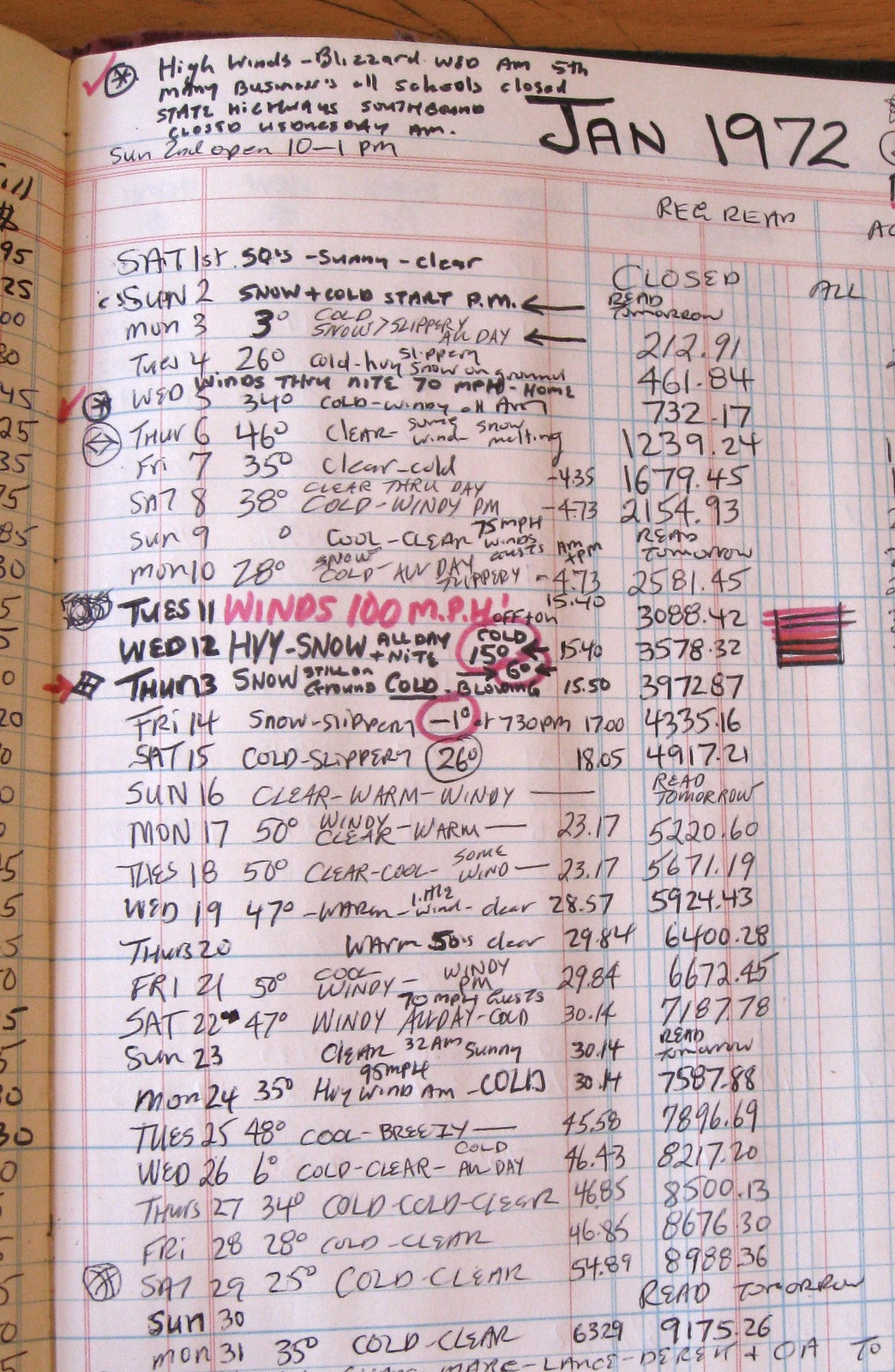
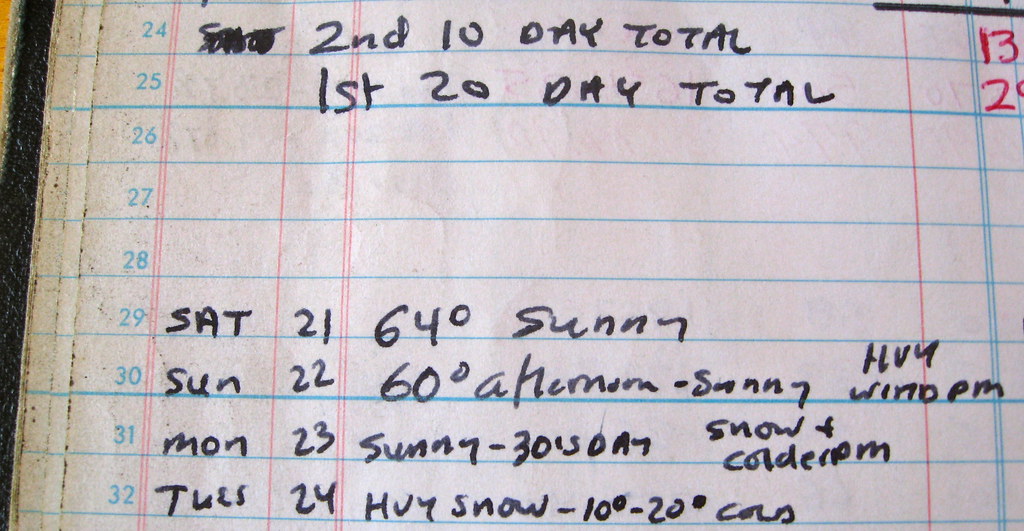
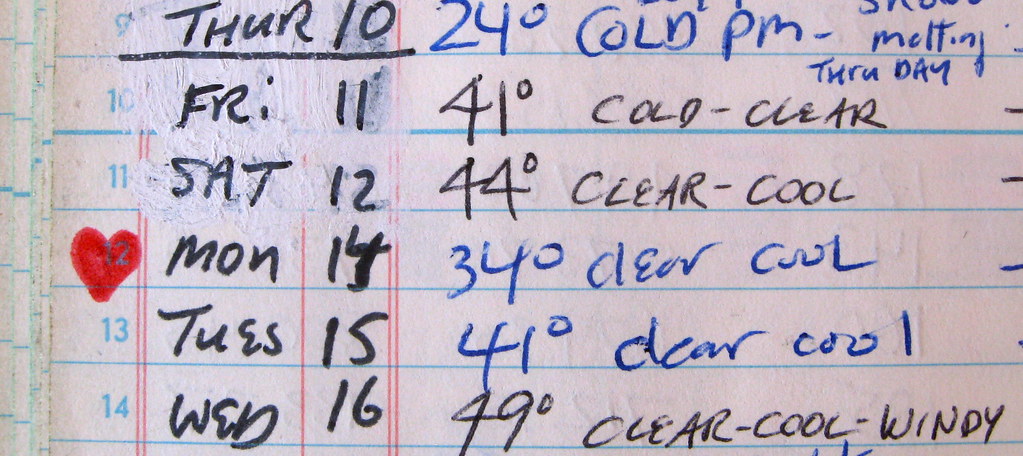
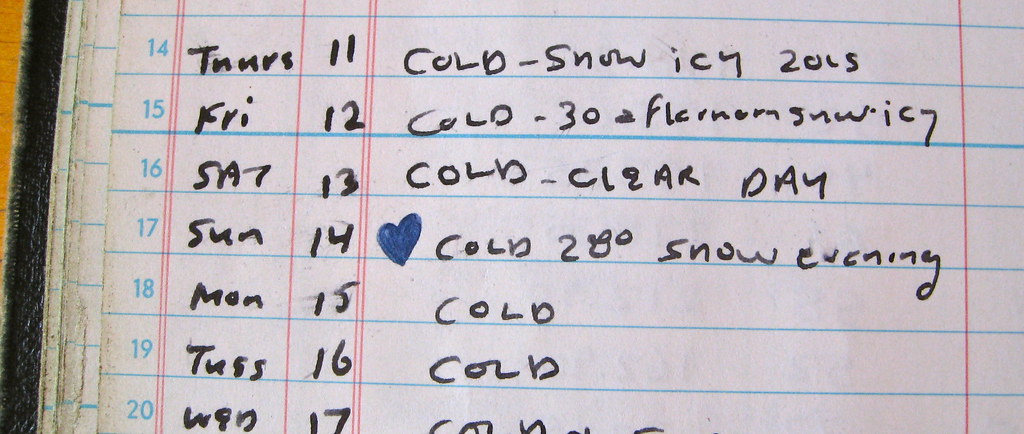
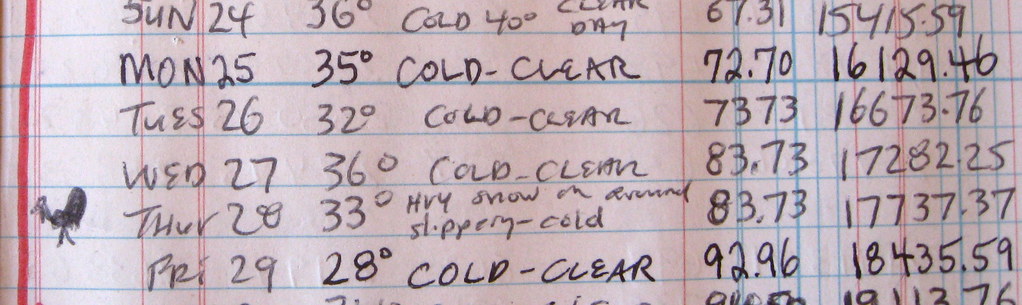
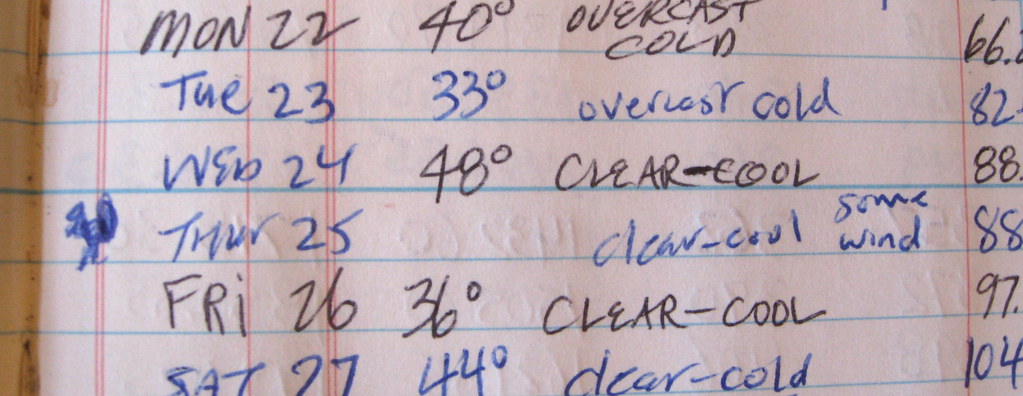
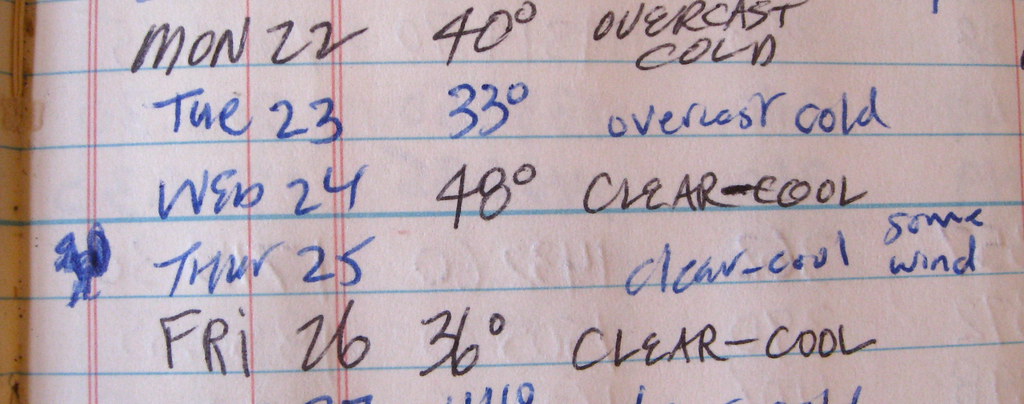
For starters, Oscar appears to have been rather fixated on the weather. Every single daily ledger entry begins with the day's high temperature and a description of the weather, with atypical or severe conditions noted in dramatic lettering:

IMG_2184.jpg

IMG_2181.jpg

I'm sure Boulder's daily weather history is easy enough to find on the internet these days. Still, it's kind of amazing that Oscar's drug store ledger also serves as a de facto meteorology archive for the city. I happen to have been born during the period covered by the ledger, so I looked up my birthday -- March 21, 1964 -- and found that it was an unusually warm day, but that it snowed just a few days later (not that I was anywhere near Boulder at the time, but it's still interesting):

IMG_2154.JPG

I especially like the top of the page for June of 1965, where Oscar noted that a tornado had taken place in Colorado Springs and then drew a little twister to punctuate the event:

IMG_2159.jpg

But weather wasn't Oscar's only obsession. Looking through the ledger, several other themes become apparent:

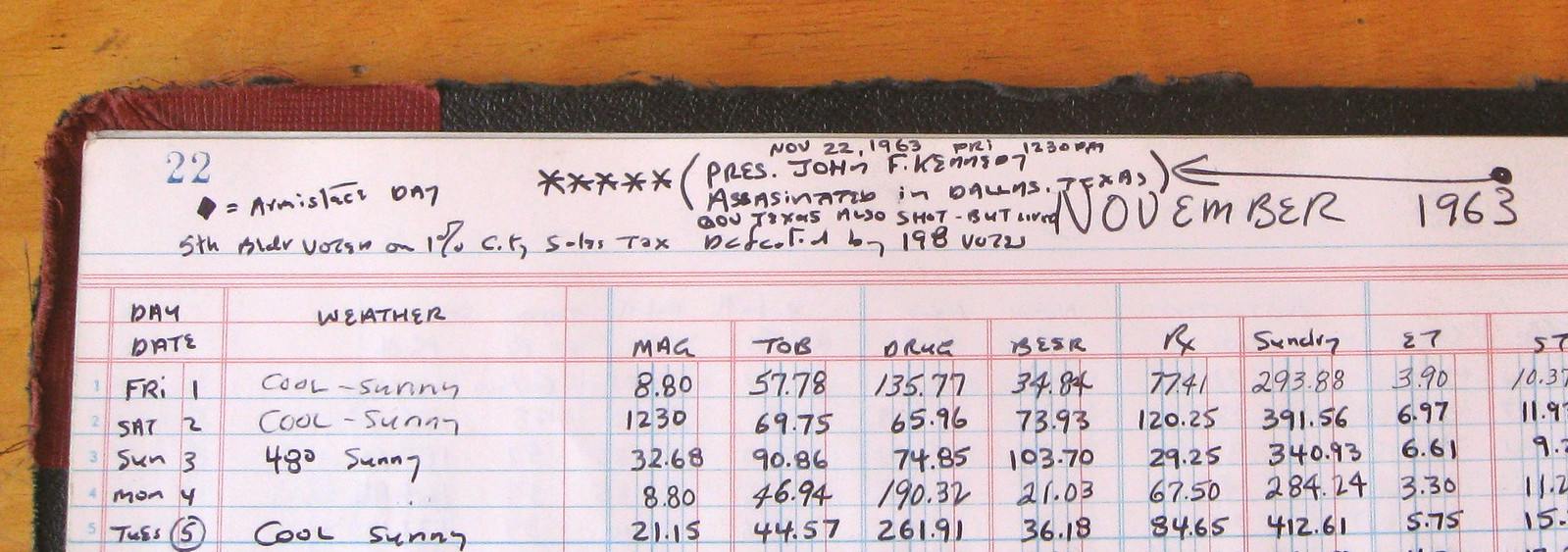
1. Current events. Significant news events were annotated at the top of the pages for the months in which they occurred. Here, for example, is the top of the page for November of 1963, when John F. Kennedy was assassinated, along with the ledger entry indicating that the store was closed on the morning of his funeral:

IMG_2151.JPG

IMG_2153.JPG

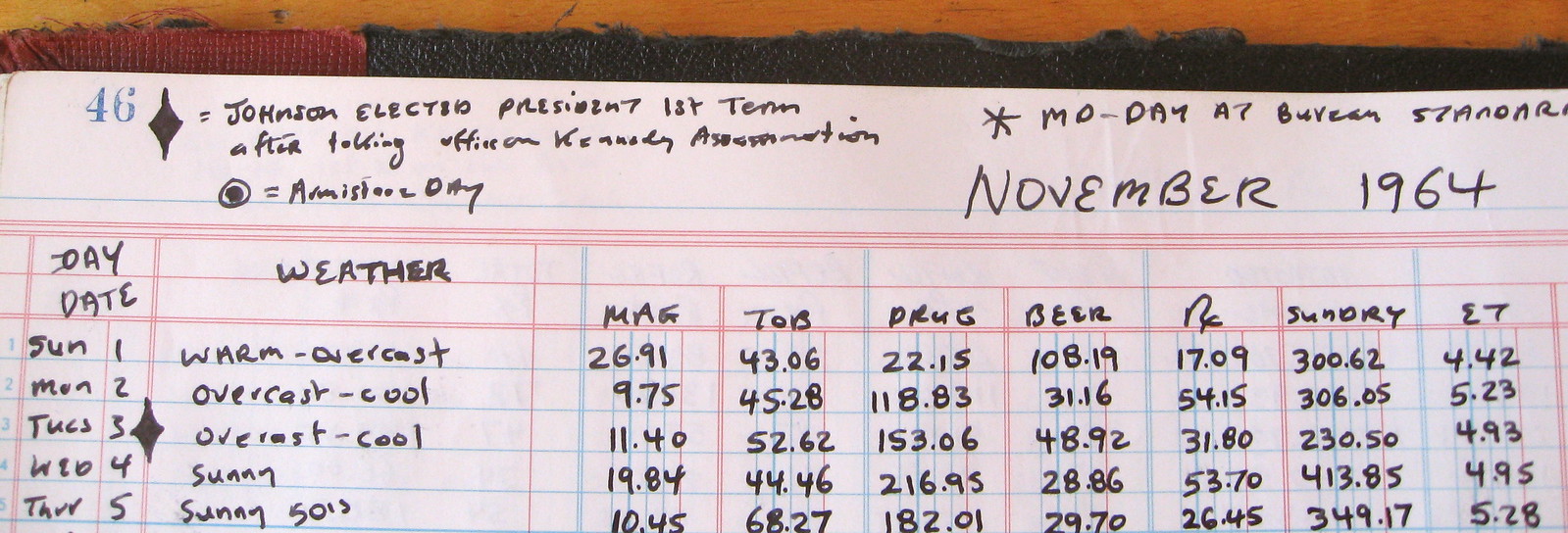
When Lyndon Johnson was re-elected a year later, this too was noted on the top of the appropriate page:

IMG_2155.JPG

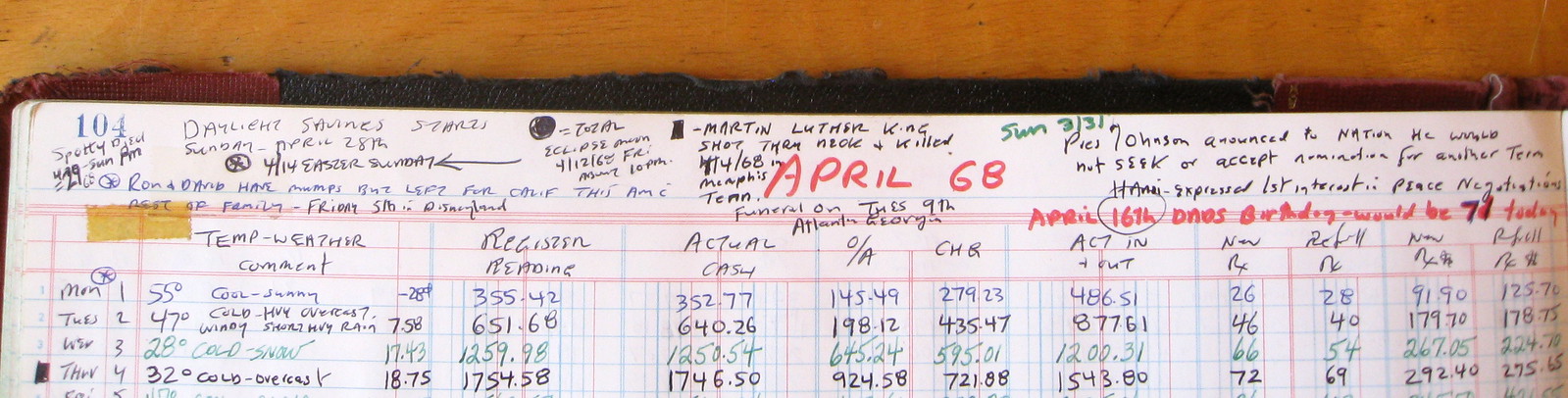
April of 1968 was a particularly busy month, with Martin Luther King Jr.'s assassination, a total eclipse, Johnson's announcement that he would not seek re-election, the start of Daylight Savings Time, and more:

IMG_2167.JPG

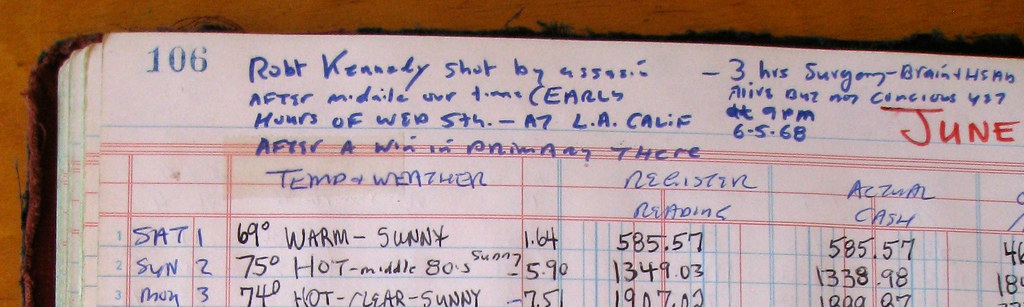
And here are the notations for Robert Kennedy's assassination (June of 1968) and the Neil Armstrong's first steps on the moon (July of 1969):

IMG_2185.jpg

IMG_2171.JPG

2. Holidays. Oscar had a fairly consistent protocol for denoting holidays in the ledger. The entry for Valentine's Day, for example, always included a little heart:

IMG_2176.JPG

IMG_2183.jpg

IMG_2156.JPG

IMG_2156.JPG

As you can see, sometimes the heart was red, and sometimes not. Maybe this was just a function of whether Oscar had a red pen within easy reach, but I doubt it. Almost everything about the ledger feels programmatic, like it was done for a reason, so I suspect there was a color-coding system for the hearts, but I haven't cracked that code yet.

The hearts are nice, but my favorite thing about the entire ledger is the crude little turkey that Oscar drew each year to designate Thanksgiving:

IMG_2174.JPG

IMG_2179.jpg

IMG_2180.jpg

How great is that?! Other holidays got their own symbols, but the hearts and the turkeys are the best ones.

3. Traffic. The ledger has repeated references to traffic developments in the Boulder area (presumably because they might affect business at Hodel's Drug), such as this newspaper clipping:

IMG_2144.JPG

IMG_2145.JPG

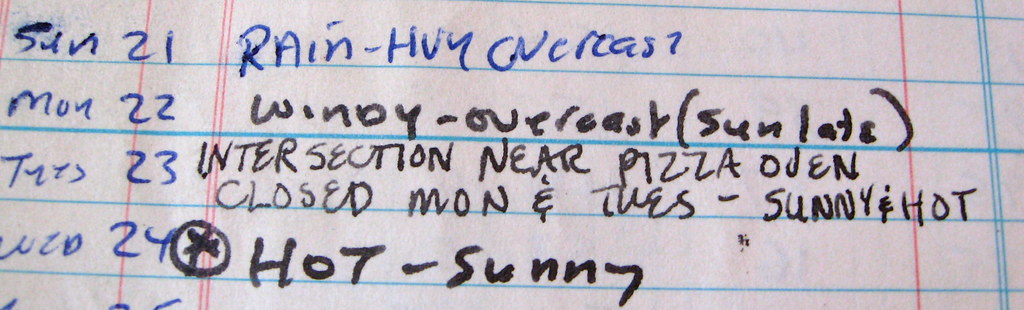
Some of the daily entries also have traffic-related notes, such as this mention of an intersection being closed:

IMG_2148.JPG

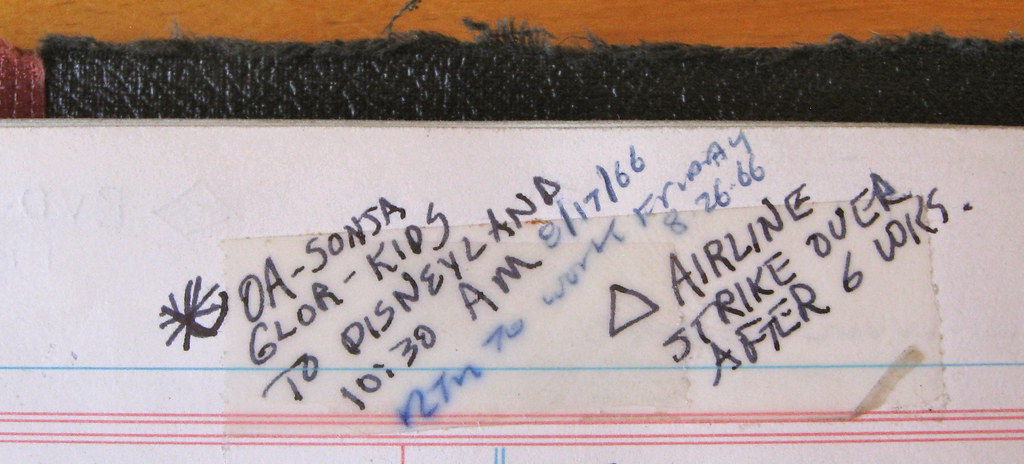
4. Family. There are many, many notations regarding family developments. Fortunately, that obituary for Oscar's wife, Sonja, lists the names of many of the family members, so I was able to decipher many of the relationships and references.

Let's start with Sonja herself. If you look again at that obituary, you'll see that the headline lists her as "Sonja" but the text refers to her as "Sonia." Interestingly, this inconsistent spelling also appears in the ledger:

IMG_2152.JPG

IMG_2162.jpg

IMG_2165.JPG

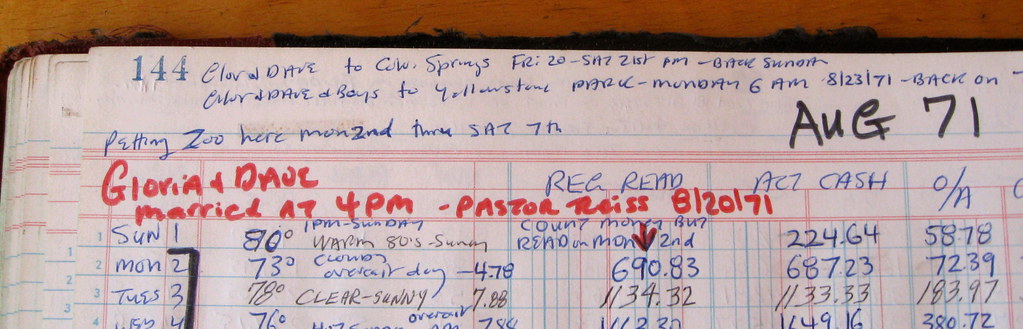
There are also many references to Oscar and Sonja/Sonia's daughter, Gloria, most notably the announcement of her marriage to a man named Dave in August of 1971:

IMG_2178.jpg

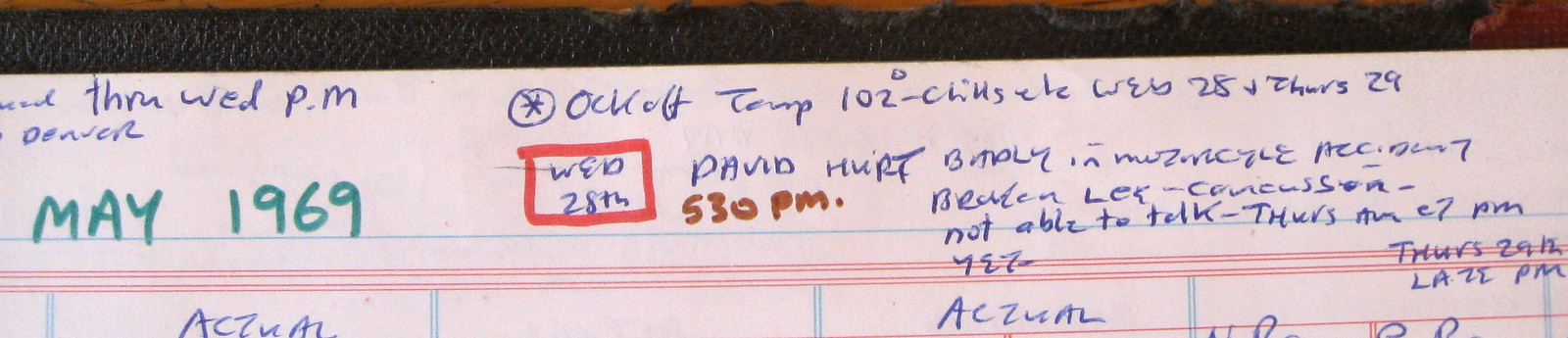
The wedding note was good to see, because Dave had apparently been involved in a serious motorcycle accident a little over two years earlier:

IMG_2170.JPG

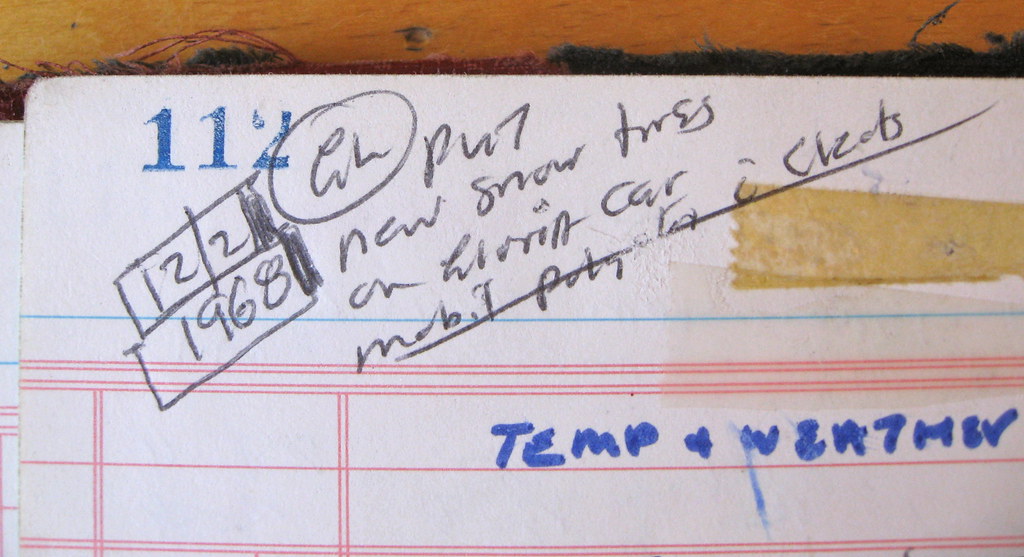
In a somewhat more mundane development, Oscar put snow tires on Gloria's car in December of 1968, which I mention only because it shows the degree to which Oscar used the ledger as a personal journal:

IMG_2169.JPG

My favorite family-related notation is from August of 1969, when Oscar managed to combine several of his passions (family, weather, cars/traffic, etc.) into the following note:

IMG_2172.JPG

In case you can't make out the handwriting, it says, "Temp 8/8 Friday officially 101º -- Sonia, Gloria, boys + I go to Colorado Springs (Cave of Winds). Air conditioning not working in Cadillac."

5. Sports. There are assorted references to sports throughout the ledger -- mostly football, but not exclusively. For the January 1964 page, for example, Oscar listed the winners of the various New Year's Day bowl games:

IMG_2150.JPG

Note that Oscar also listed the temperatures for the Rose Bowl and Orange Bowl. He really liked his weather.

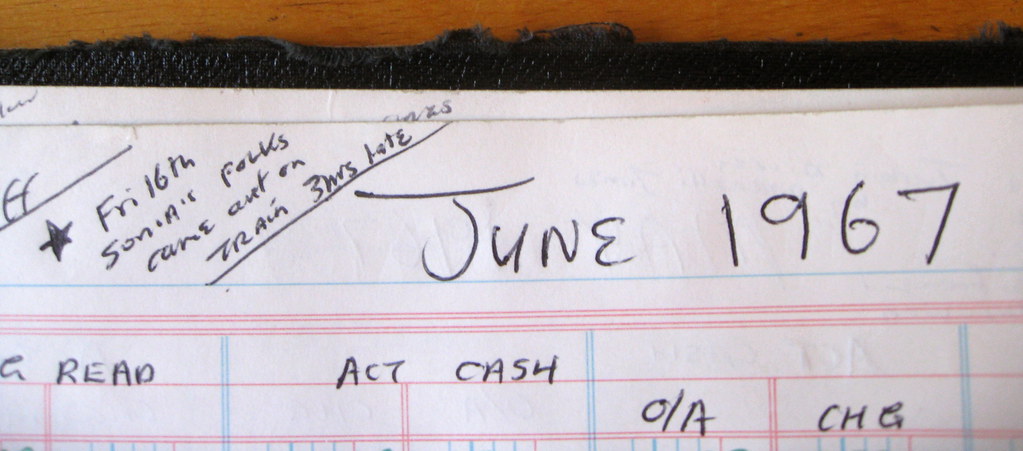
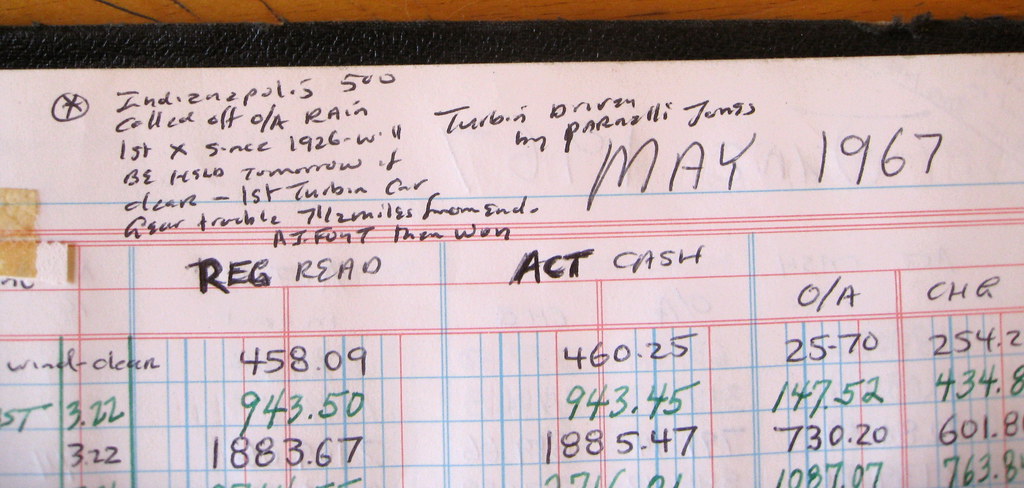
Sports and weather intersected once again in this note about the 1967 Indianapolis 500 being rained out:

IMG_2164.JPG

Oscar also attended some sporting events in person, as you can see from this note regarding a Broncos/Jets game in Denver:

IMG_2160.JPG

As you can see, Oscar went to the game with "OCKd." That abbreviation appears many times in the ledger, but I'm not certain who it refers to. According to Sonja/Sonia's obituary, she and Oscar had a son named Oscar -- maybe "OCKd" is him? Not sure.

6. The shop. As you'd expect, there are lots of notes relating to Hodel's Drug itself. Some of these are explainers for certain sales figures. The prescription revenue at the beginning of February of 1966 was higher than usual, for example. Why? Here's why:

IMG_2157.JPG

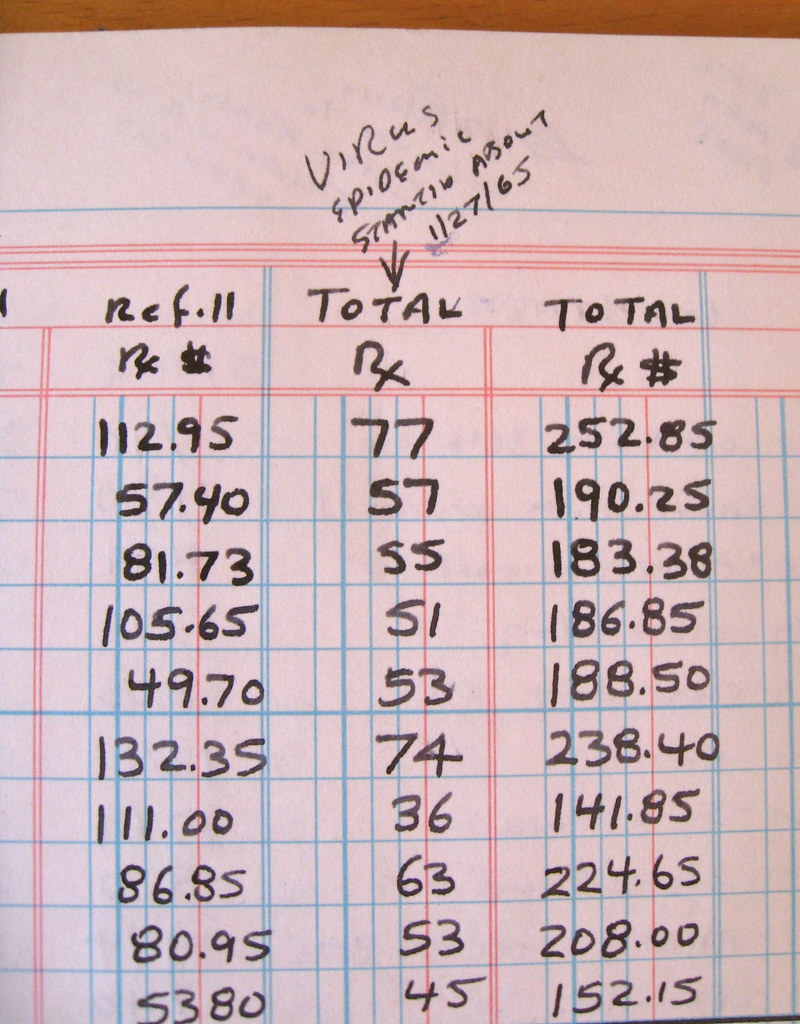
Similarly, when tobacco revenue spiked in July of 1964, Oscar provided an explainer for that as well:

IMG_2146.JPG

IMG_2147.JPG

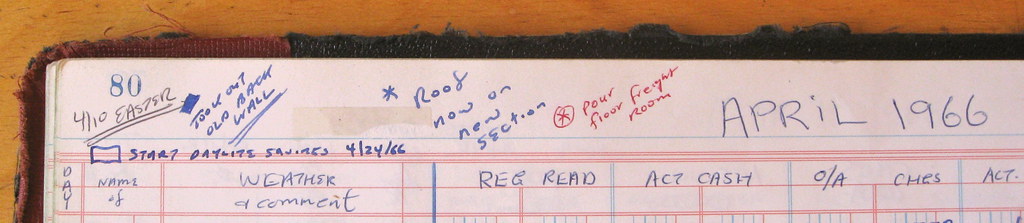
There are also some notes regarding the maintenance of the shop, like these mentions of taking out a wall and pouring a new floor:

IMG_2210.JPG

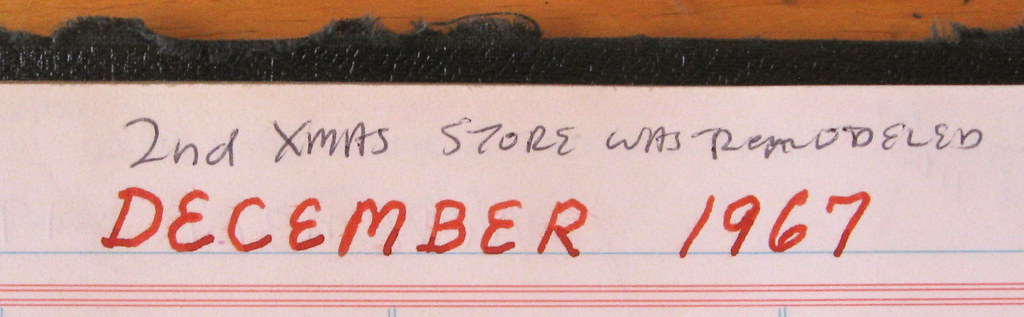
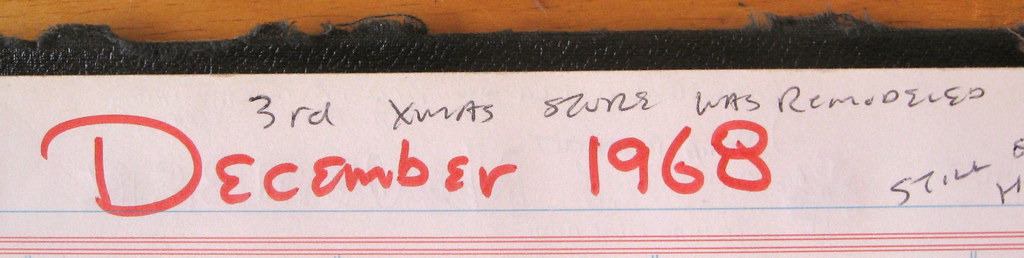
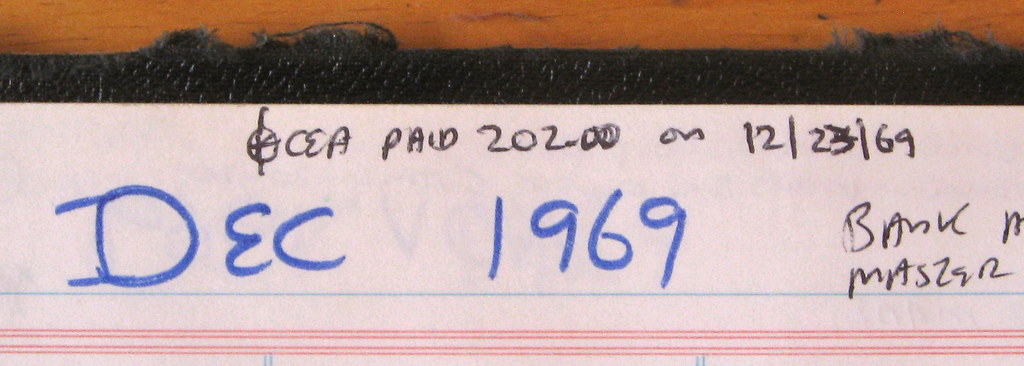
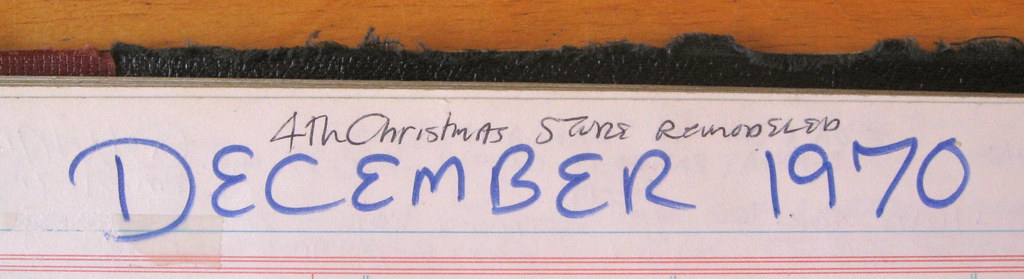
Hodel's Drug apparently underwent a remodeling for the Christmas season in 1966. It must have been deemed a success, because it was repeated every subsequent year except for 1969:

IMG_2163.jpg

IMG_2204.JPG

IMG_2205.JPG

IMG_2206.JPG

IMG_2207.JPG

IMG_2208.JPG

Hmmm. What happened in 1969? Why no Christmas remodeling that year?

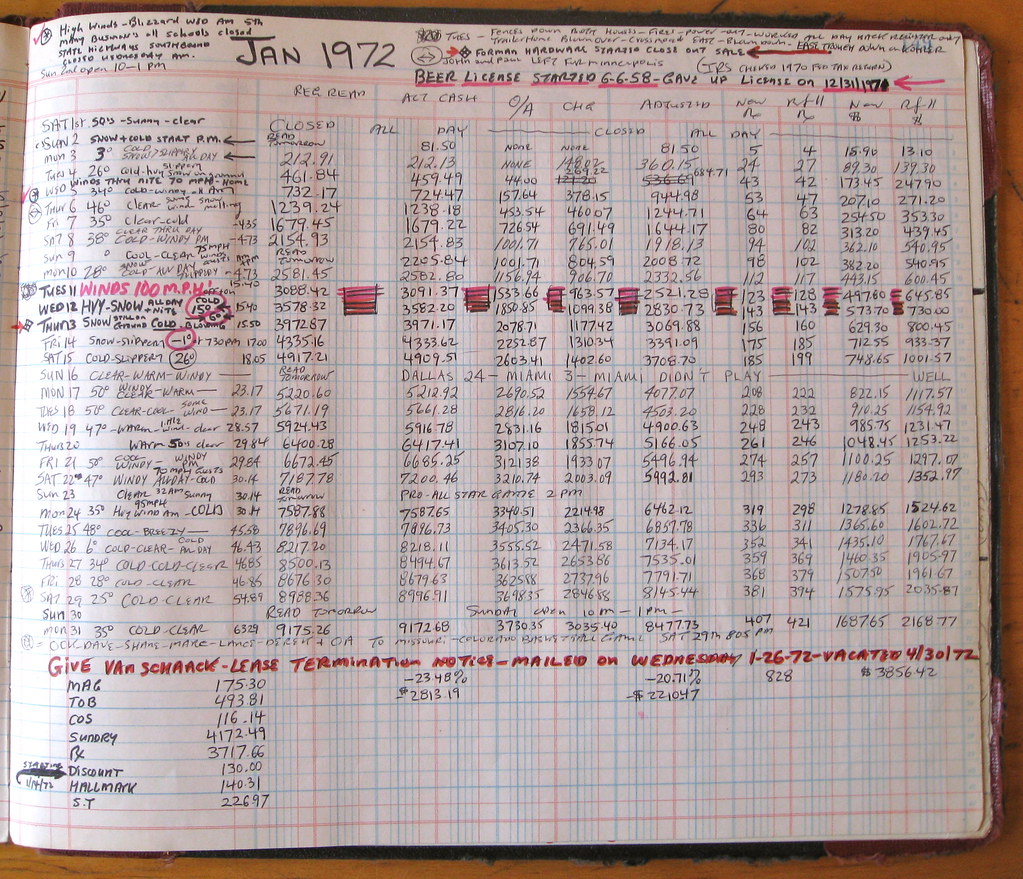
There are indications that Hodel's Drug either closed or moved in the spring of 1972. The first sign of this comes at the bottom of the page for December of 1971, where there's a note about giving up the shop's longstanding beer license:

IMG_2198.JPG

The reference to the beer license is repeated at the top of the following month's page. But the bigger news is at the bottom of that page, which indicates that Oscar had given his landlord a three-month notice of lease termination:

IMG_2201.JPG

IMG_2200.JPG

References to the impending end of the shop's lease are repeated on the pages for the next two months:

IMG_2202.JPG

IMG_2203.JPG

And that, rather maddeningly, is where the story ends. After March of 1972, the ledger was full, with no pages left for what was apparently the shop's final month. Did Oscar purchase another ledger for April, just to record the numbers for that last month? I'd like to think he did, if only because he was such an endearingly compulsive documentarian that it's hard to imagine him without his journal. Surely he must have kept tallying sales figures and jotting down weather conditions down to the very last day, no?
— — —

The Hodel's Drug ledger is an amazing document of a business and a family. My initial instinct was to track down some of Oscar and Sonja/Sonia's children or grandchildren (should be easy enough, since I know their names and at least some of them are probably still in the Boulder area) and see if they wanted this family heirloom returned to them. But first I wanted to know the route that the ledger had taken on its way to me. How had it ended up on eBay in the first place?

So I contacted the eBay seller (who, judging by his eBay profile, is an experienced seller with tens of thousands of sales) and asked how he'd acquired the ledger. The answer surprised me: "It was a consignment." In other words, someone was in possession of the ledger, figured it might have some value, and gave it to an experienced vendor to sell.

It seems likely that this person was a member of the Hodel family. Sonja/Sonia died just eight months ago, so perhaps the ledger had been stored in her home and was flagged as a likely resale item when her family went through her personal effects after her death. Or maybe the family held an estate sale and the ledger was purchased by someone who figured it might have resale value. Either way, it suggests that the family didn't care about holding onto the ledger, so maybe I shouldn't get in touch with them after all. Hmmm.

The eBay seller wouldn't tell me the consignor's identity but offered to pass along my contact info to the consignor. I accepted that offer. No response from the consignor so far, though.

So now I'm rethinking my original plan of getting in touch with the Hodels. Instead, I think I'll contact the Boulder History Museum and see what they have to say. Stay tuned.