Showing posts with label PermaRec-ish Websites. Show all posts

Monday, July 27, 2015

Small Town Noir Update

Last September I posted an entry about the Scottish blogger Diarmid Mogg, who has an interesting specialty: He collects mid-century mug shots and their accompanying police reports from the town of New Castle, Pennsylvania, and then searches the online archives of New Castle's daily newspaper to learn more about the arrestees and their lives. He publishes the results of his research in his excellent blog, Small Town Noir.

I've stayed in touch with Mogg over the past year, and he got in touch the other day with some exciting news:

It might be possible that I’m about to get a Small Town Noir book published!

There’s a new-ish publisher called Unbound, which uses a sort of crowdfunding model to fund niche-interest books. (If you’re interested in learning more, there’s an article about them here.) Their head of publishing got very excited about Small Town Noir, and we’ve set up a crowdfunding campaign for the book. It will only work if around 900 people pledge to buy it, so please spread the word to anyone you think might be interested in a pretty depressing set of stories about unlucky everyday people. (A hard sell, I know! Perhaps it would be better if I presented it as “a fascinating collection of true-life stories behind 150 beautiful old mug shots from one small American town.”)

The short video on the book's campaign page does a great job of explaining the appeal of the project. Please check it out and consider pledging to purchase the book — it's a great project that deserves to be published.

Sunday, April 19, 2015

Another Writer Who Enjoys Found Objects

I recently heard from a writer named Ben Feldman, who likes found objects and the stories behind them as much as I do. He chronicles some of these stories on his blog, New York Wanderer.

Typical of Ben's work is his investigation into the tale behind the promotional change purse shown above, which he found at a flea market. He's a better and much more dogged historical researcher than I am, so he was able to extrapolate a several decades' worth of family history, including tales of illicit liquor sales during Prohibition, from this one item. The resulting blog is lengthy but fascinating — check it out here (and you may also want to see the New York Times piece that emerged from Ben's work).

Ben has done similar investigations into a memorial plaque for the former head of a hatters' union (there's a follow-up to that entry here), a small daily memorandum book, and a tinted glass slide. Good stuff from a kindred spirit.

Wednesday, September 24, 2014

Speak of the devil: Small Town Noir, the excellent mug shot-centric site I wrote about just a few days ago, is going to be featured tonight as part of a documentary being aired on the Canadian cable channel TVO. Further details here.

Unfortunately, my cable package doesn't include TVO. But for you Canadian folks, this looks highly worthwhile.

Friday, September 19, 2014

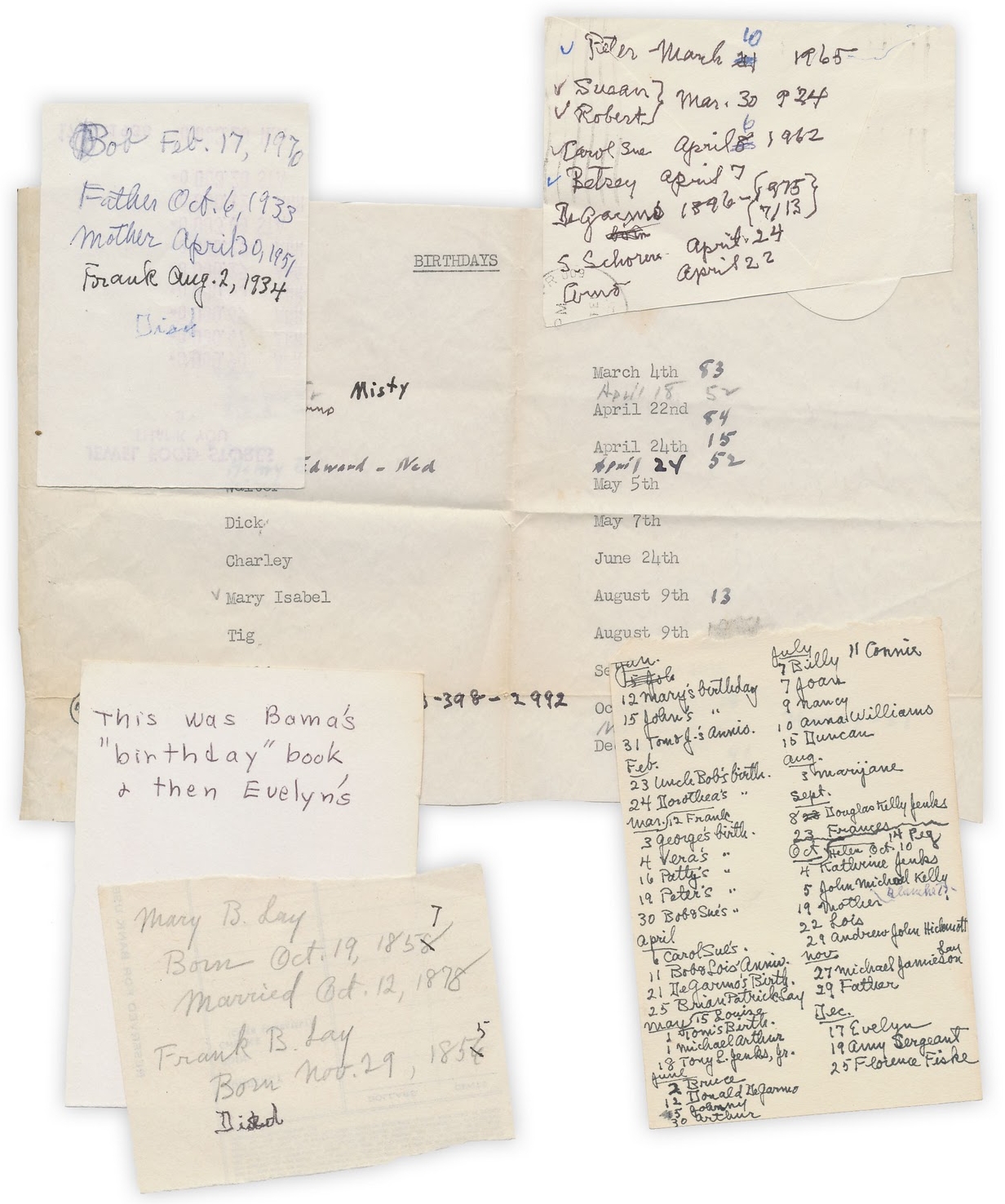
All photos from Small Town Noir; click to enlarge

I've recently become aware of a fantastic project by a Scottish parliamentary reporter named Diarmid Mogg, who has an endearingly niche-specific hobby: He collects mid-century mug shots and their accompanying police reports from one particular city — New Castle, Pennsylvania, a now-faded manufacturing town about an hour north of Pittsburgh. Then he searches the online archives of New Castle's daily newspaper, The New Castle News, to learn more about the arrestees, their alleged crimes, and the anything else he can discover about their lives. Because the News was the type of paper that documented virtually every aspect of its local community, Mogg is sometimes able to piece together a surprisingly vivid picture of a mug shot subject's life, from birth announcement to obituary. In other cases, the pickings are slimmer. Either way, Mogg chronicles all of this in his wonderful blog, Small Town Noir, which he's been writing since 2009.

Mogg is a sharp enough storyteller to recognize that the crimes these people were accused of were often much less interesting than the other aspects of their lives. In the case of the mug shots shown above, for example, the gentleman in the photos was named Frank Heckathorn. Mogg spends eight nicely crafted paragraphs explaining how Heckathorn and his cousins had been picking blackberries in the woods in 1921 when they came upon the unconscious body of a badly beaten 14-year-old girl. This turns out to be completely unrelated to the Heckathorn's mug shots, which resulted from an arrest for indecent exposure in 1943 — an incident that Moggs mentions at the end, almost as an afterthought.

In other words, the mug shots are intriguing as historical artifacts but are even more interesting when viewed as portals into people's lives — just like the report cards that inspired Permanent Record. And just as the report cards led me to seek out and become acquainted with the descendants of the Manhattan Trade School students, Mogg has developed an intimacy with the people connected to his project. As he recently wrote:

Since I started researching and publishing the stories behind the mug shots on the Small Town Noir website, I’ve visited New Castle a couple of times, tracked down crime scenes, met relatives of the people I’ve written about — I’ve even attended the 95th birthday party of a man who had his mug shot taken at the age of seventeen, in 1935, when he was charged with stealing a car. (The return of his mug shot was my birthday gift to him.) Over those years, I’ve come to feel something like love for New Castle and the people whose lives I’ve tried to piece together.

That quote comes from an article Mogg wrote for a narrative history website called The Appendix. It provides the best overview of what he and Small Town Noir are about, including a good explanation of how he began collecting the mug shots, how they became available in the first place, and so on. I strongly recommend that you start there and then dig into Small Town Noir itself.

One additional detail worth mentioning: As longtime PermaRec readers are aware, I've written several times about lost class rings being found. So I laughed when I read this Small Town Noir entry about a 1945 mug shot, which includes the following passage about the arrestee:

By the 1970s ... Charles [the arrestee] was made foreman of the city’s sewers. In 1976, he was working in a sewer in Winter Avenue when he found a 1942 class ring inscribed with the initials MAS hanging on a broken tree branch. He called New Castle High, whose staff checked their records and told him that it must have belonged to Mary Agnes Schetrom. Charles’s friend, Frank Gagliardo, had been the Schetroms’ paper boy and still knew some friends of the family, who told Charles that Mary Agnes was living on Kenneth street. Two hours after he had found the ring, Charles returned it to Mary Agnes, who told him she had accidentally dropped it down her toilet in 1946 and had not expected to see it again.

The story of a lost class ring lurking within the story of a vintage mug shot — very meta, at least from a Permanent Record perspective.

Monday, August 27, 2012

Screen shot 2012-08-27 at 7.40.54 PM.png Screen shot 2012-08-27 at 7.41.02 PM.png

Back in April I posted an entry about the Forgotten Bookmarks blog, which is about little treasures found inside old books. Now I've learned about another web site with a similar but distinct mission: Together, as Always, which is devoted to documenting handwritten inscriptions inside of books, usually on the front endpapers.

What you see above is a typical example -- a 1963 edition of Gulliver's Travels, with the following inscription:

Marlyn,

Hope that you can read this. Next time I'll do better.

Creed

Hmmm. Did he mean he'd "do better" in terms of his handwriting? His probable misspelling of Mar[i]lyn's name? Something else? It's hard to know exactly what it means, but there's definitely an undercurrent of sadness there.

This sense of awkward melancholy can be found in many of the inscriptions, like this one:

Screen shot 2012-08-27 at 7.24.36 PM.png Screen shot 2012-08-27 at 7.24.46 PM.png

It reads, "Someday I would like to sit and talk with you again. But not today -- perhaps tomorrow?" So odd. Was that some sort of olive branch being offered after a lengthy détente? An inside joke? Just a case of clumsy phrasing?

Together, as Always is the work of an artist named Julianne Aguilar, who found all the books in Texas thrift shops. In her "About" page, she says the project "explores ownership, and how an object can still be owned even after being discarded." She goes on:

Books give a gift-giver a unique opportunity to personalize their gift. Names, dates and occasions denote for whom the book was intended, the date it was given and why. These highly personal messages are discarded with the book and will be read by anyone who owns it in the future. Almost no one seems to make any attempt to remove the inscription, even if it was written in pencil. As a result, these books feel like they still belong to someone, as though to own them is to own a stranger’s secrets. The thrill of these objects is their mystery and their unwillingness to let go of the past.

Nicely put. I could keep on citing favorite inscriptions from the site, but I'll restrict myself to just one more:

Screen shot 2012-08-27 at 7.58.43 PM.png Screen shot 2012-08-27 at 7.58.49 PM.png

In case you can't read the inscription there, it says:

Scott Wilkinson Andrews

Christmas 1974

May your interest in coins be a lifetime.

Momma

I assume she meant to say that his interest in coins should last a lifetime, but whatever -- it's more endearing this way. And speaking of endearing, when's the last time you saw someone sign a note with "Momma"? Nice.

To explore the rest of Together, as Always, look here.

(Special thanks to Kirsten Hively for telling me about this excellent site.)

+ + + + +

Update: After I posted this entry, I sent a note to Julianne Aguilar, telling her how much I like her site and letting her know I'd blogged about it. She wrote back with the following:

I am honored to be featured on your blog -- especially because I so love Permanent Record! Believe it or not, when I read your story on Slate last fall, I was in the first planning stages for my own project, and it was a big inspiration. At the time I was working in archives in a small town in West Texas and found myself wanting to read and make work about archives. Your story really got me looking around for anything forgotten, which took me to the only thrift store in town, which was conveniently directly across the street from my apartment, which is where the book collection began.

How cool is that? I've become a fan of her project, and she was already a fan of mine!

+ + + + +

Slate update: I just delivered the latest full-length Permanent Record article to my Slate editor, who says it's tentatively scheduled to run during the week of Sept. 10. This article took an unusual turn -- it's about a story emerging from one of the report cards, but the story isn't about the student connected to the card. That's all I'll say for now, except that I think you'll like it.

Tuesday, April 10, 2012

birthday.jpg
Photo from forgottenbookmarks.com; click to enlarge

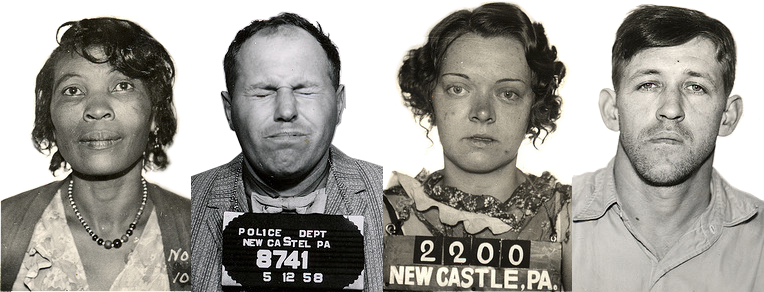
No, I didn't find the lists of birthdays and death dates that are shown above. A guy named Michael Popek found them. He runs a used book store and often discovers things tucked away inside of old books, which he chronicles on his blog, Forgotten Bookmarks. Last fall he published a book by that same title. (As for the lists shown above, Popek found them inside a book of Shakespeare.)

As you may recall, about a month ago I ran an item about a 49-year-old note found inside a book. The guy who found that note successfully tracked down the fellow who'd written it. But Michael Popek doesn't try to connect the dots or reconstruct the stories of behind the objects he finds -- he just lets them speak for themselves.

And that's fine, because he finds a lot of them. He's been blogging about this stuff since 2007, during which time he's amassed over 1000 entries. If he tried to trace the backstory of each one, he'd end up so far down the rabbit hole that he'd never get back out.

So what does he find besides lists of dates? A small sampling: Snapshots. ... Recipes. ... Magazine clippings. ... Bus tickets. ... Postcards. ... Receipts (I really like that one). ... Letters -- sometimes handwritten, sometimes typewritten. ... Legal documents. ... Drawings (that's another of my favorites). ... Four-leaf clovers. ... Maps. ... And yes, as the blog's name implies, bookmarks (and what a beauty that one is!).

Sorry about all those links, but Forgotten Bookmarks is kind of addictive, so it's easy to get carried away. Frankly, I'm a little embarrassed not to have known about Popek's project until Kirsten Hively told me about it a few days ago. Just poke around anywhere on his site -- you're bound to find interesting stuff. (He also does used book giveaways on a regular basis, which is very nice.)

I haven't yet gotten my hands on a copy of Popek's book, but I plan to find a used copy. And I'm going to be seriously bummed if there's nothing lurking inside of it.